

Daily Dose Of Jazz…
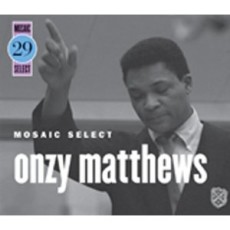
Onzy Matthews was born in Fort Worth, Texas on January 15, 1936, grew up in Dallas until he was 14, when his mother pulled up stakes and moved to Los Angeles for a better job. He graduated from high school at 16 and had already decided he wanted to sing. Nearly every day he walked to a nearby park, where he could play piano for hours in the recreation building.
Augmenting his early gospel roots with healthy doses of smooth California jazz and big band music, Matthews taught himself to accompany his singing on piano until he realized he needed arrangements.
He attended Westlake College of Music, studied ear training and harmony, started singing with a dance band and learning about arranging. After several years of performing, attending concerts and asking questions he had 21 original songs arranged for big band.
His musical career sprang from eight bars of music. As an aspiring singer, pianist and composer in 1963, a young Mr. Matthews gave his first professional arrangement to Les Brown for a tryout with the Band of Renown. Out of the arrangement came 8 bars that sounded good to Onzy and Les Brown advised him to take those 8 bars and start from there. Doing so he went on to become one of the most sought-after arrangers in jazz and pop music. It was later through Dexter Gordon that these first twenty-one were played by the best musicians in Hollywood that turned into a regular Wednesday night jam session. The word spread and he started getting courted by record labels to work with their artists.
Onzy’s first major arranging job was on Lou Rawls’ album Black & Blue, followed by his debut as a leader in 1964 on “Blues With A Touch Of Elegance” for Capitol. About a year later, with his career in full swing, he held a guest spot on a New York radio show hosted by mercer Ellington who introduced him to his dad, friendship was struck and four years later became collaborators, filling the void from Billy Strayhorn’s death.
Matthews tailors the arrangements according to the empathy of the artist by listening to the artist and arranging to bring out things in them they weren’t aware of. This was his magic. After Ellington death in ’74, he moved to Seattle, formed a big band for three years moved between Texas and New York and finally moved to Paris in ’79, put together another big band, played with Miles Davis and finally moved back to Dallas in 1994.
Onzy D. Matthews, whose 35-year career had him working with some of jazz’s most notables, was discovered in his Dallas apartment passed away at his typewriter by jazz singer Jeanette Brantley and her husband Hans Wango on November 15, 1997. He was 67.
Daily Dose Of Jazz…
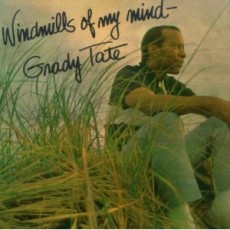
Grady Tate was born January 14, 1932 in Durham, North Carolina who began singing at age four, drums at five. However music was not in his immediate future as he earned a degree from North Carolina Central University with a degree in English literature/drama, a minor in psychology and taught English and speech in Washington, DC. Fortunately for the jazz world his desire to pursue an acting career lead him to New York City and the American Academy of Dramatic Arts and once in New York his reputation as an outstanding musician resulted in work with Quincy Jones.
Grady Tate’s drumming helped to define a particular hard bop, soul jazz and organ trio sound during the mid 1960’s and beyond. His slick, layered and intense sound is instantly recognizable for its understated style in which he integrates his trademark subtle nuances with sharp, crisp “on top of the beat” timing (in comparison to playing slightly before, or slightly after the beat). The Grady Tate sound can be heard prominently on the many classic Jimmy Smith and Wes Montgomery albums recorded on the Verve label in the 1960s.
He has been a member of the New York Jazz Quartet, the Tonight Show with Johnny Carson for six years, and his most widely heard vocal performances are the songs “I Got Six”, “Naughty Number Nine”, and “Fireworks” from Multiplication Rock and America Rock part of the Schoolhouse Rock series.
Grady Tate’s popularity as choice sideman of accomplished musicians is due to his remarkable intuitiveness and ability to make any style of music swing tastefully, and his interpretation of many different genres of music, in which he creates his own unique style of jazz led him to work with a host of talent, the short list including Lionel Hampton, Sarah Vaughan, Jimmy Smith, Grant Green, Stanley Turrentine, Lena Horne, Astrud Gilberto, Ella Fitzgerald, Cal Tjader, Bill Evans and Stan Getz.
Grady Tate, baritone vocalist and drummer has been on the faculty of Howard University since 1989.
Daily Dose Of Jazz…
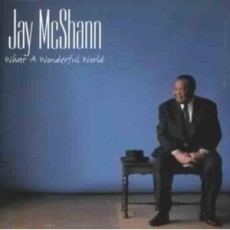
Jay McShann, born James Columbus McShann on January 12, 1916 in Muskogee, Oklahoma began played the piano from the age of 12. His primary education came from Earl “Fatha” Hines late-night radio broadcasts from the Grand Terrace Café. Leaving home he spent time at college and working with bands throughout Oklahoma, Arkansas, Arizona and New Mexico.
In the 1930 Jay moved to Kansas City working with both local groups and his own band with his 1938 band comprised of Charlie Parker, Bernard Anderson, Al Hibbler, Paul Quinichette, Earl Coleman, Ben Webster and Walker Brown, creating a music that would become known as the Kansas City sound.
Nicknamed Hootie, it was during the 1940s that he stood at the forefront of the blues and hard bop jazz musicians mainly from Kansas City. His first recordings were all with Charlie Parker, the first as “The Jay McShann Orchestra” on August 9, 1940. After World War II he began to lead small groups featuring blues shouter Jimmy Witherspoon. Witherspoon started recording with McShann in 1945, and fronting McShann’s band, and had a hit in 1949 with “Ain’t Nobody’s Business”.
Jay McShann was inducted into the Blues Hall of Fame, was nominated twice for a Grammy Award, performed regularly with violinist Claude Williams and continued to recording and touring into the nineties around Kansas City and Toronto, Ontario. The blues and jazz pianist Jay McShann, whose career spanned more than sixty years, passed on December 7, 2006, at St. Luke’s Hospital in Kansas City.
Daily Dose Of Jazz…
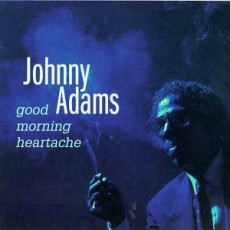
Laten John Adams was born in New Orleans, Louisiana on January 5, 1932 the oldest of ten children and became a professional musician after leaving school. He began his career-singing gospel with the Soul Revivers and Bessie Griffin’s Consolators, but crossed over to secular music in 1959. He recorded Dorothy LaBostrie’s “I Won’t Cry” on the RIC label and produced by teenager Mac Rebennack a.k.a. Dr. John who would later give him a #27 hit in 1962 with “A Losing Battle”.
In 1963, Adams went on to record for Modern Records and Watch Records with limited success until he signed with SSS International. Having three hits on the billboard charts and an album “Heart and Soul” he moved unsuccessfully to other labels like Atlantic and Ariola. During this period he held down a regular gig at Dorothy’s Medallion Lounge in New Orleans and toured the southern nightclub circuit.
In 1983 signing with Rounder Records, Johnny recorded a series of nine critically acclaimed albums beginning with “From the Heart” in 1984, encompassing a wide range of jazz, blues and R&B styles while highlighting Adams’ voice. By 1991 “The Real Me” album brought him a number of accolades, including a W.C. Handy Award. He began touring internationally, working and recording with such musicians as Aaron Neville, Harry Connick Jr. Lonnie Smith and Dr. John.
Johnny Adams, jazz, blues and gospel singer, passed away on September 14, 1998 in Baton Rouge, Louisiana after a long battle with prostate cancer.
More Posts: vocal
Daily Dose Of Jazz…
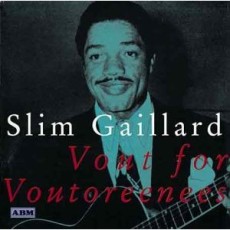
Bulee “Slim” Gaillard was born on January 4, 1916 in Santa Clara, Cuba. His childhood in Cuba was spent cutting sugarcane and picking bananas, as well as occasionally going to sea with his father. At age 12, he made his way to America settling in Detroit. A move to New York City in the late 1930s saw Gaillard’s rise to prominence as part of Slim & Slam, a jazz novelty act he formed with bassist Slam Stewart. Their hits included “Flat Foot Floogie”, “Cement Mixer” and the hipster anthem, “The Groove Juice Special”.
Gaillard’s appeal was that he presented a hip style with broad appeal, was a master improviser whose stream of consciousness vocals ranged far afield from the original lyrics along with wild interpolations of nonsense syllables. Gaillard could play several instruments, such as guitar and piano and always managed to turn the performance from hip jazz to comedy.
In the late forties and early fifties, Gaillard frequently opened at Birdland for such greats as Charlie Parker, Flip Phillips and Coleman Hawkins. Slim composed theme songs for radio shows, appeared in several shows in the 1960s and 1970s, such as Charlie’s Angels, Mission Impossible, Along Came Bronson and Roots: The Next Generation. By the early 1980s he was touring the European jazz festival circuit, playing with such musicians as Arnett Cobb.
Slim Gaillard, singer, songwriter, pianist, guitarist and actor noted for his vocalese, spoke 9 languages including “Vout”, a language he constructed out of word play and created a dictionary, passed away on February 26, 1991 in London, England at the age of 75.