

Daily Dose Of Jazz…
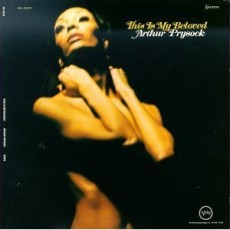
Arthur Prysock was born on January 2, 1929 on Spartanburg, South Carolina but was raised on a farm in North Carolina. He left home at 16, moved to Hartford, Connecticut and found work with an aircraft company during World War II until they discovered he was underage. He then found a day job as a cook, singing around town at night with a band.
In 1944 bandleader Buddy Johnson signed the baritone as a vocalist, singing on several Johnson hits on Decca Records and became a mainstay of the live performance circuits. By 1952 Prysock went solo, signed with Decca, recorded “I Didn’t Sleep a Wink Last Night” and in 1960s covered Ray Noble’s ballad “The Very Thought Of You” and “It’s Too Late Baby, It’s Too Late”. Signing with Verve Records he recorded “Arthur Prysock & Count Basie” and “A Working Man’s Prayer”.
In the seventies, he had a surprise disco hit with “When Love Is New” and in 1985, recorded his first new album in almost a decade, “Arthur Prysock” He gained further attention for his tender, soulful singing on a beer commercial, “Tonight, Tonight, Let It Be Lowenbrau”.
Over the course of a prolific 43-year career, Arthur, who had been influenced by Billy Eckstine, was seen primarily in front of big bands. He recorded nearly 60 albums for Mercury, Old Town, Milestone and Decca record labels, including the orated “This Is My Beloved”. In 1995 he received the Pioneer Award from the Rhythm and Blues Foundation.
His tender music has been a staple of jazz radio in the wee hours of the morning, and of cheek-to-cheek dancing in smoke-filled cocktail lounges. Arthur Prysock, the baritone romantic crooner that never lost his vocal strength, rich resonance or his deep, velvety tones, passed away on June 21, 1997.
More Posts: vocal
Daily Dose Of Jazz…
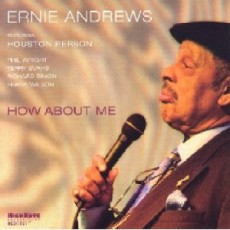
Ernie Andrews was born on December 25, 1927 in Philadelphia, Pennsylvania and spent his earliest years singing in his mother’s church. When he was becoming teen age his family move to Los Angeles, California where he studied drums and continued singing at Jefferson High School. His early influences included Ella Fitzgerald, Billy Eckstine, Al Hibbler, Johnny Mercer, Jimmy Rushing and “Big” Joe Turner.
Discovered by songwriter Joe Greene in 1947 when he won an amateur contest at Central Avenue’s Lincoln Theatre, Ernie was taken into the studio and recorded him at the ripe age of 17.The hit “Soothe Me” sold 300,000 copies and Andrews became a singer to be reckoned with. His next big hit came with Benny Carter called “Make Me A Present Of You” and by this time he was not only working at home but also touring playing clubs, after-hours rooms and concerts.
By 1959, Andrews had joined Harry James’ band, touring the U.S. and South America for nine years, which time he considers his most valuable learning experience. In 1967, he recorded the jazz classic “Big City” with Cannonball Adderley on Capital Records, rejoined James in 68, based himself in Baltimore in ’69, began a solo career and had another big hit with “Bridge Over Troubled Waters”. Her returned to Los Angeles in 1974 where he has resided for more than 50 years.
He has the ear to improvise and a rich resonant voice, and plays his vocal chords as a musician plays his horn. With his special strut, unique mannerisms and a performance that portrays the gamut of emotional experience, he consistently moves audiences to standing ovations. Vocalist Ernie Andrews continued to play clubs, concerts and jazz festivals throughout the world, often performing in Las Vegas, until his transition on February 21, 2022, at the age of 94.

More Posts: vocal
Daily Dose Of Jazz…
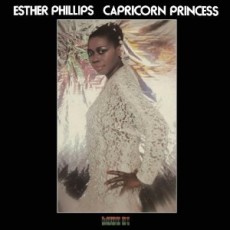
Esther Phillips was born Esther Mae Jones on December 23, 1935 in Galveston, Texas. He parents divorced when she was young and she shared her childhood between Houston and Los Angeles and brought up singing in church. At age fourteen she entered and won a local L.A. amateur talent contest that culminated in a recording with Johnny Otis for Modern Records and added her to his traveling revue, billed as Little Esther Phillips, a name she reportedly took from a gas station sign.
Her first hit record was “Double Crossing Blues” in 1950 for Savoy Records and after several hit records with Savoy that went to number one or hit the Billboard charts in the top ten, she was counted as one of the very few female artists that enjoyed such success in their debut year. She left Otis and Savoy for Federal Records but just a quickly as the hits came, they stopped, in part because she no longer worked with Otis and her increasing drug use that had her addicted by the middle of the decade.
By 1954, she was back home in Houston recuperating with her father, working small nightclubs around the South, punctuated by periodic hospital stays in Lexington, Kentucky, stemming from her addiction. In 1962, Kenny Rogers re-discovered her while singing at a Houston club and got her signed to his brother Lenox label, which assisted in her comeback. From Lenox she went to Atlantic Records, dropped “Little” from her name, and covered the Beatles’ “And I Love Him” and they flew her to the UK for her first overseas performance.
With the ushering in of 1972 she realized one of her biggest with her first album “From A Whisper To A Scream” for Creed Taylor’s Kudu Records with an account of drug use on the lead track in Gil Scott-Heron’s “Home Is Where The Hatred Is”. The song went on to be nominated for a Grammy Award but when Phillips lost to Aretha Franklin, the latter presented the trophy to Phillips, saying she should have won it instead.
While at Kudu she scored her biggest hit single with a disco-style update single of Dinah Washington’s “What A Difference A Day Makes” that reached the U.S. Top 20 and the UK Top 10. The subsequent album had her working with the Brecker Brothers, Joe Beck, David Sanborn, Steve Khan and Don Grolnick. She continued to record and perform throughout the 1970s and early 1980s, completing a total of seven albums on Kudu and four with Mercury Records.
At age 48, Esther Phillips died in Carson, California on August 7, 1984 from kidney and liver failure due to her on-going battle she waged with heroin dependency.
More Posts: vocal
Daily Dose Of Jazz…
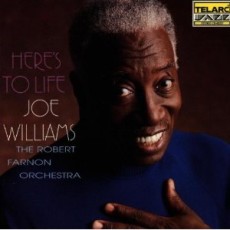
Joe Williams was born Joseph Goreed on December 12, 1918 in Cordele, Georgia but was raised in Chicago from the age of four by his mother, grandmother and aunt. As a child he was greatly influenced by the rebellious sound of jazz from Louis Armstrong, Duke Ellington, Ethel Waters, Cab Calloway, Big Joe Turner and many others of the 1920’s he would hear on the radio. By his early teens, he had already taught himself to play piano and had formed his own gospel vocal quartet, known as “The Jubilee Boys”, that sang at church functions.
During his mid-teens Williams began performing as a vocalist, singing solo at formal events with local bands. The most that he ever took home was five dollars a night, but that was enough to convince his family that he could make a living with his voice. So, at 16, he dropped out of school, created his stage name to “Williams” and began earnestly marketing himself to Chicago clubs and bands. His first job was singing with the band at Kitty Davis’s club during the evening for tips that would sometimes amount to $20.
Williams first real break came in 1938 when clarinetist Jimmy Noone invited him to sing with his band. Less than a year later, the young singer was earning a reputation at Chicago dance halls and on a national radio station that broadcast his voice across the nation. Soon he was touring the Midwest by 1939 and accompanying Louis Armstrong and Fats Waller, a year later toured with Coleman Hawkins. In 1942 Lionel Hampton hired Joe to fill-in for the regular vocalist for the orchestra, the Tic Toc Club in Boston and cross-country tours. By the time the relationship ended Williams was in great demand. Through the 40s he toured and made his first recording with Andy Kirk, which led to working with Red Saunders and recording for Okeh and Blue Lake Records.
He went on to sing with the Count Basie Orchestra from ’54 to 61 with his first recording “Count Basie Swings, Joe Williams Sings” that hit #2 on the charts and sparked another LP, he won Down Beat magazine’s New Star Award and international critic’s Best New Male Singer and reader’s poll Best Male Band Singer. Through the end of the 50s the band was consistently touring Europe.
By the Sixties he was working a solo career with top-flight jazz musicians like Harry “Sweets” Edison, Clark Terry, George Shearing and Cannonball Adderley. He did all the variety shows from The Tonight Show to Joey Bishop, Merv Griffin, Steve Allen and Mike Douglas. He gained further notoriety as the father-in-law on The Cosby Show.
Baritone Joe Williams continued to perform regularly at jazz festivals in the U.S. and aboard, as well as on the nightclub circuit. He received a star on the Hollywood Walk Of Fame in 1983 next to Count Basie, sang Ellington’s Come Sunday at Basie’s funeral, performed the title track All of Me in the Steve Martin/Lily Tomlin vehicle, won two Grammy Awards and enjoyed a successful career, working regularly until his death of natural causes at age 80. He collapsed on the street a few blocks from his home on March 29, 1999 in Las Vegas, Nevada.
More Posts: vocal
Daily Dose Of Jazz…
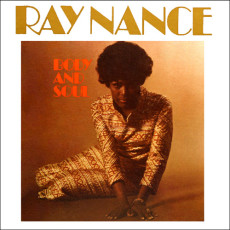
Ray Willis Nance was born on December 10, 1913 in Chicago, Illinois and as a child he studied piano, took violin lessons and was self-taught on trumpet. He led small groups from 1932-1937, then spent periods with the orchestras of Earl Hines and Horace Henderson through to 1940, however, he is best known for his long association with Duke Ellington through most of the 1940s and 1950s, after he was hired to replace Cootie Williams.
Shortly after joining the band, Nance was given the trumpet solo on the first recorded version of “Take The “A” Train” which became the Ellington theme, a major hit and jazz standard. Nance’s “A Train” solo is one of the most copied and admired trumpet solos in jazz history that even Williams upon his return to the some twenty years later would play Nance’s solo almost exactly as the original.
Ray was often featured on violin and was the only violin soloist ever featured in Ellington’s orchestra. He is also one of the well-known vocalists from the Ellington orchestra, having sung arguably the definitive version of “It Don’t Mean A Thing (If It Ain’t Got That Swing). It was Nance’s contribution to take the previously instrumental horn riff into the lead vocal, which constitute the now infamous, “Doo wha, doo wha, doo wha, doo wha, yeah!” The multi-talented trumpeter, violinist, vocalist and dancer earned him the nickname “Floorshow”.
He left the Ellington band in 1963 after having switched to and playing cornet alongside his predecessor Cootie Williams for a year. Over the course of his career he recorded a few albums as a leader and with Earl Hines, Rosemary Clooney and others. Ray Nance passed away on January 28, 1976 in New York City.