

Daily Dose Of Jazz…
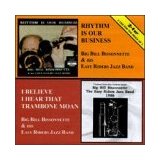
Big Bill Bissonnette was born February 5, 1937 in Bridgeport, Connecticut who became a jazz trombonist and producer. A strong advocate of New Orleans jazz played by Black musicians in the Sixties he led his group The Easy Riders Jazz Band.
During that period Bill also established his own Jazz Crusade label and organized northern tours for such veterans as Kid Thomas Valentine, George Lewis and Jim Robinson. After a period off the jazz scene, Bill successfully published of his 1992 memoirs, “The Jazz Crusade” that told many stories about New Orleans’ musicians.
Bissonnette reactivated his label and began to play trombone again. He has produced and recorded over 100 jazz sessions for his Jazz Crusade label, appearing as trombonist or drummer on over 50 recording sessions of New Orleans jazz.
He has spent much of the 1990s documenting the British jazz scene with his “Best of the Brits” CD series. He published a newsletter several times a year. Trombonist, drummer, producer, bandleader and writer retired from music and now resides in Concord, North Carolina in 2006.
More Posts: bandleader,drums,writer
Daily Dose Of Jazz…
Ira Gitler was born December 18, 1928 in Brooklyn, New York and grew up listening to swing bands in the late 1930s and 1940s, before discovering the new music of Charlie Parker and Dizzy Gillespie. In the early 1950s, he worked as a producer for many recording sessions of Prestige Records and is credited with coining the term “sheets of sound” in the late 1950s, to describe the playing of John Coltrane.
Ira was the New York editor of Down Beat magazine during the 1960s and has written for Metronome Magazine, Jazz Times, Jazz Improv, Modern Drummer, the New York Times, the San Francisco Chronicle, the Village Voice, Playboy, World Monitor and New York Magazine along with international publications Swing Journal in Japan, Music Jazz – Italy, Jazz Magazine, France.
Gitler was awarded a Guggenheim Fellowship in 1974, received a Lifetime Achievement Awards by the New Jersey Jazz Society in 2001, and by the Jazz Journalists Association in 2002.
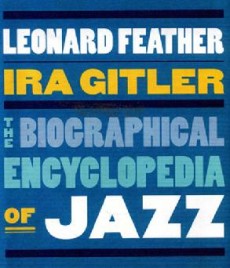
He is a jazz historian and journalist best known for “The Biographical Encyclopedia of Jazz, co-authored with Leonard Feather. He has written hundreds of liner notes for jazz recordings since the early 1950s and is the author of dozens of books about his two passions, jazz and ice hockey.
Daily Dose Of Jazz…
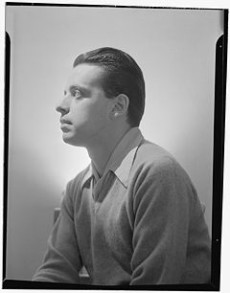
Nesuhi Ertegun was born November 26, 1917 in Istanbul, Turkey, moving to Washington, DC when his father was appointed Ambassador to the United States in 1935. From an early age, Nesuhi’s primary musical interest was jazz, having attended concerts in Europe. While at the Turkish Embassy he also promoted jazz concerts during 1941-44.
After his father’s death in 1944, Ertegun stayed in the U.S., moved to California, got married and established the Crescent record label. He purchased Jazz Man Records and issued traditional jazz recordings producing classic Kid Ory revival recordings plus sessions with Pete Daily and Turk Murphy. He went on to work with Contemporary Records and Imperial Records developing their jazz catalog for the later.
In 1955, he was preparing to work for Imperial Records to develop their jazz record line and develop a catalog of LPs. However, his younger brother Ahmet Ertegun and Jerry Wexler persuaded him to become a partner in Atlantic Records over the jazz and LP department.
As a producer he worked with John Coltrane, Charles Mingus, Ornette Coleman, the Modern Jazz Quartet, Ray Charles, Chris Connor, the Drifters, Bobby Darin, Roberta Flack and numerous others while being first recruiting songwriters and producers Leiber and Stoller. He went on to establish WEA International venturing into Latin-American rockers and other world music groups and remained at the helm until his retirement in 1987.
Nesuhi Ertegun, writer, editor, producer, educator, art collector and soccer promoter died on July 15, 1989, at the age of 71, due to complications following cancer surgery. He was posthumously inducted into the Rock and Roll Hall of Fame, awarded the Grammy Trustees Award for lifetime achievement, the National Soccer Hall of Fame and had the Nesuhi Ertegun Jazz Hall of Fame at Jazz at Lincoln Center dedicated to him.