


Daily Dose Of Jazz…
Ali Jackson Jr. was born on April 3, 1976 in Detroit, Michigan. His mother, a classical pianist, taught him piano and how to read music at age 4, his father, a professional bass player, taught him music theory and gave him drums lesson from rudiment books.
Attending Detroit’s prestigious Cass Technical High School, he went on to matriculate through The New School For Jazz and Contemporary Music and privately studying with Elvin Jones and Max Roach.
Ali has recorded two albums as a leader and as a sideman has performed and recorded with musicians including with Joshua Redman, Anat Cohen, Kurt Rosenwinkel, Wynton Marsalis, Jacky Terrasson, Craig Handy, James Carter, Dee Dee Bridgewater, Aretha Franklin, George Benson, Harry Connick Jr., KRS-1, Marcus Roberts, Cyrus Chestnut, Joshua Redman, Diana Krall and Eric Reed.
Ali Jackson is currently the drummer with the Lincoln Center Jazz Orchestra, performs with the Wynton Marsalis Quintet, Horns in the Hood, and leads the Ali Jackson Quartet. He is also the voice of “Duck Ellington,” a character in the Penguin book series Baby Loves Jazz and has hosted “Jammin’ with Jackson,” a series for young musicians at Jazz at Lincoln Center’s Dizzy Club Coca-Cola.

More Posts: drums
Jazz In Film
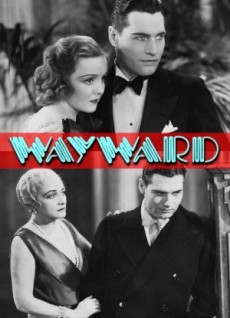
Wayward: This 1932 Paramount Productions drama about family intrigue brought on by a jealous mother-in-law was directed by Edward Sloman and starred Nancy Carroll, Richard Arlen and Pauline Frederick.
Taken from the novel Wild Beauty by Mateel Howe Farnham it features the song ”What’s the Difference”. Edward Heyman wrote the lyrics and the music composed by Johnny Green. The film also featured music by pianist Claude Hopkins and his Orchestra.
More Posts: film
Daily Dose Of Jazz…
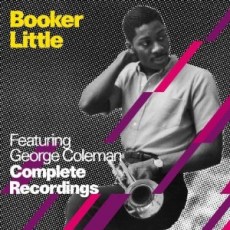
Booker Little, Jr. was born in Memphis, Tennessee on April 2, 1938. He studied trumpet and music at the Chicago Conservatory from 1956 to 1958 during which time he worked with local musicians like Johnny Griffin. A move to New York offered him the opportunity to work with Max Roach and Eric Dolphy, recording with the later on the 1960 Far Cry session and leading a residency at the Five Spot in 1961. This collaboration would produce three classic albums for Prestige Records.
It was during this stint that he began to show promise of expanding the expressive range of the “vernacular” bebop idiom started by Clifford Brown in the mid-1950s. As a leader he recorded four albums and recorded another eleven as a sideman with Dolphy, Max Roach, John Coltrane, Slide Hampton, Bill Henderson, Abbey Lincoln and Frank Strozier during his short four years from 1958-1961.
Little made an important contribution to jazz as one of the first trumpeters to develop his own voice post Clifford Brown, though stylistically, he is rooted in Brown’s crisp articulation, burnished tone and balanced phrasing. Trumpeter and composer Booker Little died of complications resulting from uremia due to kidney failure at the age of 23 on October 5, 1961 in New York City.

More Posts: trumpet

Daily Dose Of Jazz…
Alberta Hunter was born on April 1, 1895 in Memphis, Tennessee to Laura Peterson, a maid in a Memphis brothel and Charles Hunter, a Pullman porter who she never knew. She attended Grant Elementary School, off Auction Street, which she called Auction School, in Memphis. Having had a difficult childhood, and not happy with her new stepfather and family she left for Chicago, Illinois, around the age of 11, in the hopes of becoming a paid singer. She had heard that it paid 10 dollars a week but instead of finding a job as a singer she had to earn money by working at a boarding house that paid six dollars a week as well as room and board.
Hunter began her singing career in a bordello and soon moved to clubs that appealed to men, black and white alike. By 1914 she was receiving lessons from jazz pianist, Tony Jackson, who helped her to expand her repertoire and compose her own songs. Singing around Chicago, one of her first notable experiences as an artist was at the Panama Club where she honed her craft before a cabaret crowd. Her big break came when she was booked at Dreamland Cafe, singing with King Oliver and his band.
She first toured Europe in 1917, performing before adoring and respectful audiences in Paris and London. Her career as singer and songwriter flourished in the 1920s and 1930s, and she appeared in clubs and on stage in musicals in both New York and London. The songs she wrote include the critically acclaimed Downhearted Blues in 1922. She recorded several records with Perry Bradford from 1922 to 1927 as well as sessions on Black Swan, Paramount, Gennett, OKeh, Victor and Columbia. While still working for Paramount, she also recorded for Harmograph Records under the pseudonym May Alix.
Alberta eventually moved to New York City. She performed with Bricktop and recorded with Louis Armstrong and Sidney Bechet. She headed the U.S.O.’s first black show, performing in Casablanca, Korea and other theaters of war during World War II and after, until her mother’s death in 1957. It was at this point that she left music for a career in healthcare, working at Roosevelt Island’s Goldwater Memorial Hospital for 20 years. The hospital forced Hunter to retire because it believed she was 70 years old but was actually 82 years old. Deciding to return to singing, she had a regular engagement at a Greenwich Village club, becoming an attraction there until her passing away on October 17, 1984.
Her life was documented in Alberta Hunter: My Castle’s Rockin’, a 1988 TV movie, narrated by the pianist Billy Taylor, and in Cookin’ at the Cookery, a biographical musical by Marion J. Caffey, in which Ernestine Jackson portrays her. Vocalist and composer Alberta Hunter was inducted to the Blues Hall of Fame in 2011, the Memphis Music Hall of Fame in 2015 and her comeback album, Amtrak Blues, was honored by the Blues Hall of Fame in 2009.
More Posts: vocal