

Daily Dose Of Jazz…
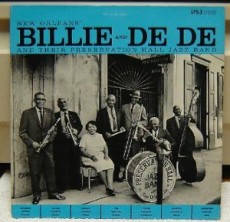
Billie Pierce was born Wilhelmina Goodson on June 8, 1907 in Marianna, Florida. She was born into a family of pianists with both parents and seven-sisters playing, notably her sister Ida Goodson.
Early in the 1920s, Billie played with Bessie Smith and later in the decade played in the bands of Alphonse Picou, Emile Barnes and George Lewis. By the 1930s she was playing the Blue Jay Club, where she met trumpeter De De Pierce; the two fell in love, married, and co-led their own ensemble, which served as the house band at Luthjen’s Dance Hall in the 1950s.
She played in the Preservation Hall Jazz Band and was a regular on the New Orleans jazz scene in the 1950s through the early Seventies. Pianist and singer Billie Goodson died on September 29, 1974 in New Orleans, Louisiana at the age of 67.

Give The Gift Of Knowledge
More Posts: vocal
Hollywood On 52nd Street
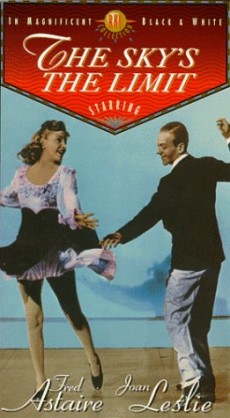
My Shining Hour and One For My Baby (And One More For The Road) are from a 1943 musical comedy movie titled “The Sky’s The Limit”. Harold Arlen composed the music and Johnny Mercer wrote the lyrics. It starred Fred Astaire and Joan Leslie.
My Shining Hour was introduce by Sally Sweetland and was nominated for an Academy Award for Best Song. It is believed that the opening line “this will be my shining hour” to have been a reference to Winston Churchill’s famous rallying call to British citizens during the war: “This will be our finest hour”.
One For My Baby (And One For More The Road) took two and a half days to shoot, after seven days of full set rehearsal. After a drunken rendition of the song, he furiously tap dances up and down the bar, pausing only to smash stacked racks of glasses and a mirror. The number was first performed in the film by Fred Astaire but popularized by Frank Sinatra.
Sponsored By

www.whatissuitetabu.com
Daily Dose Of Jazz…
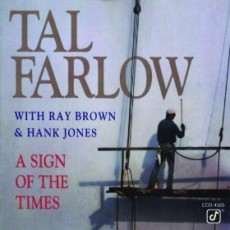
Talmage Holt Farlow was born on June 7, 1921 in Greensboro, North Carolina. He didn’t take up the guitar until he was twenty-one but within a year was playing professionally, although he had a reluctance to perform publicly. But, by 1948 he had joined Marjorie Hyams’ band, moved to Red Norvo’s group from ’49 to ’53 and after only six months with Artie Shaw’s Gramercy Five in 1953, Farlow put together his own group, which for a time included pianist Eddie Costa.
Farlow’s extremely large hands led to his nickname “Octopus” spreading over the fret board as if they were tentacles. In 1956 Down Beat magazine critics named him as the very best jazz guitarist in the world. Where other similar players of his day combined rhythmic chords with linear melodies, Tal preferred placing single notes together in clusters, varying between harmonically richened tones based on a startling new technique.
A supreme technician, renowned for his articulation, and smooth relaxed phrasing even at the most daunting tempos, Tal retired from full-time performing in 1958, returning to a career as a sign painter, playing only the occasional date.
He only made one record as a leader during 1960–1975, but emerged a bit more often during 1976–1984, recording for Concord fairly regularly before largely disappearing again. He was profiled in the documentary film, Talmage Farlow, and can be heard leading groups for Blue Note, Verve and Prestige. Guitarist Tal Farlow died of cancer in New York City on July 25, 1998 at the age of 77.
Take A Dose On The Road
More Posts: guitar
Daily Dose Of Jazz…
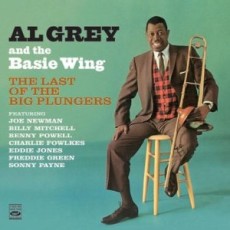
Al Grey was born in Aldie, Virginia on June 6, 1925 but grew up in Pottstown, Pennsylvania. After serving in the Navy during WWII, where he started playing trombone, he joined Benny Carter’s band, later moving to Lionel Hampton’s trombone section. After some solo worked he joined Dizzy Gillespie’s big band in ’56 and a year later was touring Europe with Count Basie.
Trummy Young inspired Al’s early trombone style and he developed a wild, strong and full sound. Solos often consisted of short, pronounced phrases with precisely timed syncopation. He became known for his plunger mute technique, later writing an instructional book title “Plunger Techniques”. When playing with the plunger, however, he would produce the most mellow fill-ins and shape melodic answers to the lead voice.
After 1961 Grey performed only occasionally with the Count and apart from leading his own combos, he collaborated with many jazz greats such as Herbie Hancock, Melba Liston, J. J. Johnson, Quincy Jones, Ray Charles, Jack McDuff, Ella Fitzgerald and Frank Sinatra. His trombone skills were also featured on the award-winning soundtrack for The Color Purple.
Al Grey, who passed away on March 24, 2000, greatly contributed to the post-swing era jazz-trombone vocabulary and will be remembered for his charming personality as well as his ability to bond with audiences around the world.
Take A Dose On The Road
More Posts: trombone

Daily Dose Of Jazz…
Gordon “Specs” Powell was born June 5, 1922 in New York City. He started out musically on the piano but by the late 1930s he became exclusively a drummer. He began in the swing era working with Edgar Hayes in 1939, Benny Carter in 1941-42 and Ben Webster.
He started working as a staff musician for CBS in 1943 and by the early 60s he was lead drummer on The Ed Sullivan Show. He only led one recording session for Roulette Records in 1957 titled “Movin’ In”.
Remaining active until the 1970s, Specs Powell, jazz drummer and percussionist that worked in the bebop and hard bop idioms was honored by the Big Band and Jazz Hall of Fame in 2004.
Though he passed away three years later on September 15, 2007 at the age of 85, Specs Powell selected discography lists his orchestra and big band albums, “Movin’ In” and “Big Band Jazz” and left behind an impressive albeit a selected collection of recordings with Teddy Wilson, Jess Stacy, Red Norvo, Erroll Garner, Shirley Scott, Reuben Wilson, Bernard Purdie and Billy Butler among others.
Dose A Day-Blues Away
More Posts: drums