

Daily Dose Of Jazz…
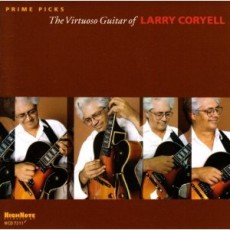
Larry Coryell was born April 2, 1943 in Galveston, Texas moved to Washington as a child. After graduating from Richland High School in eastern Washington, he moved to Seattle to attend the University of Washington.
In 1965, Coryell moved to New York City where he became part of Chico Hamilton’s quintet replacing Gabor Szabo. In the Sixties he recorded with Gary Burton, played with The Free Spirits and extended his musical landscape to include influences of rock, jazz and eastern music.
He formed his own group, “The Eleventh House” in 1973 and following the break-up of this band, Coryell played mainly acoustic guitar but returned to electric guitar later in the 1980s.
In 1979, Coryell formed “The Guitar Trio” with jazz-fusion guitarist John McLaughlin and flamenco guitarist Paco de Lucia. The group toured Europe, released “Meeting of Spirits” recorded at Royal Albert Hall in London, however, his drug addiction led to his being replaced by Al Di Meola.
By the turn of the century he settled back into a more mainstream style of playing releasing “Cedars of Avalon”, “Monk, Trane, Miles & Me”, “Tricycles”, and “Power Trio: Live In Chicago”. In 2007, Coryell published an autobiography titled “Improvising: My Life in Music”. Guitarist Larry Coryell remains active in the music industry performing, touring and recording.
More Posts: guitar
Daily Dose Of Jazz…
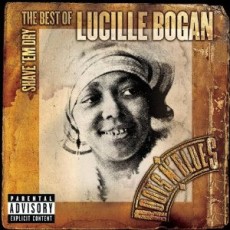
Lucille Bogan was born in Amory, Mississippi on April 1, 1897 but was raised in Birmingham, Alabama and at age five she was named Lucille Anderson. In 1916 she married railway man Nazareth Lee Bogan and she received her training singing in the rowdiest juke joints of the 1920s. She first recorded vaudeville songs in New York for Okeh Records in 1923. That same year she recorded “Pawn Shop Blues” in Atlanta, which was the first time a black blues singer had been recorded outside New York or Chicago.
Among the first blues singers to be recorded, in 1927 Lucille signed with Paramount Records in Chicago, recording her first big success, “Sweet Petunia”, later covered by Blind Blake. By 1930 her recordings had begun to concentrate on drinking and sex, with songs such as “Sloppy Drunk Blues”, “Tricks Ain’t Walkin’ No More” and “Black Angel Blues” later covered by B. B. King as “Sweet Little Angel”. She would later record for Brunswick Records.
Many of Bogan’s songs, most of which she wrote herself, have thinly-veiled humorous sexual references with the theme of prostitution featured prominently in several of her recordings. In the early Thirties Lucille returned to New York and recorded prolifically under the pseudonym Bessie Jackson until the middle of the decade. Lucille Bogan does not appear to have recorded after 1935, spending some time managing her son’s jazz group, Bogan’s Birmingham Busters, before moving to Los Angeles, where she died on August 10, 1948 from coronary sclerosis.
More Posts: vocal
Daily Dose OF Jazz…
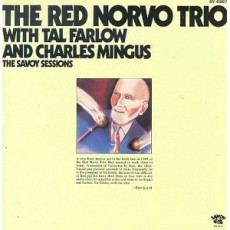
Red Norvo was born Kenneth Norville on March 31, 1908 in Beardstown, Illinois. It is said that he sold his pet pony to help pay for his first marimba. He began his career in 1925 in Chicago playing with a band called “The Collegians”, in 1925. He played with many other bands, including an all-marimba band on the vaudeville circuit along with the bands of Paul Whiteman, Benny Goodman, Charlie Barnet and Woody Herman.
By 1933 he had recorded two sessions for Brunswick under his own name including two of the earliest, most modern pieces of chamber jazz: Bix Beiderbecke’s “In A Mist” and his own “Dance of the Octopus”. For these he put aside the xylophone for the marimba yet outraged the label’s head that tore up his contract and threw him out, though the album remained in print throughout the 30s.
From 1934-35 Red recorded 8 modern swing sides for Columbia followed by 15 sides of Decca and their short-lived Champion label series in 1936. From there he formed a Swing Orchestra and recorded for ARC, Vocalion and Columbia featuring brilliant arrangements by Eddie Sauter and often vocals by Mildred Bailey.
In 1938, Red Norvo and His Orchestra reached number one with their recordings of “Please Be Kind” and “Says My Heart”. He went on to record with Benny Goodman, Charlie Parker, Dizzy Gillespie in 1945, hit the West Coast in ’47, helped Charles Mingus rise to prominence in his trio, recorded for Savoy, recorded with Sinatra in Australia and released by Blue Note, appeared on the Dinah Shore Chevy Show and appeared in the movie Screaming Mimi as himself.
Red Norvo, helped to establish the xylophone, marimba and vibraphone as a viable jazz instrument continued to record and tour throughout his career until a stroke in the mid-1980s forced him into retirement. He died at a convalescent home on April 6, 1999 in Santa Monica, California at the age of 91.
More Posts: composer,marimba,vibraphone,xylophone
The Jazz Voyager
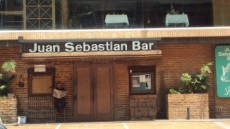
Juan Sebastian Bar Av. Venezuela, Urb. El Rosal, Caracas, Venezuela / Telephone: (58-2) 951-0595 / Contact: Jose Ornelas
The Juan Sebastian Bar is the oldest jazz club in Venezuela (21 years) has excellent ambience. The bar has a house band that plays mostly jazz standards, and sometimes they present special guests.
Daily Dose Of Jazz…
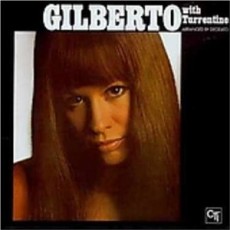
Astrud Gilberto was born Astrud Weinert on March 30, 1940 in the state of Bahia and raised in Rio de Janiero, the daughter of a Brazilian mother and a German father, She married Joao Gilberto in 1959, emigrating to the United States in 1963 and has continued to reside in the US ever since. They divorced in the mid-1960s and she began a relationship with her musical partner, Stan Getz.
Although now widely known for her samba and bossa nova music, she had never sung professionally and it was at the behest of her husband Joao that she sang on the recording of the Getz/Gilberto album featuring Stan Getz, Joao Gilberto and Antonio Carlos Jobim. Providing the English vocals to the 1965 Grammy Award-winning song “The Girl From Ipanema”, and her career was launched garnering her worldwide recognition and establishing her as a jazz and pop singer.
Her first solo album was The Astrud Gilberto Album in 1964, went on tour with Stan Getz singing bossa nova and American jazz standards, Gilberto didn’t start to record her own compositions until the 1970s. Her repertoire included such standards as “The Shadow Of Your Smile”, “It Might As Well Be Spring”, “Love Story”, “Fly Me To The Moon”, “Day By Day”, “Here’s That Rainy Day” and “Look to the Rainbow”.
Astrud has recorded songs in Portuguese, English, Spanish, Italian, French, German and Japanese, has received the “Latin Jazz USA Award for Lifetime Achievement”, inducted into the “International Latin Music Hall of Fame”, contributed to the Aids benefit album Red Hot + Rio, has had numerous versions of her songs sampled and used in movies, is a fine artist and ardent animal rights advocate.
More Posts: vocal