


The Jazz Voyager
Tha Chang Jazz Club: 25-27-29 Charoen Raj Rd., Chiang Mai, Thailand 50000 / Telephone: 053 248 601-2 Fax. 053 248 602 / Contact: Surachai Leosawadipong.
Located on the right-hand side of The Gallery, where you can sit down, relax, watch and listen to live music. You will be served in a friendly, personal atmosphere. The club provides quality live jazz and blues music every night from 9.30 p.m. onwards.
Daily Dose Of Jazz…
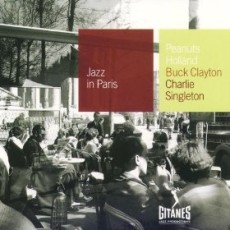
Herbert Lee “Peanuts” Holland was born on February 9, 1910 in Norfolk, Virginia. Holland learned to play trumpet at the Jenkins Orphanage. A veteran of the Alphonse Trent territory band with whom he recorded and played with from 1928 to 1933, he also played with Al Sears, the Jeters-Pillars Orchestra, Willie Bryant Jimmie Lunceford and Lil Armstrong’s band.
In 1938 Peanuts led his own very successful band prior to moving to New York City the following year. There he joined the big bands of Coleman Hawkins and Fletcher Henderson. Through the first half of the Forties he was part of Charlie Barnet’s band and in 1946 with Don Redman toured Europe.
Holland elected to stay in Europe living in Paris and Stockholm and performing with his own small combo. He amassed a catalog of 46 recordings for European labels between 1946 and 1960 regularly working with such jazz names as Mezz Mezzrow, Don Byas, Billy Taylor and Claude Bolling.
Jazz trumpeter Peanuts Holland best known for his contributions to swing jazz, passed away on February 7, 1979 in Stockholm, Sweden, just two days shy of his 69th birthday.
From Broadway To 52nd Street
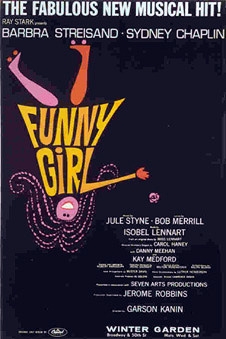
Funny Girl opened at the Winter Garden Theatre on March 26, 1964 and entered into the fraternity of blockbuster musicals with 1,348 performances. Jule Styne & Robert Merrill composed the music and from the score came the classic tune People, that became a hit long before it premiered on Broadway performed by Barbra Streisand. Joining her in the cast of players were Sydney Chaplin, Jean Stapleton and Lainie Kazan.
The Story: The early years of Ziegfield Follies star Fanny Brice in which Streisand recreates her Broadway triumph. She reminisces about her life as she wanders back to the days of Keeney’s Music hall, her eventual success and the two men in her life. There’s Flo Ziegfeld, who makes her a star and Nicky Arnstein, a gambler, who she marries. Her career flourishes as Nicky’s gambling and prison sentence destroy her marriage. She sings, roller-skates, cracks jokes, loves & marries a gambler, and tugs at your heart in a tour-de-force performance)
Jazz History: The Sixties was the most tumultuous decade in the history of America and the changes were reflected in jazz. Many musicians were falling under the modal-jazz spell of Miles Davis’ Kind of Blue, and the free-jazz influence of saxophonist Ornette Coleman; John Coltrane performs in concert as a member of Miles Davis’ group for the last time, riots break out at the Newport Jazz Festival and Max Roach begins to record his Freedom Now! Suite. The country saw John F. Kennedy elected as the youngest President in U.S. history, we lived the Cuban missile crisis, student sit-ins and segregation protests at restaurants, and the San Francisco Chronicle reports that Dave Brubeck lost $40,000 in bookings from a month-long tour of U.S. southern states because he refused to drop African-American bassist Eugene Wright from his group.
Sponsored By

www.whatissuitetabu.com
Daily Dose Of Jazz…
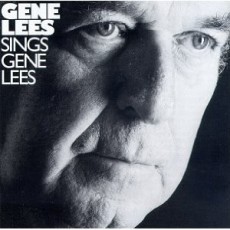
Frederick Eugene John “Gene” Lees was born in Canada on February 8, 1928 the eldest of four children. He began his writing career as a newspaper reporter in 1948 prior to moving to the U.S. and becoming a music critic at the Louisville Times in Kentucky. By the end of the Fifties he was editor of Down Beat magazine.
As a freelance writer, Lees wrote for Stereo Review, High Fidelity and the New York Times in the U.S. along with several Canadian publications like the Toronto Star and Maclean’s. As a biographer, Lees has written about Oscar Peterson, Lerner & Loewe, Henry Mancini, Woody Herman and about racism in jazz music in “Cats of Any Color: Jazz Black and White”.
Gene wrote nearly one hundred liner notes for artists as diverse as Stan Getz, John Coltrane and Quincy Jones. As a novelist he published “And Sleep Until Noon” in 1967 and his second book, “Song Lake Summer” was published in 2008. He won his first of five ASCAP-Deems Taylor Awards in 1978 for a series of articles published in High Fidelity about US music. Lees’ famous monthly “Jazzletter” was established in 1981, and contains musical criticism by Lees and others.
In the early 60s he studied composition by correspondence with the Berklee College of Music, piano with Tony Aless, guitar with Oscar Castro-Neves and became a lyricist translating and writing English lyrics for the Portuguese bossa nova tunes. He wrote the lyrics for Antonio Carlos Jobim’s Corcovado re-titled “Quiet Nights of Quiet Stars”, also “Someone To Light Up My Life”, “Song of the Jet”, “The Happy Madness” and “Dreamer”. He has said that Frank Sinatra’s recording of Quiet Nights was the definitive rendition. He also contributed lyrics to Milton Nascimento’s Bridges, Charles Aznavor Broadway concert, “One World, One Peace” – the poems of Pope John Paul II recorded by Sarah Vaughan and recorded Bridges – Gene Lees Sings Gene Lees.
Gene Lees, music critic, biographer, lyricist and journalist struggled with heart disease in his later years and died on April 22, 2010 in Ojai, California.
More Posts: biographer,critic,journalist,lyricist
Daily Dose Of Jazz…
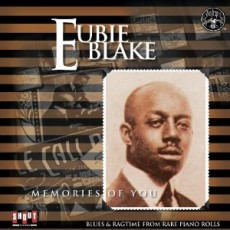
James Hubert Blake was born on February 7, 1887 in Baltimore, Maryland to former slaves and was the only surviving child of eight. Blake’s musical training began when he was just four or five years old when he wandered into a music store, climbed on the bench of an organ, and started “fooling’” around. The store manager recognized his genius, told his mother and subsequently bought an organ.
At seven, he received music lessons from the Methodist church organist, by fifteen he played piano at Aggie Shelton’s Baltimore bordello and got his first big break in the music business when world champion boxer Joe Gans hired him to play the piano at Gans’ Goldfield Hotel, the first “black and tan club” in Baltimore in 1907. In 1912, Blake began playing ragtime in vaudeville with James Reese Europe’s “Society Orchestra” which accompanied Vernon and Irene Castle’s ballroom dance act. Shortly after World War I, Blake joined forces with performer Noble Sissle forming the vaudeville music duo, the “Dixie Duo” that transformed into 1921’s “Shuffle Along”, the first hit musical on Broadway written by and about African-Americans.
Throughout his career Blake made three films with Sissle for Lee DeForest’s Phonofilm Sound-On-Film, later played the Boathouse nightclub in Atlantic City, was bandleader with the USO during World War II, with his career winding down in 1946 enrolled and graduated from New York University, revived in 1950 with new interest in ragtime as artist, historian and educator, received the Presidential Medal of Freedom from President Reagan, awarded numerous honorary doctorates and had another hit Broadway play “Eubie!” in his honor. Eubie Blake continued to play piano and record until his death on February 12, 1983 in Brooklyn, New York. He was 96.
More Posts: piano