

Daily Dose Of Jazz…
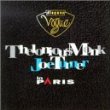
Joe Turner was born Joseph H. Turner on November 3, 1907 in Baltimore, Maryland. He was a stride and jazz pianist, not to be confused with blues singer Big Joe Turner. He started to learn the piano from his mother at age five and began to make a name for himself in Harlem as a teenager shortly after his move to New York in 1925.
Joe got his first big break in 1928 when Benny Carter hired him as part of his orchestra. He followed this with playing in Louis Armstrong’s group. He was an accompanist to Adelaide Hall with whom he toured Europe in 1931 where he remained through 1939 when war broke out.
Tuner returned to the States and worked as a singer, played with Sy Oliver’s band, then Rex Stewart until after the war. He went back to Europe passing through Hungary and Switzerland before settling in Paris and occasionally returning to the U.S. to perform.
He was the last major stride pianists to survive the era following in the footsteps of James P. Johnson and Fats Waller. He had a superb technique and fine sense of swing, recording a handful of albums. Joe Turner passed away of a heart attack on July 21, 1990 in Paris, France at age 82.

More Posts: piano
From Broadway To 52nd Street
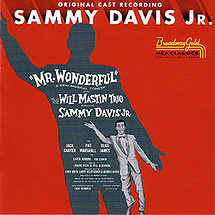
Mr. Wonderful opened at the Broadway Theatre on March 22, 1956 and ran for 383 performances. Jerry Bock, Larry Holofcener and George David Weiss composed the music and lyrics for the musical from which emerged Too Close For Comfort to become a jazz standard.
The Story: Written specifically to showcase the talents of Sammy Davis Jr. the thin plot, focusing on entertainer Charlie Welch’s show business struggles, primarily served as a springboard for an extended version of Davis’s Las Vegas nightclub act. The cast was comprised of Sammy Davis Sr., Will Mastin, Jack Carter, Chita Rivera, Malcolm Lee Beggs and Marilyn Cooper.
Jazz History: The 1930s belonged to popular swing big bands, in which some virtuoso soloists became as famous as the bandleaders. Key figures in developing the “big” jazz band included bandleaders and arrangers Count Basie, Cab Calloway, Jimmy and Tommy Dorsey, Duke Ellington, Benny Goodman, Fletcher Henderson, Earl Hines, Glenn Miller and Artie Shaw.
Swing was also dance music. It was broadcast on the radio ‘live’ nightly across America for many years especially by Hines and his Grand Terrace Cafe Orchestra broadcasting coast-to-coast from Chicago, well placed for ‘live’ time-zones. Although it was a collective sound, swing also offered individual musicians a chance to ‘solo’ and improvise melodic, thematic solos, which could at times be very complex and important music.
Over time, social strictures regarding racial segregation began to relax in America: white bandleaders began to recruit black musicians and black arrangers.
Sponsored By

www.whatissuitetabu.com

Daily Dose Of Jazz…
Kurt Elling was born November 2, 1967 in Chicago, Illinois who first became interested in music through his father and growing up sang in choirs and played various musical instruments. As a child he listened to Tony Bennett, learned counterpoint from the motets of Bach and sang in his high school choir. He played violin, French horn, piano and drums but wasn’t exposed to jazz until he attended college listening to Dave Brubeck, Dexter Gordon, Herbie Hancock and Ella Fitzgerald among others. He went on to pursue a master’s in philosophy of religion but left one credit short to pursue a career as a jazz vocalist.
Kurt began to perform around Chicago in basement clubs and jam sessions, scat singing and improvising his own lyrics while working day jobs to survive. He started listening to the minimalism and emotion of Chet Baker and to Mark Murphy exposing him to the poetry of Jack Kerouac. He recorded a demo in the early 90s that resulted in signing with Blue Note and the subsequent releasing of seven albums with the label.
He has been nominated for nine Grammy Awards, winning Best Vocal Jazz Album for 2009’s Dedicated To You. He often leads the Down Beat critics poll and has been awarded the Prix Billie Holiday from the Académie du Jazz. Elling is a baritone with a four-octave range, a writer, and composer who performs vocalese. Kurt Elling has sung and recorded with Bob Belden, Joanne Brackeen, Oscar Brown, Jr., Orbert Davis, Jon Hendricks and Bob Mintzer to name a few. Since 1995, he has collaborated with pianist, composer, and arranger and musical director Laurence Hobgood, regularly leading a quartet.
More Posts: vocal
Daily Dose Of Jazz…
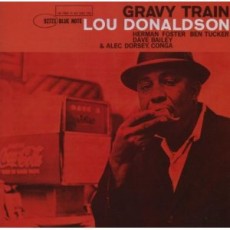
Lou Donaldson was born November 1, 1926 in Baden, North Carolina, the second of four children in a musical family, his mother being a concert pianist and the music director at Baden High School. His mother started him out on the clarinet and once mastering the instrument and his pursuit of a music career was ignited.
At age 15, Lou matriculated to North Carolina A & T College, received a Bachelor’s of Science degree, joined the marching band playing clarinet. Drafted into the US Navy in 1945, he played in the Great Lakes Navy Band playing both clarinet and alto saxophone for dances. Hearing Charlie Parker play, he decided that this was the style of playing he would make his own, having previously playing like Johnny Hodges, Tab Smith or Pete Brown.
Upon return from the military he went back North Carolina A& T College, he played in the Billy Tolles dance band and with the Sabby Lewis Band during the summer months in Boston. Sitting in one night with Illinois Jacquet and hearing him play drummer Poppa Joe Jones told Lou to come to New York. Lou went to work at Minton’s Playhouse, was approached by Alfred Lyons of Blue Note Records and recorded with the Milt Jackson Quartet.
Success came and more records as a leader came with Horace Silver, Clifford Brown, Grant Green, John Patton, Blue Mitchell, Donald Byrd, Horace Parlan, Tommy Turrentine, Al Harewood, George Tucker, Jameel Nasser and Curtis Fuller playing as sidemen. Donaldson went on to have a prolific career playing bebop, hard bop jazz blues and soul jazz, helping fellow musicians get work and get paid, bringing Gene Harris and the 3 Sounds from Washington DC to New York to record with him on the famous album called LD Plus 3.
Awarded an honorary doctorate from North Carolina A&T University and n inducted into the International Jazz Hall of Fame along with countless of honors and awards for his outstanding contributions to jazz, alto saxophonist Lou Donaldson continues to express himself as a composer and bandleader.
More Posts: saxophone
Daily Dose Of Jazz…
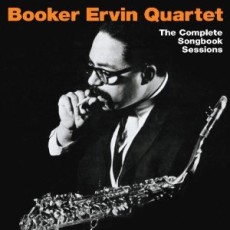
Booker Telleferro Ervin II was born October 31, 1930 in Denison, Texas but didn’t take up the saxophone until he was an adult. After teaching himself tenor saxophone while in the USAF, he moved to the Boston area and studied at Berklee College of Music. His tenor playing was characterized by a strong, tough sound, blues/gospel phrasing and perhaps inspired by growing up in the south. Some thought Coltrane influenced him but it is also thought that they developed their styles independently, and beyond some sheets of sound similarities, they were distinctively different.
Moving to New York, Ervin joined Horace Parlan’s quartet, with whom he recorded “Up & Down” and “Happy Frame of Mind” on Blue Note. He went on to work with Charles Mingus from 1956 to 1963, appearing on “Goodbye Pork Pie Hat” on the album “Mingus Ah Um” and “Wednesday Night Prayer Meeting” on the Blues and Roots session in 1959, as well as the Mingus Mingus Mingus Mingus Mingus recording.
During the Sixties Ervin also led his own quartet, recording for Prestige with ex-Mingus associate pianist Jaki Byard along with bassist Richard Davis and Alan Dawson on drums. Ervin later recorded again on Blue Note and played with pianist Randy Weston.
Tenor saxophonist Booker Ervin had 18 albums as a leader and two dozen as a sideman with Teddy Charles, Andrew Hill, Mal Waldron and others, died of kidney disease in New York City on July 31, 1970 at the age of 39.
More Posts: saxophone