

Daily Dose Of Jazz…
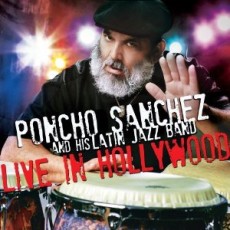
Poncho Sanchez was born October 30, 1951 in Laredo, Texas, the youngest of eleven children, but was reared in Norwalk, California. Exposed to and influenced by Afro-Cuban music (mambo, son, cha-cha, rumba, guaracha, salsa) and bebop jazz, he originally started as a guitarist. Discovering his talent for singing during an R&B band audition, he become the group’s lead vocalist. He later taught himself the flute, drums and timbales before finally deciding to pursue conga playing in high school.
In 1975, Sanchez’s idol, vibraphonist Cal Tjader invited him to perform one set with his band. Seeing the young man’s talent, Tjader hired Sanchez for a week before officially making him a full member of the ensemble. Sanchez played a crucial role as conguero for several years until Tjader’s death in 1982.
Before his death, Tjader suggested to Carl Jefferson, Concord Records founder, to sign Sanchez and his soon-to-be-formed group under the Concord Picante label. Tjader’s wishes were honored, and the first two records were composed and arranged by long-time Tjader collaborator Clare Fischer. Poncho produced 19 albums for the label and garnered a Grammy for his “Latin Soul” album.
He has played with Mongo Santamaria, Hugh Masekela and a host of jazz and Latin musicians and vocalists to numerous to name along with the iconic funk band Tower of Power on his “Do It” project. Poncho Sanchez is respected as one of the top percussionists of our time and continues to perform worldwide.
More Posts: conga,percussion
Daily Dose Of Jazz…
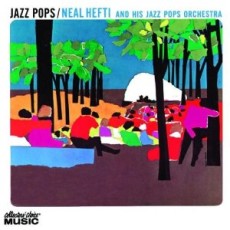
Neal Hefti was born on October 29, 1922 in Hastings, Nebraska, outside Omaha and was a child of the jazz age. His mother, a music teacher, started piano lessons at the age of 3, becoming well versed in theory and harmony by the time he took up the trumpet at 11. He was already writing arrangements, having taught himself by trial and error in high school and was supplying local dance bands with music well before he graduated. After winning several school prizes, he was to start making a living as a jazz trumpeter in the big bands of Charlie Barnet and Charlie Spivak.
After travelling to California with Spivak to make a film, Hefti stayed on the West Coast, joined Woody Herman’s band as a trumpeter in 1944 and his arranging began to take precedence over his playing. Hefti married, moved back to New York and began writing in every genre and for all sizes of ensembles, becoming adept at using small forces to create a big sound. He arranged for Count Basie both in octet and big band configurations making Neal became one of his principal writers. He went on to write numerous compositions for Harry James in the late 40s and 50s designed to feature the leader’s trumpet and the band’s star drummer Buddy Rich.
Hefti fronted his own band in the Fifties, contributed to some of Frank Sinatra’s most popular albums, including “Frank Sinatra and Swinging Brass”, which he also produced. From the early 1960s onwards, he was increasingly involved in the world of films and television, winning a Grammy award for his Batman theme. Hefti was a brilliant composer and arranger who created the scores for many other television shows and films, notably the two Neil Simon movies The Odd Couple and Barefoot in the Park. His score for Harlow included the song “Girl Talk” that has become a jazz standard.
However, in 1978 after his wife’s passing, he ceased to write and record new music. Nevertheless, because Basie continued to commission other writers to replicate his style, his effect on big band arranging and on film scores remained extremely influential. Trumpeter, composer, songwriter and arranger Neal Hefti, who contributed to the genres of swing and big band along with scores for the film and television industries, passed away in Toluca Lake, California on October 11, 2008.
Daily Dose Of Jazz…
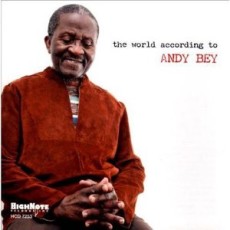
Andrew W. Bey was born October 28, 1939 in Newark, New Jersey. Although he received piano and singing lessons later on, he began playing by ear at the age of three. In the early 50s Andy got his initial professional exposure working on a television show “Startime” with Connie Francis and sang for Louis Jordan. He went on to form a trio with sisters Salome and Geraldine called “Andy and The Bey Sisters”. They recorded various sides and released two albums on the Prestige label and one on RCA. The group parted in 1965.
In the Seventies he worked with the Thad Jones/Mel Lewis Orchestra, collaborated with musicians like Stanley Clarke and also did notable work with Horace Silver and Gary Bartz. Later he recorded an album titled “Experience And Judgment” which had Indian influences. After that period he returned to hard bop and also recorded covers of music by non-jazz musicians.
In 1994, openly gay, Andy was diagnosed HIV-positive, but as of yet it has not interrupted his career. Colleague Herb Jordan assisted him with a resurgence of his recording career with “Ballads, Blues, & Bey” in 1996, returning him to prominence. Since then he has released five additional albums with his latest 2013 offerings titled “Chillin’ With Andy Bey” and “World According To Andy Bey”. Vocalist and pianist Andy Bey continues to perform, record and tour.
The Jazz Voyager
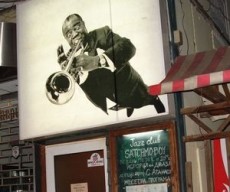
Satchmo Jazz Club: 34 Stamboliiski Blvd, Sofia, Bulgaria / Cell Phone Reservations: +359 88 827 74 09 Located in the center of Sofia where you can enjoy jazz with your friends while having a bottle of good old Bulgarian red wine. The service is good and there are different bands playing on weekends until 1:00am.
Daily Dose Of Jazz…
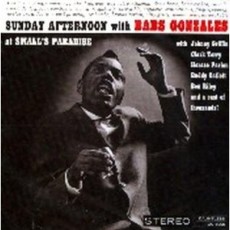
Babs Gonzales was born Lee Brown on October 27, 1919 in Newark, New Jersey and he and his brothers were all called Babs. He studied piano at a young age and learned to play drums. He sang in clubs; wore a turban in Hollywood in the late 1940s, calling himself Ram Singh; worked as a chauffeur for Errol Flynn; called himself Ricardo Gonzales (Mexican rather than ‘Negro) so as to get a room in a good hotel.
Gonzales was a pioneer in the scat vocalese style who did what he could to popularize bop. He had stints with Charlie Barnet and Lionel Hampton’s big bands, and then led his own group Three Bips & a Bop from 1946 to1949, recording for Blue Note during 1947- 1949, including the earliest version of “Oop-Pop-A-Da”, later covered by Dizzy Gillespie. Among his sidemen on these dates were Tadd Dameron, Tony Scott, Roy Haynes, James Moody, J.J. Johnson, Julius Watkins, Art Pepper, Wynton Kelly, Don Redman and Sonny Rollins making his recording debut.
When Capitol Records decided to flirt with bop around 1950, Babs was voicing the sessions. He worked with James Moody; recorded with Jimmy Smith, Johnny Griffin, and Bennie Green, who was one of the first Americans to perform at Ronnie Scott’s club in London as early as 1962. Spending a lot of time in Europe Babs was considered quite a colorful jazz personality there. A hard-working promoter of jazz, he also published three autobiographies; “I Paid My Dues — Good Times”, “No Bread” and “Movin’ On Down De Line”.
Babs Gonzales, who used his voice as a musical instrument incorporating slang, strange and funny new words in rhythmically complex phrases died on January 23, 1980. He would later become more of a cult figure, leaving a recorded legacy that is considered collector’s items for the die-hard bop aficionados. Though his place in jazz history is often blurred, he was present during the bop revolution and was ever the consummate hipster.
More Posts: vocal