

Daily Dose Of Jazz…
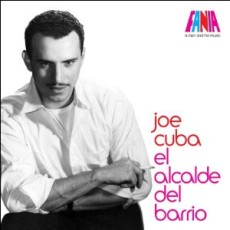
Joe Cuba was born Gilberto Miguel Calderon to Puerto Rican parents on April 22, 1931 in Spanish Harlem in New York City. Playing in his father’s organized stickball club “the Devils”, Cuba broke his leg and his attention shifted to the conga. Practicing every free moment between school, after graduating from high school he joined a band.
In 1950, when he was 19 years old, he played for J. Panama and also for a group called La Alfarona X. The group soon disbanding, Cuba enrolled in college to study law. While at college he attended a concert in which Tito Puente performed. He went up to Tito and introduced himself as a student and fan and soon they developed what was to become a lifetime friendship. This event motivated Cuba to organize his own band and in 1954, his agent recommended that he change the band’s name from the Jose Calderon Sextet to the Joe Cuba Sextet, making their debut at the Stardust Ballroom.
In 1962, Cuba recorded “To Be With You” with the vocals of Cheo Feliciano and Jimmy Sabater, Sr. The band became popular in the New York Latin community. The lyrics to Cuba’s music used a mixture of Spanish and English, becoming an important part of the Nuyorican Movement.
In 1965, the Sextet got their first crossover hit with the Latin and soul fusion of “El Pito” (I Never Go Back To Georgia) a chant taken from Dizzy Gillespie’s intro to the seminal Afro-Cuban tune, “Manteca”. Sabater later revealed, “None of them had ever been to Georgia.
Along with fellow Nuyorican artists such as Ray Barretto and Richie Ray, Cuba was at the forefront of the developing Latin soul sound in New York, merging American R&B styles with Afro-Cuban instrumentation. Cuba was one of the key architects behind the emerging Latin Boogaloo sound, which became a popular and influential Latin style in the latter half of the 1960s.
By 1966, his band which included timbales, congas, bongos, bass, vibraphones and piano among its musical instruments scored a U.S. “hit” on the National Hit Parade List with the song “Bang Bang”, kicking off the popularity of the boogaloo. He also had a Billboard #1 hit that same year with “Sock It To Me Baby” .
Inducted into the International Latin Music Hall of Fame in 1999, Joe was named Grand Marshall of the Puerto Rican Day Parade celebrated in Yonkers, New York in 2004; and was also the director of the Museum of La Salsa, located in Spanish Harlem, Manhattan, New York.
Joe Cuba, conga player and Father of Latin Boogaloo was hospitalized for a persistent bacterial infection and passed away on February 15, 2009 in New York City, after being removed from life support.
More Posts: conga
Daily Dose of Jazz…
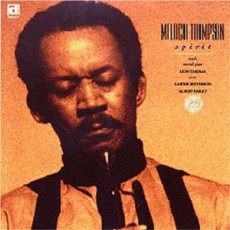
Malachi Richard Thompson was born on August 21, 1949 in Princeton, Kentucky and moved to Chicago as a child. He credited his interest in the trumpet to hearing Count Basie’s band at the Regal Theatre when he was 11 years old. Malachi worked in the rhythm and blues scene on Chicago’s South Side as a teen and in 1968 he joined the Association for the Advancement of Creative Musicians (AACM), spending some time in the AACM big band. Thompson graduated from Governor’s State University in 1974 with a degree in music composition.
He performed and toured with the Operation Breadbasket Big Band, which was affiliated with the Southern Christian Leadership Conference. He has worked with saxophonists Joe Henderson, Jackie McLean, Frank Foster and Archie Shepp among other musicians while living in New York City. He formed his “Freebop” band in 1978, eventually relocating to Washington, D.C., working with Lester Bowie’s Hot Trumpets Repertory Company and formed Africa Brass, inspired by traditional New Orleans brass bands.
With a goal of preserving the Sutherland Theater on Chicago’s South Side, Thompson founded the Sutherland Community Arts Initiative in 1991, a non-profit corporation, and wrote incidental music for a play about the theater. Diagnosed in 1989 with T-cell lymphoma and learning he had one year to live, Thompson claimed he was healed by radiation and reading about jazz. He died in Chicago from a relapse of his cancer on July 16, 2006.
More Posts: trumpet
Daily Dose Of Jazz…
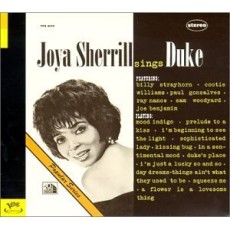
Joya Sherrill was born on August 20, 1924 in Bayonne, New Jersey and originally aspired to be a writer. While still in high school her father arranged for an introduction with Duke Ellington in 1942, aged 17. Six months later she joined the orchestra fronting the band as his vocalist. Leaving briefly to attend Wilberforce University, she returned to the group from 1944 to 1946. She had a hit with Ellington’s tune “I’m Beginning to See the Light”.
Subsequently, she worked as a soloist, performing with Rex Stewart, Ray Nance and others into the 1960s. She returned to Ellington for 1959’s A Drum Is A Woman. She toured the U.S. in 1959 and then took a role in the Broadway show “The Long Dream”. She toured with Benny Goodman in the USSR in 1962 and then returned to sing with Ellington in 1963.
One of the first Blacks to host a television program, from 1970 to 1982 she had a children’s television show, “Time for Joya”, later called “Joya’s Fun School. Although she only taped a few years worth of original episodes, the show would be seen in reruns for twelve years. Late in the 1980s she hosted a children’s show in the Middle East.
Joya Sherrill, jazz vocalist, died of complications from leukemia on June 28, 2010 in Great Neck, New York at the age of 85.
More Posts: vocal
The Jazz Voyager
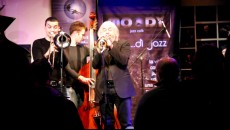
Moody Jazz Cafe: Via Nedo Nadi 5., Foggia, Italy / Telephone: 0881/71.14.32 Fax: 0881/71.14.32 / Contact: Nino Antonacci. During the morning this location is a normal cafè but at night it undegoes a magical transformation and becomes a real jazz club.
Daily Dose Of Jazz…
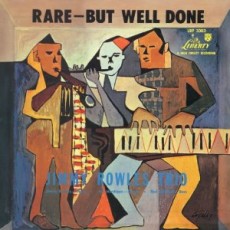
Jimmy Rowles was born James G. Rowles on August 19, 1918 in Spokane, Washington and studied at Gonzaga College. After moving to Los Angeles in 1942, he joined Lester Young’s group and also worked with Benny Goodman, Woody Herman, Les Brown, Tommy Dorsey, Tony Bennett and as a studio musician.
In the 1950s and 1960s, he frequently played behind Billie Holiday and Peggy Lee and in 1973, Rowles settled in New York City, where he performed and/or recorded with Zoot Sims and Stan Getz among others. He joined Ella Fitzgerald for nearly three years in 1981 succeeding Paul Smith as her accompanist first performing with her at the Mocambo nightclub in L.A.’s Hollywood district in late 1956. Jimmy appeared on several recording sessions with her in the 1960s and played on Fitzgerald’s final collaboration with Nelson Riddle, The Best Is Yet To Come in 1982.
In 1983, Jimmy worked with Diana Krall in Los Angeles, developing her playing abilities and encouraged her to add singing to her repertoire. He composed several jazz pieces, the best known being “The Peacocks”; accompanied jazz singer Jeri Brown in 1994 on the only album containing only his own compositions, A Timeless Place.
Pianist Jimmy Rowles, who released a number of albums under his own name and explored various idioms including swing and cool jazz, died from cardiovascular disease in Burbank, Los Angeles County, California, at the age of 78 on May 28, 1996.
More Posts: piano