

Daily Dose Of Jazz…
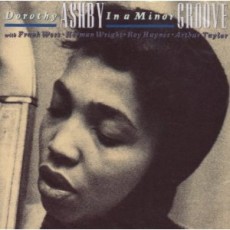
Dorothy Ashby was born Dorothy Jeanne Thompson on August 6, 1932 in Detroit, Michigan growing up around music where her father, guitarist Wiley Thompson, often brought home fellow jazz musicians. As a young girl, Dorothy would provide support and background to their music by playing the piano. She attended Cass Technical High with fellow students Donald Byrd, Gerald Wilson and Kenny Burrell. While in high school she played a number of instruments including the saxophone and string bass before coming upon the harp.
Attending Wayne State University in Detroit, Ashby studied piano and music education; graduated and began playing piano around the Detroit jazz scene. By 1952 she had made the harp her main instrument, and at first her fellow jazz musicians were resistant to the idea of adding the harp into jazz performances. Overcoming their initial resistance and perception of it being an instrument of classical music and also somewhat ethereal in sound, she built support for the jazz harp by organizing free shows and playing at dances and weddings with her trio.
She recorded with Ed Thigpen, Richard Davis, Jimmy Cobb, Frank Wess and others in the late 1950s and early 1960s and had her own radio show in Detroit. Ashby played with Louis Armstrong and Woody Herman, was included in Down Beat magazine’s Best Jazz Performances, and produced Black theater in Detroit by starting a theatrical group with her husband John Ashby providing a training ground for actors like Ernie Hudson,
By the late 1960s, the harpist settled in California breaking into the studio recording system with the help of the soul singer Bill Withers who recommended her to Stevie Wonder playing on the former’s +’Justments and the latter’s “If It’s Magic” in the Seventies. As a result, Dorothy played studio sessions for Dionne Warwick, Diana Ross, Earth, Wind & Fire, and Barry Manilow. She was featured in the song “Come Live With Me” on the soundtrack for the 1967 movie Valley of the Dolls.
Along with Alice Coltrane, Ashby extended the popularization of jazz harp past a novelty, showing how the instrument can be utilized seamlessly as much a bebop instrument as the saxophone. Her skill and creativity is recognized today and her musical legacy is enduring as numerous hip-hop musicians have sampled her music.
Dorothy Ashby, harpist and composer, passed away from cancer on April 13, 1986 in Santa Monica, California.
More Posts: harp
Daily Dose Of Jazz…
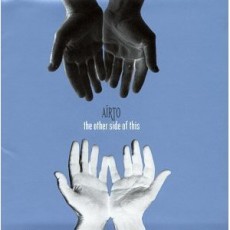
Airto Moreira was born in Itaiopolis, Brazil on August 5, 1941 into a family of folk healers but was raised in Curitiba and Sao Paulo. Showing an extraordinary talent for music at a young age, he became a professional musician at age 13, and his first landmark recording was “Quarteto Novo” with Hermeto Pascoal in 1967. Shortly after, he followed his wife Flora Purim to the U. S., settling in New York City.
Airto began playing regularly with jazz musicians in the city beginning with the bassist Walter Booker and through him began playing with Joe Zawinul, who in turn introduced him to Miles Davis. At this time Miles was mounting the seminal fusion recording Bitches Brew to which Airto became a part of.
After two years with Miles, Airto joined Miles alumni Joe Zawinul, Wayne Shorter and Miroslav Vitous forming Weather Report and recording their self-titled debut album. He left Weather Report and joined Chick Corea’s new band Return To Forever, drumming on the debut Return To Forever and Light As A Feather, commonly regarded as fusion classics.
Airto has played with many of the greatest names in jazz including Cannonball Adderley, Lee Morgan, George Benson, Donald Byrd, Paul Desmond, Dave Holland, Jack DeJohnette, John McLaughlin, Astrud Gilberto, Keith Jarrett and George Duke just to name a few. He also has played with symphonic orchestras and as a solo percussionist, and during live performances often includes a samba solo, where he emulates the sound of an entire band using just a single pandeiro.
In addition to jazz concerts and recordings, Airto has composed and contributed music scores to both television and film including Apocalypse Now and Last Tango In Paris. The drummer and percussionist has taught at UCLA and the California Brazil Camp and collaborated with his wife Flora and P.M. Dawn on “Non-Fiction Burning” for the Aids benefit album Red Hot + Rio produced by the Red Hot Organization.
More Posts: drums,percussion
Daily Dose Of Jazz…
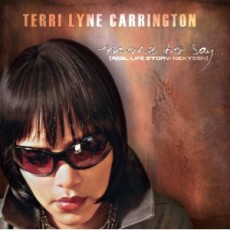
Terri Lyne Carrington was born on August 4, 1965 in Medford, Massachusetts and by age 7 was given a set of drums that had belonged to her grandfather, Matt Carrington, who had played with Fats Waller and Chu Berry. After studying privately for three years, she played her first major performance at the Wichita Jazz Festival with Clark Terry. At age 11 she received a full scholarship to Berklee College of Music and at the ripe age of 12 years old she was profiled on the PBS kids’ biography program “Rebop”.
While attending Berklee College of Music she played with leading musicians such as Kevin Eubanks, Donald Harrison, Greg Osby and others. She also studied under master drum instructor Alan Dawson and made a private recording entitled, TLC and Friends, with Kenny Barron, Buster Williams, George Coleman and her father, Sonny Carrington, before turning 17. Throughout high school Terri traveled across the country doing clinics at various schools and colleges.
In 1983, her mentor Jack DeJohnette encouraged Carrington to move to New York, where she worked with Stan Getz, James Moody, Lester Bowie, Pharoah Sanders, Cassandra Wilson, Dizzy Gillespie, Clark Terry, Al Jarreau, Herbie Hancock, Wayne Shorter, Joe Sample, David Sanborn and too many others to list. The late 80s saw her moving to Los Angeles where she became the house drummer for the Arsenio Hall show and then again near the close of the century with the Sinbad hosted show “Vibe”.
Carrington is a Grammy nominated musician with several recordings as a leader, and has collaborated with Peabo Bryson on “Always Reach For Your Dreams” commissioned for the 1996 Atlanta Olympic Games. She has toured the U.S. and Europe several times performing her own music and backing other musicians such as numerous configurations of Herbie Hancock’s electric and acoustic groups for a decade beginning in 1997.
In 2003 she received an honorary doctorate from Berklee College of Music, was appointed professor in 2007 and serves as Artistic Director of the Berklee Beantown Jazz Festival.
More Posts: drums
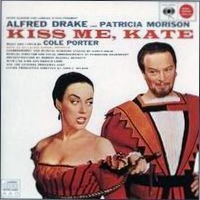
From Broadway To 52nd Street
Kiss Me Kate opened its doors at the New Century Theatre on December 30, 1948 and was the second musical to be lauded as a blockbuster with a run of 1077 performances. Alfred Drake, Patricia Morrison, Lisa Kirk and Harold Lang were the stars of the show, who sung the music composed by Cole Porter, So In Love and From This Moment On, which became jazz standards. The musical won the very first Tony Award for Best Musical presented in 1949.
The Story: While cast members of a revival of Shakespeare’s Taming of the Shrew celebrate another opening, another show, the show’s stars, Fred & Lilli, celebrate their first anniversary of their divorce. They reminisce about better times. Fred sends Lilli a bouquet, leading her to believe he is still in love with her. Misunderstanding leads to argument between the two. Meanwhile, one of the cast members signs Fred’s name to his gambling debt. Goons arrive to collect and Fred convinces them to make Lilli perform. Debt is voided on a technicality. Fred & Lilli make up over the course of the evening and recognize they do still love each other)
Broadway History: In 1880, a stretch of Broadway between Union Square and Madison Square was illuminated by Brush arc lamps, making it among the first electrically lighted streets in the United States. By the 1890s, the portion of Broadway from 23rd Street to 34th Street was so brightly illuminated by electrical advertising signs, that people began calling it “The Great White Way.” When the theater district moved uptown, the name was transferred to the Times Square area.
Sponsored By

www.whatissuitetabu.com
Daily Dose Of Jazz…
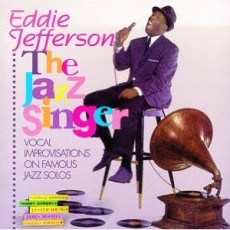
Eddie Jefferson was born on August 3, 1918 in Pittsburgh, Pennsylvania and started his career in show business as a tap dancer. By the late Forties, he was singing and writing lyrics to tunes like “Parker’s Mood” and “I Cover The Waterfront”. He is credited with pioneering vocalese, a musical style in which lyrics are set to an instrumental composition or solo. Perhaps his best-known song is “Moody’s Mood for Love”, though first recorded by King Pleasure, who cited Jefferson as an influence.
One of Jefferson’s most notable recordings “So What” combined the lyrics of artist Christopher Acemandese Hall with the music of Miles Davis to create a masterwork that highlighted his prolific skills, and ability to majestically turn a phrase, into his jazz vocalese.
Jefferson’s last recorded performance was at the Joe Segal’s Jazz Showcase in Chicago and released on video by Rhapsody Films. He shared the stand with fellow bandleader and alto saxophonist Richie Cole. The performance was part of a tour that Jefferson and Cole led together that took them to their opening night in Detroit at the legendary Baker’s Keyboard Lounge, a jazz club built in the 1930’s whose stage graced musicians from the genre as diverse as Dexter Gordon and Sonny Stitt.
Vocalist Eddie Jefferson was shot and killed while leaving Baker’s on May 8, 1979 by a suspected disgruntled dancer who had been fired by Jefferson. She was later acquitted of the murder charge. He was 60. A previously unreleased 1976 live album, Eddie Jefferson at Ali’s Alley, with drummer Rashied Ali, was finally posthumously released in 2009.
More Posts: vocal