

Daily Dose Of Jazz…
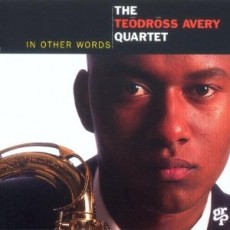
Teodross Avery was born on July 2, 1973 and grew up in Oakland and Vacaville, California. Exposed to a wide range of music by his parents, at ten he began his training with classical guitar. However after hearing Coltrane’s Giant Steps he switched to saxophone and it was Wynton Marsalis who bought him a saxophone as a testament to his young promise. At 17 he won a full scholarship to Berklee College of Music.
Two years into Berklee the young saxophonist was heard by Carl Griffin of GRP/Impulse who signed him at age 19, launching his first album In Other Words to critical acclaim. This brought to national attention and demand by the likes of Aretha Franklin and Ramsey Lewis among others. Graduating in 1995 he moved to New York, landed a performance spot in the film Love Jones, released his sophomore project My Generation and worked with Dee Dee Bridgewater, Roy Hargrove, Leela James, Roy Ayers, Mos Def, and Betty Carter. By the end of the decade he was touring with Lauryn Hill and Matchbox Twenty
As a composer and producer, Teo has collaborated on such feature films as Beauty Shop and Brown Sugar, the documentary The N Word, has written music for Amy Winehouse, and appeared on numerous television shows like American Idol, Ellen Degeneres, Saturday Night Live and others. He has been a part of Grammy winning recordings, and recipient of the Advancement In The Arts Clifford Brown/Stan Getz Fellowship and the Sony Innovator Award. With five albums as a leader and several more as a sideman, saxophonist Teodross Avery continues to perform, compose, tour and record.

More Posts: saxophone

Daily Dose Of Jazz…
Alvino Rey was born Alvin McBurney on July 1, 1908 in Oakland, California but grew up in Cleveland, Ohio. Showing very early signs of his mechanical and musical aptitude, he built his first radio at the age of 8, becoming one of the youngest licensed ham operators in the country. Received a banjo at 10, he began studying guitar at age 12 and by 15 he invented an electrical amplifier for the guitar.
In 1927, Rey played banjo with Cleveland bandleader Ev Jones while still in high school. After graduation Rey went to New York and signed with Phil Spitalny Orchestra, playing electric guitar. He changed his name to Alvino Rey to coincide with the Latin music craze in the late Twenties.
Two years later he was in California playing with Horace Heidt in San Francisco. From 1932 to 1939, Alvino played steel and Spanish guitar and in Horace Heidt and His Musical Knights, pioneering the instrument, as well as becoming known for his unique sound and one of the best-known and best-paid sidemen in the country,
Rey formed his own group with the King Sisters and Frank DeVol, that became the Mutual Broadcasting house band that had Johnny Mandel, Neal Hefti, Mel Lewis, Al Cohn, Zoot Sims playing and Nelson Riddle, Billy May and Ray Conniff arranging among others.
Alvino performed well into his eighties after moving to Salt Lake City, Utah and retired from music in 1994 but retained his interests in music and electronics into his mid-nineties. Alvino Rey, swing era musician, pioneer and father of the pedal steel guitar, passed away on February 2, 2004.

More Posts: guitar
Daily Dose Of Jazz…
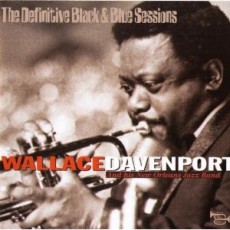
Wallace Foster Davenport was born on June 30, 1925 in New Orleans, Louisiana. He started on trumpet at age 13 with The Young Tuxedo Brass Band. In 1941 he played with Papa Celestin before leaving New Orleans to serve in the Navy. Returning home after WWII, Wallace easily transitioned to bop and swing with various bands, recording with Roy Brown and touring Europe and the U.S. with Lionel Hampton and recording with Mezz Mezzrow in 1950s Paris.
Davenport played and recorded with Count Basie in the mid 60s, toured with Ray Charles and Lloyd Price but by the end of the decade returned to traditional jazz, releasing albums on his own label My Jazz from 1971-76. He recorded again in Europe with George Wein in ’74, with Panama Francis and Arnett Cobb in 1976, reunited with Hampton and recorded with Earl Hines this same year.
In the eighties, Davenport worked with both traditional units as The Alliance Hall Dixieland Band and gospel groups like The Zion Harmonizers and Aline White; and backed vocalists Sammy Davis Jr. and Frank Sinatra. He routinely went on impromptu tours in Asia and Europe, once played expressly for the Norway King Olav V, played regularly at the New Orleans Jazz & Heritage Festival and received numerous awards and accolades for his musical contributions. Trumpeter Wallace Davenport died in New Orleans, Louisiana, at 78 years of age on March 18, 2004. He was one of the few 1930s traditional trumpeters able to branch out into bop and swing.

More Posts: trumpet
Daily Dose Of Jazz…
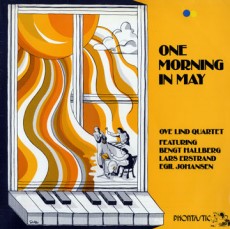
Ove Lind was born Nils Ove Lind on June 29, 1926 in Stockholm, Sweden who learned to play the clarinet in his youth. He worked as a professional musician from 1946 playing with the Simon Brehm Orchestra in 1949 and followed with Thore Swanerud, Charlie Norman and the sextet Swinging Swedes from 1952-54.
In 1954 he created the Hallberg Almstedt-Lind Quartet with others Gunnar Almstedt and Bengt Hallberg that played swing in Benny Goodman’s spirit. During the 1950s, Lind is also an arranger and studio musician on the record label Metronome.
1963 he formed his own orchestra and became, along with vibraphone player Lars Erstrand a key figure in the revival of swing music that came to be called happy jazz. As of 1968 it has been the music featured at the jazz pub Stampen in Stockholm’s Old Town. Lind would go on to record and perform in trio and quartet combo configurations.
Ove Lind, clarinetist, bandleader, composer and arranger, passed way on April 16, 1991 in Haninge, Sweden.

More Posts: clarinet
Daily Dose Of Jazz…
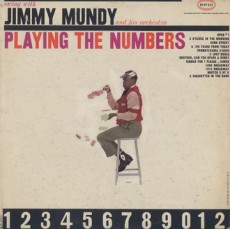
Jimmy Mundy was born James Mundy in Cincinnati, Ohio on June 28, 1907. He learned to play the saxophone as a child but gained his arranging skills in his early twenties playing in the local bands of Erskine Tate, Tommy Miles and Carroll Dickerson.
In 1932 he sat in the saxophone chair of the Earl Hines band for four years, but swiftly developing a reputation as an arranger. Arranging a couple of tunes for Claude Hopkins in 1932, it was after selling one of his arrangements to Benny Goodman in 1935 that Mundy was hired him away from Hines, becoming Goodman’s staff arranger.
Mundy was also a significant supplier of arrangements to Count Basie from about 1940 to 1947, as well as writing for Gene Krupa, Paul Whiteman, Dizzy Gillespie, Charlie Spivak, Harry James and many others. He briefly led his own band in 1939, but after WWII he returned to arranging for Basie, James, and others.
Jimmy wrote the score to the 1955 musical “The Vamp” that starred Carol Channing. The 1957 musical “Livin’ The Life” and the 2010 dance revue “Come Fly Away” also had some of his music.
In 1959, a move to Paris had Mundy as the musical director for Barclay Records but he returned to the U.S. in the Sixties. He continued an active career as a writer well into the 1970s. He recorded three albums as a leader with his last “Fiesta In Brass” the year before his death. On April 24, 2003, tenor saxophonist, arranger and composer Jimmy Mundy passed away.
More Posts: saxophone