

Daily Dose Of Jazz…
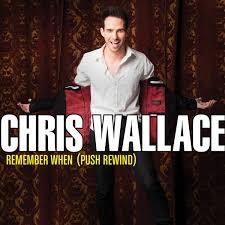
Chris Wallace was born on August 9, 1971 in Regina, Saskatchewan. A self taught drummer he rose to professional status through relentless self study. As he developed as a musician he began to add jazz music to his already large repertoire of pop, rock, r&b and funk. He moved to New York City and studied with drum clinician and educator Dom Famularo.
In the late 90s he relocated to the United Kingdom and became a central figure in the jazz scene in Scotland. He put together two trios, NeWt which was awarded the 2012 Scottish Jazz Ensemble, and Breach, and he formed a quartet named Loose Grip that released the album Looking Glass. Wallace has appeared with countless international jazz musicians as a sideman.
Becoming more active on the jazz scene, he began performing with many of the nation’s top players such as Graeme Stephen, Paul Harrison, Phil Bancroft, Steve Hamilton, Kevin Mackenzie, Mario Caribe and many others. As a sideman he performed with international artists such as Jamie Oehlers, Jim Mullen, Silke Eberhard, Alan Barnes, Louis Durra, Damon Brown, Ulf Wakenius, Anders Bergkrantz and others.
Chris has backed many singers as well including Lady Rizo, Ali McGregor, Julienne Taylor, Lillian Boutee, Niki King and Holly Penfield. Not limiting himself to jazz, the rock field has Chris sharing stages across Europe with bands such as Asia, King Crimson, Uriah Heep, Saga and many others. He has performed with world class cabaret artists in the UK and has toured Australia twice.
As an educator he has a long teaching history as well, with many years of private students of all ages under his belt. More formally, he was head drum tutor at Stevenson College in Edinburgh, Scotland for three years beginning in 2009.
Drummer Chris Wallace, now based in Toronto, Canada, continues to perform and record.

More Posts: bandleader,drums,history,instrumental,jazz,music
The Jazz Voyager
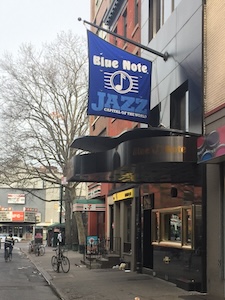
From the City by the Bay to the Big Apple to Greenwich Village that is home to some of the best jazz clubs in the city. And this week the Jazz Voyager is heading to this part of the city that never sleeps to catch a set at the Blue Note. The intimate 250 seat venue has been hosting the biggest names in jazz since its humble beginnings in 1981.
Alto saxophonist Gary Bartz, NEA Jazz Master and professor of saxophone and jazz performance at Oberlin Conservatory takes off a few days from teaching to hit the stage this week for four nights, Thursday through Sunday. Since the 1960s he has held tenure with Max Roach, Charles Mingus, Art Blakey, and Miles Davis. What he will bring to this engagement is something this Jazz Voyager is anticipating.
The venue is located at 131 W 3rd St, New York, NY 10012. For more information visit https://www.bluenotejazz.com/nyc.

More Posts: adventure,club,flute,genius,jazz,music,preserving,saxophone,travel
Daily Dose Of Jazz…
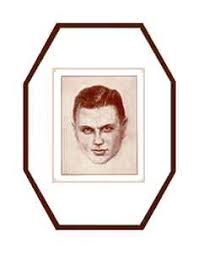
Peter Packay was born Pierre Paquet on August 8, 1904 in Brussels, Belgium and lived with his family in China for part of his childhood, but returned to Belgium in 1912. As a teenager he was crippled in one arm by an accident, but decided to learn to play trumpet anyway at age 20, joining the Varsity Ramblers.
He co-founded a band called Red Beans with David Bee and served as its principal composer of originals. Bee left the group and was replaced by Robert De Kers, and Packay remained its leader until its dissolution in 1929. In the 1930s he formed another group, Packay’s Swing Academy, which played with Coleman Hawkins among others. He also did arrangements for bandleader Billy Arnold.
As a composer, Packay’s works included Alabama Mamma, The Blue Duke, Dixie Melody, and Lullaby for a Mexican Alligator. Following World War II he gave up performance to concentrate on composition and arrangement for songs like Jazz in the Rain, One Day and Grey Skys.
Trumpeter, arranger, and composer Peter Packay died on December 26, 1965 in Westende, Flanders, Belgium.
More Posts: bandleader,history,instrumental,jazz,music,trumpet
Daily Dose Of Jazz…
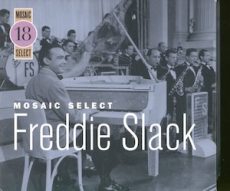
Frederick Charles Slack was born on August 7, 1910 in Westby, Wisconsin and learned to play drums as a boy. He later took up the xylophone and at the age of 13 he changed to the piano. He studied with a local teacher throughout high school and at the age of 17, he moved with his parents to Chicago, Illinois where he continued his musical training.
Meeting clarinetist Rosy McHargue gave him the opportunity to accompany her to hear Bix Beiderbecke and Earl Hines. His first job was with Johnny Tobin before moving to Los Angeles, California where he worked with Henry Halstead, Earl Burtnett and Lennie Hayton.Then in 1934 he joined Ben Pollack.
He went on to play with the Jimmy Dorsey Band in the 1930s and was a charter member of the Will Bradley Orchestra when it formed in 1939. Known to bandmates as Daddy Slack, he played the piano solo on Bradley’s recording of Beat Me Daddy, Eight to the Bar, one of the early white boogie-woogie hits and a classic of the big band era.
Forming his own band in 1942 he signed with the newly founded Capitol Records and recorded three songs at his third recording session. His recording of Cow Cow Boogie was sung by the 17-year-old Ella Mae Morse and was Capitol’s first gold single. Slack continued to record some 80 tracks with Capitol until 1950.
Slack also recorded with Big Joe Turner, Johnny Mercer, Margaret Whiting and Lisa Morrow. He has been mentioned in song, co-wrote the 1945 classic The House of Blue Lights, first recorded with singer Ella Mae Morse.
Swing and boogie-woogie pianist and bandleader Freddie Slack was found dead in his bedroom in Hollywood, Los Angeles, California, from undetermined causes on August 10, 1965.
More Posts: bandleader,instrumental,jazz,music,piano
Jazz Poems
THE JOURNEY
Miles was waiting on the dock,his trumpet in a paper bag.
Lady was cold—
wind lashed the gardenias
I stole for her hair.
We were shabby, the three of us.
No one was coming so I started to row.
It was hard going—
stagnant, meandering…
The city moaned and smoldered.
Tin cans on the banks like shackles…
To be discovered, in the open…
But Miles took out his horn
and played.
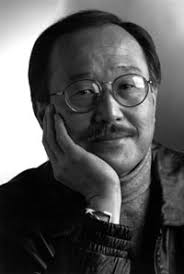
Lady sang. A slow traditional blues. The current caught us— horn, voice, oar stroking water… I don’t know how long we floated— our craft so full of music, the night so full of stars. When I awoke we were entering an ocean, sun low on water warm as a throat, gold as a trumpet. We wept. Then soared in a spiritual. Never have I been so happy. LAWSON FUSAO INADA
More Posts: book,classic,collectible,history,jazz,library,poet