

Daily Dose Of Jazz…
Eggy Ley was born Derek William Ley on November 4, 1928 in London, England and first played drums and boogie-woogie piano. During his military service in the Royal Air Force he discovered and began playing the soprano saxophone.
In 1952 he played with Mick Collier’s Chicago Rhythm Kings followed by stints with Eric Silk and Stan Sowden. Then he put together his own Trad-Jazz band, which received a long guest appearance at the New Orleans Bar in Hamburg, Germany in 1955. Eggy kept the band going throughout Germany and Scandinavia until 1962, and recorded several records, with Benny Waters and for different labels, of which the Blues for St. Pauli became a hit in Germany.
Playing regularly with his band in London, Ley also produced for Radio Luxembourg and between 1969 and 1983 he produced for the British Forces Broadcasting Service. During the 1970s he co-directed the band Jazz Legend with Hugh Rainey and also recorded together with Cy Laurie.
In 1982, he founded his band Hot Shots, ran the Jazzin’ Around newspaper and toured overseas before emigrating to Canada in the late 1980s. Soprano and alto saxophonist Eggy Ley, considered one of the first British soprano saxophonists in jazz, passed away as a result of a heart attack on December 20, 1995 in Delta, British Columbia, Canada.

Daily Dose Of Jazz…
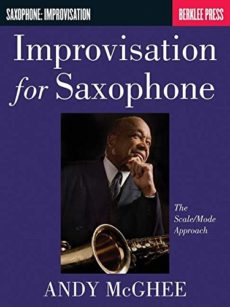
Andy McGhee was born on November 3, 1927 in Wilmington, North Carolina. Graduating from the New England Conservatory in 1949 the saxophonist worked for a short time with trumpeter Roy Eldridge and local Boston musician Fat Man Robinson. After marrying in 1950, McGhee served in the Army in Korea and at Fort Dix, New Jersey where he played in an Army band and gave lessons to other musicians.
From 1957 to 1963 McGhee worked with Lionel Hampton’s band, touring the United States, Europe, and the Far East. During his tenure with Hampton, he composed the song, McGhee, that was recorded on The Many Sides of Lionel Hampton. He went on to work with Woody Herman from 1963 to 1966.
Joining the faculty of Berklee College of Music in 1966, Andy taught saxophonists Bill Pierce, Javon Jackson, Donald Harrison, Antonio Hart, Sam Newsome, Richie Cole, Greg Osby, and Ralph Moore. While devoting his time to teaching, McGhee wrote the instruction books Improvisation for Saxophone and Flute: The Scale/Mode Approach and Modal Strategies for Saxophone.
In the late Seventies he teamed again with Lionel Hampton and the Lionel Hampton Alumni Band as part of The Boston Globe Jazz Festival, performing with Bob Wilber, Ernie Wilkins, Teddy Wilson, Alan Dawson and Terri Lynne Carrington. and Hampton on vibraphone. The early 1990s, saw McGhee touring again with Lionel Hampton as member of the Golden Men of Jazz tour with Harry “Sweets” Edison, Clark Terry, Benny Bailey, Al Grey, and Benny Golson.
In 2006 he was awarded an Honorary Doctorate of Music from Berklee College of Music. On October 12, 2017, tenor saxophonist and educator Andy McGhee passed away at the age of 89.

More Posts: saxophone
Daily Dose Of Jazz…
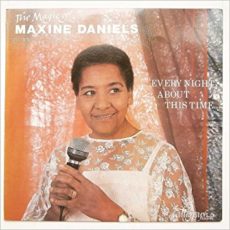
Maxine Daniels was born Gladys Lynch in Stepney, London on November 2, 1930, one of thirteen children and the elder sister of entertainer and singer Kenny Lynch. She first received recognition as a singer when she won a local talent contest, at the age of 14, in a Stepney cinema. That local recognition lead to a first singing job with a semi-professional band led by a Canning Town grocer. She then won another talent competition organized by the Daily Sketch and sponsored by bandleader Ted Heath.
A two year residency followed from 1954 to 1956 with bandleader Denny Boyce at The Orchid Room in Purley. At Boyce’s suggestion she changed her stage name and through their regular Radio Luxembourg broadcasts she gained a wider audience and the opportunity to record for the Oriole label.
Over the course of her career vocalist Maxine Daniels recorded eleven albums, and worked with Humphrey Lyttelton. She passed away on October 20, 2003 in Romford, England at the age of 72.
More Posts: vocal

Review: Dangerus & The Freedom Fighters
Dangerus was born on March 26, 1990 in Uster, Switzerland to a Black American father and a Serbian mother, and the singer, lyricist, composer and bandleader grew up listening to rock, jazz, reggae and classical music that his father played in the house. In grammar school he sang songs in music class and sat at the feet of his father as he composed, often using melodies in his songs that his son would hum. These experiences became the foundation of his musical education and now this multi-faceted singer is adding piano to his musical arsenal.
In 2014 forming his band, The Freedom Fighters, he has brought together a multicultural and international sextet of accomplished musicians featuring Brazilian producer, arranger and keyboardist Julinho Martins, drummer Herby Casseley from Jamaica, jazz bassist Merlin Mathews of Portuguese and Canadian heritage, Chineyem Okolo, a guitarist from Nigeria and Severin Blaser, a Swiss jazz saxophonist.
Why Dangerus, is an often asked question when interviewed. The answer is quite simple. Break down his name to Danger and Us, you will understand his dis-ease. He believes his generation, like every generation before him, is in danger of inheriting a world that will not sustain them and is doing nothing to correct the situation. Poverty, oppression, hunger, genocide, the ecology and their very existence is in danger of implosion. This dynamic group of Freedom Fighters are socially and politically conscious of the destructive system that is ultimately threatening humanity. They also see themselves as one instrument of change and a danger to that very system of oppression and slavery. They are warriors of the light and music is their weapon, operating in the footsteps of Fela Kuti.
Their logo is a lion, known globally as the king of the jungle, the protector of the pride. His job, like the logo, is black and white. There is no grey area, but there are those who seek to undermine humanity for selfish gains, tending to operate in the grey between dawn and sunrise, dusk and sunset. In those cases, these warriors see themselves as guardians of their urban concrete jungle and the earth that has given them birth.
However, this is much more than a picture of a lion as it has symbolism well beyond. Look closely and one will see the lion’s teeth are his lethal weapons, represented by keyboards and guitars, the tongue is a road, implying the way of one’s journey. The nose and whiskers are two arms chained together, depicting unity, and holding the barb-wires of oppression that are his whiskers. The eyes are fire and they are the force to be unleashed upon the world through their music. The mane let’s all know they are descendants of royalty and their bearing is regal..
Never straying far from his cultural roots or the diaspora, Dangerus delivers his songs with a fervor and passion, inspired by the trials and triumphs of today’s world. If you listen closely you will hear the influences of reggae with jazz, ska, bossa nova and samba, in what can only be described as an homage to Bob Marley, Black Uhuru, Peter Tosh, Jimmy Cliff and others who spoke of love, beauty, strength, politics and freedom. Dangerus and the Freedom Fighters continue this tradition, standing on the shoulders of those musical ancestors.
It is evident that this poet is contemplative and compassionate in his search for answers about an unstable world not of his making that will be left for his generation. Those of us who have marched the decades of unrest and have witnessed the beauty of the world, this is familiar territory celebrating the joy and pain of love and life. We understand, it is their generation’s turn to shout at the consciousness of society the gravity of their situation. Highly recommended listening but only if you are ready to expand your mind and face your convictions.
carl anthony | notorious jazz / november 29, 2017
Give A Gift Of Jazz ~ Share 
#preserving genius
More Posts: bandleader,composer,history,instrumental,jazz,music,vocal
Daily Dose Of Jazz…
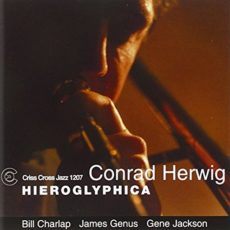
Conrad Herwig was born Lee Conrad Herwig III on November 1, 1959 in Lawton, Oklahoma. He graduated from North Texas State University in Denton, Texas, where he performed in the One O’Clock Lab Band, attended Goddard College and Queens College, CUNY.
He began his career in Clark Terry’s band in the early 1980s and has gone on to be a featured member in the Joe Henderson Sextet, Tom Harrell’s Septet and Big Band, and the Joe Lovano Nonet and featured as a soloist on the latter’s Grammy Award winning 52nd Street Themes.
He performs and records with Eddie Palmieri’s La Perfecta II and Afro-Caribbean Jazz Octet, Michel Camilo’s 3+3, the Mingus Big Band (often serving as musical director, and was an arranger on the 2007 Grammy nominated Live at the Tokyo Blue Note, the Jon Faddis Jazz Orchestra, and Jeff “Tain” Watts Family Reunion Band, among many others.
He has recorded several highly acclaimed projects in the Afro-Caribbean jazz genre, including the Grammy nominated albums the Latin Side of Joe Henderson featuring Joe Lovano for Half Note Records, the Latin Side of Wayne Shorter, Another Kind of Blue: The Latin Side of Miles Davis, and, the Latin Side of John Coltrane. Conrad has worked with Paquito D’Rivera, Dave Valentin, Eddie Palmieri, and Randy Brecker. He has been voted No. 1 Jazz Trombonist three times in the Downbeat Jazz Critics’ Poll and nominated for Trombonist of the Year by the Jazz Journalists Association on multiple occasions.
He has conducted master classes, seminars and workshops at hundreds of universities and conservatories around the world and has received performance and teaching grants from the National Endowment for the Arts. Trombonist Conrad Herwig is a professor of jazz trombone, jazz improvisation and jazz composition and arrangement at Rutgers University, was elected to the Board of Directors of the International Trombone Association and continues to compose, perform and record.

More Posts: trombone