Daily Dose Of jazz…
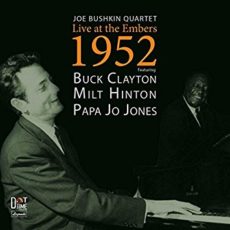
Joe Bushkin was born on November 7, 1916 in New York City and began his career playing trumpet and piano with New York City dance bands. He acquired a lot of experience performing with Frank LaMare’s Band at the Roseland Ballroom in Brooklyn, New York.
In 1935 he joined Bunny Berigan’s band, played with Eddie Condon from 1936 to 1937, and with Max Kaminsky and Joe Marsala, before rejoining Berigan in 1938. He then left to join Muggsy Spanier’s Ragtime Band in 1939. From the late Thirties through to the late 1940s he also recorded with Eddie Condon as well as performing on radio and television. After his World War II service he worked with Louis Armstrong, Bud Freeman and Benny Goodman.
Best-known for his composition Oh! Look at Me Now with John DeVries, composed when he was working in Tommy Dorsey’s band. The song would become Frank Sinatra’s first hit. In his 60s, Bushkin’s semi-retirement was ended by an offer from Bing Crosby for them to tour together in 1976 and 1977. He also appeared on Crosby’s 1975 Christmas TV special with Fred Astaire, performed in a concert series at New York’s St. Regis Hotel in 1984 that celebrated his 50 years in show business.
Pianist Joe Bushkin passed away in Santa Barbara, California on November 3, 2004, three days shy of his 88th birthday, which he had dreamed of celebrating the 88 piano keys.

More Posts: piano
Daily Dose Of Jazz…
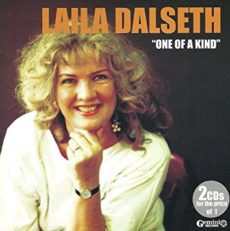
Laila Dalseth was born on November 6, 1940 in Bergen, Norway and after an early debut in her hometown she joined the Oslo jazz scene, and recorded with among others Kjell Karlsen, Egil Kapstad and Helge Hurum’s big band.
Dalseth recording debut in the Seventies was with the Metropol Jazz, participated in Stokstad/Jensen Trad.Band, in a band with Per Borthen, as well as at Teatret Vårtin the play Havhesten through the decade. She has with her own band released Listen Here!, One of a Kind and then Everything I Love, all on the Gemini Records label. Her group, L. D. Quintet consisted of husband Totti Bergh on saxophone, Per Husby on piano, Kåre Garnes on bass and Tom Olstad on drums.
Dalseth was awarded Buddyprisen, and three times was awarded the Spellemannprisen i klassen jazz, for Just Friends 1975, Glad There is You 1978 and Daydreams 1984. She was internationally recognized for the record Time for Love with Red Mitchell and Travelling Light with Al Cohn both in 1986, The Judge and I in 1991 with Milt Hinton, A Woman’s Intuition 1995 with her own sextet featuring Philip Catherine, We Remember You 1986/2003 with Al Cohn, and Everything I Love in 2004. Five of these releases were critically ranked among the Ten best jazz albums of the year» by the American jazz magazine Cadence.
Jazz vocalist Laila Dalseth continues to perform and record at the age of 77.

More Posts: vocal
Requisites
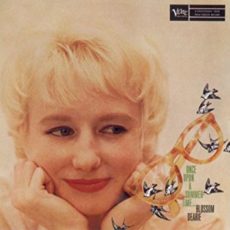
Once Upon A Summertime is an album by Blossom Dearie, recorded and released in 1959 on Verve Records. The third in a series of six albums recorded by the vocalist for the label.
When Norman Granz called and asked Blossom to make another album with Tom Nola, he had Ray Brown playing bass, Mundell Lowe playing guitar, and Ed Thigpen playing drums.e told her she could pick the songs and write the arrangements so how could a girl go wrong? So, by twisting my arm a few times he seemed to persuade her to go ahead with it… even though she says, she resisted stubbornly.
The lineup of compositions are: Tea For Two, The Surrey With the Fringe On Top, Moonlight Saving Time, It Amazes Me, If I Were a Bell, We’re Together, Teach Me Tonight, Once Upon a Summertime, Down With Love, Manhattan, Doop-Doo-De-Doop (A Doodlin’ Song) and Our Love is Here to Stay.

More Posts: collectible,vocal
Daily Dose Of Jazz…
Raul Pineda was born on November 5, 1971 in Havana, Cuba. As a young boy, he scoured his neighborhood for anything that could be used to create drums. He used metal rods driven into the ground to support used cooking oil cans, and formed drumsticks from the branches of orange trees. He was influenced by the local rumbero street bands, and at the urging of his musician grandfather, Nefer Miguel Milanés, he went on to study classical percussion for several years. He then immersed himself in Afro-Cuban music.
By 19, Raul was performing and recording with some of the leading Cuban ensembles and bandleaders, including Sentisis, and pianist Chucho Valdés. Over the next several years, international tours and Grammy-nominated recordings brought Raul to the music world’s attention as one of Cuba’s most influential young drummers. He blends a drum kit with percussion instruments, such as, the left foot cowbell.
Staying busy playing and recording with several bands and artists, since 2000, he has been playing with the Afro-Cuban-jazz-funk-rock band TIZER and with Latin superstar Juan Gabriel. Between the two bands he will have toured Venezuela, Colombia, Mexico, Dubai, Barbados, Aruba, Santiago de Chile, South Africa, Russia and South Korea.
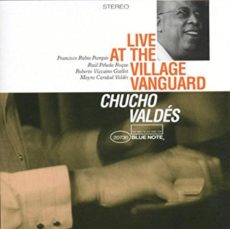
Drummer Raul Pineda has garnered three Grammy nominations and a 2000 Grammy Award for Best Latin Jazz Performance with the Chucho Valdés Quartet album, Live at the Village Vanguard. He continues to perform and record.

More Posts: drums,percussion
Daily Dose Of Jazz…
Eggy Ley was born Derek William Ley on November 4, 1928 in London, England and first played drums and boogie-woogie piano. During his military service in the Royal Air Force he discovered and began playing the soprano saxophone.
In 1952 he played with Mick Collier’s Chicago Rhythm Kings followed by stints with Eric Silk and Stan Sowden. Then he put together his own Trad-Jazz band, which received a long guest appearance at the New Orleans Bar in Hamburg, Germany in 1955. Eggy kept the band going throughout Germany and Scandinavia until 1962, and recorded several records, with Benny Waters and for different labels, of which the Blues for St. Pauli became a hit in Germany.
Playing regularly with his band in London, Ley also produced for Radio Luxembourg and between 1969 and 1983 he produced for the British Forces Broadcasting Service. During the 1970s he co-directed the band Jazz Legend with Hugh Rainey and also recorded together with Cy Laurie.
In 1982, he founded his band Hot Shots, ran the Jazzin’ Around newspaper and toured overseas before emigrating to Canada in the late 1980s. Soprano and alto saxophonist Eggy Ley, considered one of the first British soprano saxophonists in jazz, passed away as a result of a heart attack on December 20, 1995 in Delta, British Columbia, Canada.