


Daily Dose Of Jazz…
Ted Daniel was born June 4, 1943 in Ossining, New York and studied trumpet in elementary school. He began his professional career playing local gigs with his childhood friend, guitarist Sonny Sharrock. He briefly attended Berklee School of Music and Southern Illinois University, before a tour of duty with U.S. Army Bands. After his discharge from the Army, Daniel attended Central State College in Ohio, on a full music scholarship, where he met and studied with Dr. Makanda Ken McIntyre. After a year, Daniel returned to New York City and eventually received a bachelor of music degree in theory and composition from the City College of New York.
Beginning his recording career while studying in Ohio he returned briefly to New York to record Sonny Sharrock’s first album Black Woman. His second recording was with the band Brute Force that he co-led with his brother, Richard. The recording was titled Brute Force on the Embryo label and was produced by Herbie Mann. Since then, Daniel has participated in more than 30 published recordings with such artists as: Archie Shepp, Dewey Redman, Andrew Cyrille, Sam Rivers, Billy Bang, Tatsuya Nakamura and Henry Threadgill.
Daniel has produced three albums under his own name: The Ted Daniel Sextet on Ujamaa Records, Tapestry on Sun Records, and In The Beginning on Altura recordings. This recording features a twelve-piece ensemble including such artist as Oliver Lake, Arthur Blythe, Charles Tyler and David Murray. Eventually this ensemble evolved into a larger group called “Energy”.
As an educator Ted has held workshops at Amherst College, Bennington College, Williams College and the University of Hosei in Tokyo, Japan. He has also conducted a seminar in Madrid, Spain, as well as work in his community conducting summer music workshops for high and college age students.
Daniel has received a NEA compositional grant, was awarded Talent Deserving Wider Recognition from Downbeat Magazine. Presently, trumpeter Ted Daniel is writing and performing with his new group, the International Brass and Membrane Corporation (IBMC).
Sponsored By

Voices From The Community

#preserving genius
More Posts: trumpet
Daily Dose Of Jazz…
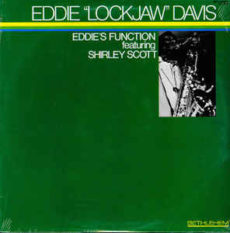
Carl Briggs Pruitt was born on June 3, 1918 in Birmingham, Alabama and began his career as a pianist, but switched to bass in 1937. For a brief time he played around Pittsburgh, Pennsylvania and then went on to work through the Forties with Roy Eldridge, the Jeter-Pillars Orchestra, Lucky Millinder, Maxine Sullivan, Cootie Williams, and Mary Lou Williams.
The 1950s saw Pruitt touring with Earl Hines and the Sauter-Finegan Orchestra, but was mostly active as a sideman and session musician on recordings with Shorty Baker, Arnett Cobb, Eddie “Lockjaw” Davis, Bill Doggett, Wynonie Harris, Bull Moose Jackson, Roland Kirk, George Shearing, Sahib Shihab, and Hal Singer among others.
Pruitt did not perform or record frequently in the 1960s or 1970s, but he did play with Woody Herman at the Montreux Jazz Festival in 1967 and recorded with Ray Nance in 1969. He toured France with Doc Cheatham and Sammy Price in 1975.
Double-bassist Carl Pruitt passed away in June of 1977.
Sponsored By

#preserving genius
More Posts: bass
Daily Dose Of Jazz…
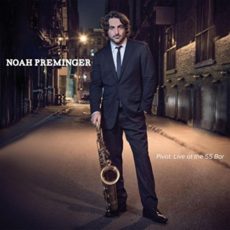
Noah Preminger was born on June 2, 1986 and grew up in Canton, Connecticut. While in high school, he studied with saxophonist Dave Liebman and went on to graduate from the New England Conservatory of Music.
Releasing his debut album Dry Bridge Road, that was a sextet session with guitarist Ben Monder, pianist Frank Kimbrough, trumpeter Russ Johnson, bassist John Hébert, and drummer Ted Poor. Noah’s sophomore album as a leader came three years later in 2011 titled Before the Rain on the Palmetto label and featured a quartet with Kimbrough, Hébert and drummer Matt Wilson. Both albums received critical acclaim from Jazz Review, Hartford Courant, New York Times and DownBeat. Dry Bridge Road was named Debut of the Year in the Village Voice critics poll, making top 10 lists in Stereophile, The Nation and JazzTimes.
Preminger has performed with Billy Hart, Dave Holland, Fred Hersch, Dave Douglas, Victor Lewis, John and Bucky Pizzarelli, Billy Drummond, George Cables, Roscoe Mitchell, Eddie Henderson, Rob Garcia, Andre Matos, Dan Cray and Julian Shore.
Currently based in Brooklyn, saxophonist Noah Preminger has released eight albums since his debut in 2008 and continues to compose, perform and record.
Sponsored By

#preserving genius
More Posts: saxophone

Daily Dose Of Jazz…
Hilaria Kramer was born June 1, 1967 in Frauenfeld, Switzerland and began to play trumpet, when she was ten years old. From 1983, she attended the vocational school department of Jazz school St. Gallen, where she studied under Benny Bailey and Art Lande.
Finished with her studies she then went to Italy and worked with the Claudio Fasoli Quintet, with Gianluigi Trovesi. She has performed with Steve Lacy, Enrico Rava, Joe Henderson, Bob Mover, Sal Nistico, Chet Baker or Sangoma Everett.
In 1988, she led a recording session of her debut album, Hilaria Kramer Quartet and released the following year on the Unit Records label. In 1991, she performed on the TV program Ladies in Jazz with singers like Nina Simone and Carmen McRae.
In the years to follow she has performed with Uli Scherer toured around Europe, has recorded 18 albums, and was awarded the Jazz Prize of the Fondation Suisa for her contributions and her work in various organisations to support Swiss jazz. Trumpeter, composer and band leader Hilaria Kramer continues to perform, record and tour.
Sponsored By

#preserving genius
More Posts: trumpet
Daily Dose Of Jazz…
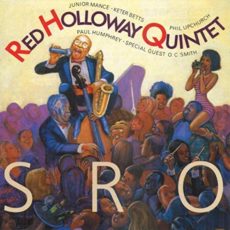
Red Holloway was born James Wesley “Red” Holloway on May 31, 1927 in Helena, Arkansas and started playing banjo and harmonica, switching to tenor saxophone when he was 12 years old. He graduated from DuSable High School] where he had played in the school big band with Johnny Griffin and Eugene Wright. He attended the Conservatory of Music in Chicago, Illinois and then joined the Army when he was 19 and became bandmaster for the U.S. Fifth Army Band.
After completing his military service returned to Chicago and played with Yusef Lateef and Dexter Gordon, among others. In 1948 he joined blues vocalist Roosevelt Sykes, and later played with other rhythm & blues musicians such as Willie Dixon, Junior Parker, and Lloyd Price.
In the 1950s he played in the Chicago area with Billie Holiday, Muddy Waters, Chuck Berry, Ben Webster, Jimmy Rushing, Arthur Prysock, Dakota Staton, Eddie “Cleanhead” Vinson, Wardell Gray, Sonny Rollins, Red Rodney, Lester Young, Joe Williams, Redd Foxx, B.B. King, Bobby Bland, and Aretha Franklin. During this period, he also toured with Sonny Stitt, Memphis Slim and Lionel Hampton. He became a member of the house band for Chance Records in 1952. He subsequently appeared on many recording sessions for the Chicago-based independents Parrot, United and States, and Vee-Jay record labels.
From 1963 to 1966, he was in organist “Brother” Jack McDuff’s band, which also featured a young guitarist, George Benson. In 1974, Holloway recorded The Latest Edition with John Mayall and toured Europe, Japan, Australia and New Zealand. From 1977 to 1982, Holloway worked with Sonny Stitt, recording two albums together, and following Stitt’s death, played and recorded with Clark Terry.
As a leader/co-leader he recorded with Big John Patton, Eric Gale, Shuggie Otis, Horace Parlan, Cedar Walton, Harry “Sweets” Edison, Matthias Bätzel Trio, T.C. Pfeiler, Norman Simmons, Phil Upchurch, O.C. Smith, Plas Johnson, Dr. Lonnie Smith, Melvin Sparks, Sacha Boutros, Henry Johnson, Chris Foreman, Greg Rockingham, Bernhard Pichi Trio
As a sideman he has performed and recorded with Gene Ammons, George Benson, Joe Dukes, Wade Marcus, Joe Williams, Eddie “Cleanhead” Vinson, Carmen McRae, Atle Hammer, Knut Riisnæs, Clark Terry, Freddy Cole, Horace Silver, Junior Mance and Etta James among others.
Saxophonist Red Holloway passed away in Morro Bay, California, aged 84 of a stroke and kidney failure on February 25, 2012, one month after Etta James, with whom he had worked extensively.
Sponsored By

#preserving genius
More Posts: saxophone