

Atlanta Jazz Festival…2017
Tradition takes time and through that time the dream weathers the tests that will one day allow it to stand alone. Tradition is not a task for the faint-hearted but is best relegated to the visionaries who recognize its value and grasp the baton as it is passed.
In Atlanta, the gateway city to the South, the bastion of tradition has long been the Atlanta Jazz Festival, the largest free jazz festival in the country. It is truly the hallmark of legacy heralding the vision of Mayor Maynard Jackson that began in 1974. It took four years of planning before the then Bureau of Cultural Affairs would launch the inaugural festival in 1978. Not without its obstacles, its success established the foundation upon which forty consecutive festivals have presented this music to admiring and adoring fans.
For 40 years, 5 mayors, Maynard Jackson, Andrew Young, Bill Campbell, Shirley Franklin and Kasim Reed, 4 decades of City Council men and women and 7 directors of the Bureau of Cultural Affairs, Robert Lomax, Shirley Franklin, Tom Cullen, Shirley Cooks, Harriet Sanford, Barbara Bowser and Camille Russell Love have kept jazz a vibrant invitation and welcome to the city each year. They have given opportunity to more than a 1000 jazz musicians and vocalists to grace the stages of the Atlanta Jazz Festival before millions of spectators.
Without their staunch support and hard work, the ever-evolving festival would not have been able to give visibility to venues around the city during the 31 Days of Jazz that precedes each Memorial Day weekend festivities. Nor would they have been able to have more than a 100 middle and high school bands compete each spring in the Youth Jazz Band Competition to win a coveted performance spot on the main stage to open each day of the festival.
Over the years without the support over the decades with staff like Michael Lomax, Malcolm Johnson, Joe Jennings, Kole Eaton, Ebon Dooley, Mitchell Feldman, Rob Gibson and John Armwood, festival managers Alonzo Craig and Melissa Laurenceau, project supervisor Nnena Nchege who ran logistics & 31 Days or Valarie Benning Barney responsible for sponsorship & marketing, there wouldn’t be current project coordinator Herman Wilson.
7 photographers have been primarily responsible for documenting festival’s growth: Jim Alexander, Sheila Pree Bright, Michael Reese, Sue Ross, Eric Waters, Julie Yarbrough and Ernest Gregory. With the onset of the internet hundreds more amateur and professional photographers have shared their photos and videos across multiple platforms.
The media has played an important part of getting the message to the people and we recognize radio sponsors WVEE 103FM, WCLK 91.9FM, 94Q Jazz Flavours, WRFG 89.3FM, WJZF, WALR/Kiss 104.1, WABE-PBA, WJZZ 107.5, 790 The Zone, as well as radio personalities Ernest Gregory and perennial emcee, John Armwood, Bobby Jackson, Steve Bowser, Phil Clore, Carl Anthony, H. Johnson, Riva Blue, and Jamal Ahmad among numerous others, who have lent their voice and time volunteering. Print media sponsors have been Creative Loafing, Jazziz, Jazz Times, Atlanta Journal-Constitution, Jezebel Magazine, Atlanta Magazine, Rolling Out, Abyss Jazz Magazine, Upscale Magazine, Atlanta Tribune The Magazine, Southwest Atlanta Magazine, and television sponsors MediaOne, BET on Jazz, WSB TV, Mundo Hispanico, and Comcast.
Last but never the least, we must never forget to give thanks to the thousands of volunteers, aptly dubbed Jazzteers by Nnena Nchege in 2005, who over forty years have unselfishly given their time to insure the success of the festival. Without their help the behind the scenes production activities that make operations run smoothly would not happen. They have are a vital component to each year’s event.
The Atlanta Jazz Festival is the acknowledged largest continuous free jazz event in North America and contributes greatly to the success of the city’s tourism, hospitality and community. Standing alongside all of the men and women who have been proud to have supported this tradition and are currently a part of this annual endeavor, it has been a privilege and an honor to be numbered among this cast.
This 40th year anniversary celebration lineup includes performers who graced the stage the very first year, those who have performed over the years and those who are first time initiates. They are the Pedrito Martinez Group, the Robert Glasper Experiment, the Allan Harris Band, Regina Carter: Simply Ella, Randy Weston’s African Rhythms Quintet, Reńe Marie and Experiment in Truth, Charles Lloyd Sky Trio, Moonchild, Nik West, Nicholas Payton Afro-Caribbean Mixtape, Macy Gray, Little Tybee, Harriet Tubman: The Band, Deva Mahal, Marquis Hill Blacktet, the Miles Davis Electric Band Tribute All Star Jam with Lil’ John Roberts feat. Russell Gunn and Miles Davis band member Mino Cinelu, Dwight Andrews, Joe Jennings & Howard Nicholson’s Life Force, Celebrating Sarah: Kathleen Bertrand & Friends Honor Sarah Vaughan, the Joe Gransden Big Band with Alexandra Jackson, the Ojeda Penn Experience with Jean Carne, Freddy Cole, Frank Houston, Kemba Cofield, Darren English, Cleveland P. Jones, Julie Dexter and Jacob Deaton Duo featuring Rasheeda Ali, Mamaniji Azanyah & Mastery, Russell Gunn & African Drums meets Kebbi Williams’ Wolf Pack and Mausiki Scales & Common Ground featuring Giwayen Mata.
Sponsors & Partners of the 2017 Atlanta Jazz Festival are Wind Creek Casino & Hotel Wetumpka, Resurgens Atlanta, Bank of America, Tito’s Handmade Vodka, City of Atlanta, Publix Supermarket Charities, Marta, Fontis Mountain Spring Water, Lyft, Loews Atlanta Hotel, and Sprouts Farmers Market.
The Official Print partner is Creative Loafing and the Official Radio Partner is WCLK 91.9FM #AJF40

#preserving genius
More Posts: festival,forty,free,history,jazz,music,tradition,years
Daily Dose Of Jazz…
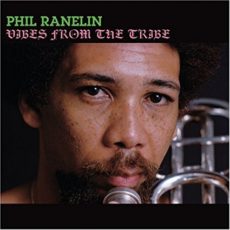
Phil Ranelin was born May 25, 1939 in Indianapolis, Indiana and lived in New York City before moving to Detroit, Michigan in the 1960s. He worked as a session musician on many Motown recordings, including with Stevie Wonder.
In 1971, he and Wendell Harrison formed a group called The Tribe, which was an avant-garde jazz ensemble devoted to black consciousness. Alongside it he co-founded Tribe Records. He released several albums as a leader in the 1970s, and continued with The Tribe project until 1978. Following this, Ranelin worked with Freddie Hubbard, Freddie Redd and the Red Hot Chili Peppers..
Working for the most part locally around Detroit in the following decades, Phil did not find widespread acceptance among jazz aficionados. He did, however, eventually gain the attention of rare groove collectors who became increasingly interested in his work. As a result, Tortoise drummer John McEntire remastered some of his older material and re-released it on Hefty Records. He also recorded on Lifeforce, Wide Hive and Rebirth record labels.
Trombonist Phil Ranelin continues to perform, compose, and record.
Sponsored By
#preserving genius
More Posts: trombone
Daily Dose Of Jazz…
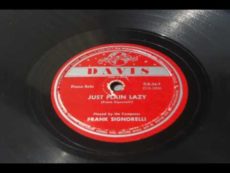
Frank Signorelli was born in New York City on May 24, 1901 and was a founding member of the Original Memphis Five at age sixteen in 191. He went on to join the Original Dixieland Jazz Band briefly in 1921. By 1927 he was playing in Adrian Rollini’s New York ensemble, and subsequently worked with Eddie Lang, Bix Beiderbecke, Matty Malneck and Paul Whiteman.
1935 saw him as a part of Dick Stabile’s All-America Swing Band and from 1936 to ‘38 he played in the revived version of the Original Dixieland Jazz Band. He recorded with Phil Napoleon in 1946 and with Miff Mole in 1958.
As a songwriter, Signorelli composed I’ll Never Be The Same, initially called Little Buttercup by Joe Venuti’s Blue Four, Gypsy that was recorded by Paul Whiteman and his Orchestra, Caprice Futuristic, Evening, Anything, Bass Ale Blues, Great White Way Blues, Park Avenue Fantasy, Sioux City Sue, Shufflin’ Mose, Stairway to the Stars and A Blues Serenade which was recorded by Signorelli in 1926, Glenn Miller and his Orchestra in 1935 and Duke Ellington’s version in 1938.
On December 9, 1975, pianist Frank Signorelli, who never led a recording session, passed away in New York City, New York.

More Posts: piano
The Jazz Voyager
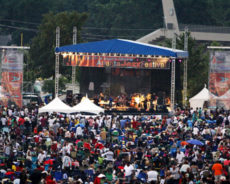
It’s the Gateway to the South where this Jazz Voyager is heading in anticipation of a great jazz weekend at the Atlanta Jazz Festival in Piedmont park. The festival turns 40 this year and there’s no other place to be than in the park celebrating this anniversary. For those veterans who’ve been there, you know No charcoal, only gas grills and no dogs allowed on the festival grounds.
For the initiates, be for-warned as the vets know you have to get in early to get your ideal spot for lawn chairs and blankets, tents, food and grills. There’s going to be thousands of folks gathering once again to celebrate this banner year of the festival. Bring plenty of water to keep hydrated and watch your children. Don’t want any lost boys and girls. Other than that, check out the lineup below, print a copy and see you there. Enjoy yourself!!! #jazzvoyager#wannabewhereyouare
The Lineup
Friday May 26th – Legends Stage:
The Pedrito Martinez Group | 7:00pm
Robert Glasper Experiment | 9:00pm
Saturday, May 27th – Legends Stage:
The Allan Harris Band | 1:00pm
Regina Carter: Simply Ella | 3:00pm
Randy Weston’s African Rhythms Quintet | 5:00pm
Reńe Marie and Experiment in Truth | 7:00pm
Charles Lloyd Sky Trio | 9:00pm
Contemporary Stage:
Moonchild | 1:30pm
Nik West | 3:30pm
Nicholas Payton Afro-Caribbean Mixtape | 5:30pm
Macy Gray | 7:30pm
Next Gen Stage:
Little Tybee | 12:30pm
Harriet Tubman: The Band | 2:30pm
Deva Mahal | 4:30pm
Marquis Hill Blacktet | 6:30pm
Late Night Jazz Jam: Park Tavern at Piedmont Park
The Miles Davis Electric Band Tribute All Star Jam with Lil’ John Roberts feat. Russell Gunn and Miles Davis band member Mino Cinelu | 11:00pm
Sunday May 28th – Legends Stage:
Dwight Andrews | 1:00pm
Joe Jennings & Howard Nicholson’s Life Force | 3:00pm
Celebrating Sarah: Kathleen Bertrand & Friends Honor Sarah Vaughan | 5:00pm
The Joe Gransden Big Band with Alexandra Jackson | 7:00pm
The Ojeda Penn Experience with Jean Carne | 8:00pm
Freddy Cole | 9:00pm
Contemporary Stage:
Frank Houston | 1:30pm
Kemba Cofield | 2:15pm
Darren English | 3:00pm
Cleveland P. Jones | 3:45pm
Julie Dexter and Jacob Deaton Duo featuring Rasheeda Ali | 4:30pm
Mamaniji Azanyah & Mastery | 5:15pm
Russell Gunn & African Drums meets Kebbi Williams’ Wolf Pack | 6:15pm
Mausiki Scales & Common Ground featuring Giwayen Mata | 7:30pm
Sponsored By
Voices From The Community
#preserving genius
More Posts: adventure,club,genius,jazz,music,preserving,restaurant,travel,voyager
Daily Dose Of Jazz…
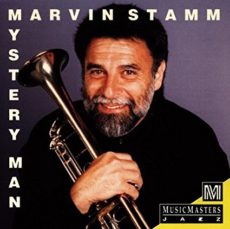
Marvin Stamm was born May 23, 1939 in Memphis, Tennessee and began playing trumpet at age 12. He attended Memphis State University and then went on to matriculate through North Texas State University where he was a member of the One O’Clock Lab Band.
After graduation he played with Stan Kenton’s Mellophonium Orchestra from 1961 to 1963, and then with Woody Herman from 1965 to 1966. For the next six years he performed as a member of the Thad Jones and Mel Lewis Orchestra from until 1972, and went with Benny Goodman from 1974 to 1975.
During the Seventies he began a decades-long career as a prolific studio and session musician, recording with Bill Evans, Quincy Jones, Donald Fagen, Oliver Nelson, Duke Pearson, Wes Montgomery, Freddie Hubbard, Stanley Turrentine, Grover Washington, Jr., Patrick Williams, Michel Legrand, Lena Horne, Frank Foster, Average White Band, Paul Desmond, Frankie Valli, Deodato, Les DeMerle, and George Benson, and played the flugelhorn solo on Uncle Albert/Admiral Halsey by Paul McCartney.
In the 1980s he played with John Lewis’ American Jazz Orchestra, the Bob Mintzer Band, the George Gruntz Concert Jazz Band, Louie Bellson’s Big Band, Maria Schneider’s band and since 2002 the trumpeter has been a member of the Westchester Jazz Orchestra.

#preserving genius
More Posts: trumpet