

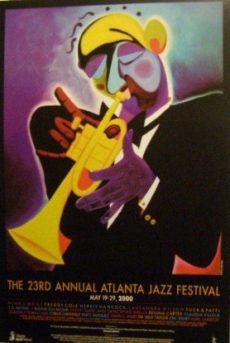
Atlanta Jazz Festival…. 2000
Another year has passed and the city is reveling in a brand new millennium and for many 2000 is the first and only time they will experience the turning of a hundred years. This makes it a very special year as it’s Camille Russell Love’s third year and two Bill’s are nearing the end of their terms – President Clinton and Mayor Campbell, the latter being a bit daunted and a little tongue-tied when meeting Nina Simone.
However, for most of the jazz fans it was a very spiritual weekend in the city too busy to hate. As photographer Jim Alexander pointed out that the festival and the period leading up to it boosts the morale of the city. Jazz deejay Phil Clore echoes similar sentiment, commenting that the beauty of the people gathering in a mood of unity to listen to great music and each administration over the years have endorsed a theory held by Shirley Franklin and Maynard Jackson, that the festival increases the cultural pride of Atlanta.
The Atlanta Jazz Festival was in full swing from May 19th – 29th with numerous venues hosting jazz. Music was heard and appreciated by varied audiences in Piedmont Park, Chastain Park Amphitheatre, Rialto Center, the Tabernacle, Sambuca Jazz Cafe, Justin’s, Churchill Grounds, Karma, Woodruff Park, Centennial Olympic Park. and the Yin Yang Cafe.
Adam’s Township, Atmel Larry, Audrey Shakir, Cassandra Wilson, Cheryl Renee, Claudia Villella, Cyrus Chestnut, Dan Coy Trio, David S. Ware, Dennis Springer, Dr. Billy Taylor’s Jazz from the Kennedy Center, Eric Benet, Freddy Cole, Gonzalo Rubalcaba, Herbie Hancock, In the Spirit, Jacques Lesure Trio, Kathleen Bertrand, Kevin Griffin, Kevin Houser Quartet, Life Force, Mahluli Workshop, Miguel Romero, Naked Jazz, Nina Simone, Papo Vazquez / Pirates & Trubadours, Regina Carter, Rick Bell Quintet, Ron Wiggins Trio, Squat, Steve Turre & Sanctified Shells, T.S. Monk and the Monk on Monk Big Band, Tuck & Patti, Urban Blue and the World Mambo Mission.
Sponsoring this year’s celebration of free jazz included some of the hosting venues as well as General Motors, DElta Airlines, Anheuser-Busch, MARTA, WSB-TV, Creative Loafing, Hilton Atlanta, Justin’s, Sambuca Jazz Cafe, Churchill Grounds, Karma, Centennial Olympic Park, The Atlanta Coca-Cola Bottling Company, BET on Jazz, JazzTimes, Media One, WALR/KISS 104.7 FM, Atlanta Journal-Constitution, Renaissance Atlanta-Downtown, Tabernacle, Rialto Center for the Performing Arts, Atlanta Downtown Partnership, Hartsfield International Airport Program and the Ying Yang Cafe.

#preserving genius
More Posts: festival,forty,free,history,jazz,music,tradition,years
Daily Dose Of Jazz…
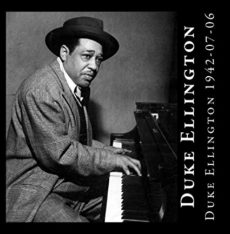
Junior Raglin was born Alvin Raglin on March 16, 1917 in Omaha, Nebraska. He started out on guitar but had picked up bass by the mid-1930s. He played with Eugene Coy from 1938 to 1941 in Oregon, and then joined Duke Ellington’s Orchestra, when Ellington returned to using two basses, then replaced Jimmy Blanton after his departure from the orchestra. He remained with Duke from 1941 to 1945.
After leaving Ellington, Raglin led his own quartet, and also played with Dave Rivera, Ella Fitzgerald, and Al Hibbler. He returned to play with Ellington again briefly in 1946 and 1955. Falling ill in the late 1940s, he quit performing;
Double-bassist Junior Raglin, who performed mainly during the swing era and never recorded as a leader, passed away on November 10, 1955 at age 38.
Sponsored By

#preserving genius
More Posts: bass
Daily Dose Of Jazz…
Arif Mardin was born on March 15, 1932 in Istanbul, Turkey into a family of privilege that included statesmen, diplomats, leaders and business owners of the Ottoman Empire and the Turkish Republic. He grew up listening to Bing Crosby and Glenn Miller, met jazz critic Cuneyt Sermet, who turned him onto this music and eventually became his mentor. After graduating from Istanbul University in Economics and Commerce, he studied at the London School of Economics. Though never intending to pursue a career in music, influenced by his sister’s music records and jazz, he became an accomplished orchestrator and arranger.
In 1956 fate took him down a different path when he met Dizzy Gillespie and Quincy Jones at a Ankara concert. He sent three demo compositions to his radio friend Tahir Sur who subsequently took these compositions to Jones and Mardin became the first recipient of the Quincy Jones Scholarship at the Berklee College of Music in Boston, Massachusetts. Two years later with fiancé Latife, he relocated to Boston. After graduating in 1961, he taught at Berklee for one year and then moved to New York City to try his luck.
His career began at Atlantic Records in 1963 as an assistant to Nesuhi Ertegün. He rose through the ranks quickly, becoming studio manager, label house producer and arranger. In 1969, Arif became the Vice President and later served as Senior Vice President until 2001. He worked closely on many projects with co-founders Ertegün and Jerry Wexler, as well as noted recording engineer Tom Dowd. The three of them, Dowd, Mardin, and Wexler, became legendary and were responsible for establishing the Atlantic Sound.
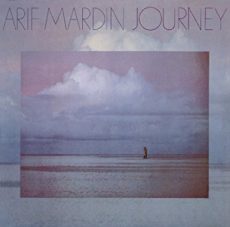
He recorded two solo albums in the Seventies, Glass Onion and Journey, the latter wearing the hats of composer, arranger, electric pianist and percussionist. Mardin performed with Randy and Michael Brecker, Joe Farrell, Gary Burton, Ron Carter, Steve Gadd, Billy Cobham and many others. He composed, arranged, conducted and produced The Prophet in 1974, an interpretation of Kahlil Gibran’s The Prophet voiced by Richard Harris.
Arif produced George Benson, The Manhattan Transfer, Vince Mendoza, and the Modern Jazz Quartet, but not limited to jazz he also produced, among others, Margie Joseph, Roberta Flack, Donny Hathaway, Raul Midón, Patti Labelle, Aretha Franklin, Barbra Streisand, Bette Midler, Diana Ross, Queen, Jeffrey Osborne, and numerous others. In 1975 he discovered Barry Gibb’s distinctive falsetto that became the Bee Gees trademark.
Over a 40 year career Mardin produced forty gold and platinum albums, 11 Grammy Awards, was inducted into the National Academy of Recording Arts and Sciences Hall of Fame, and was a trustee of Berklee and awarded an honorary doctorate
Pianist, percussionist, producer, arranger, studio manager and vice president Arif Mardin passed away at his home in New York City on June 25, 2006 following a lengthy battle with pancreatic cancer.
Sponsored By

#preserving genius
More Posts: arranger,percussion,piano,producer
Daily Dose Of Jazz…
Sonny Cohn was born George T. Cohn on March 14, 1925 in Chicago, Illinois and started playing in small groups in his hometown with King Fleming while still a teenager. He sat in with Red Saunders’ group in 1945, while Saunders was out of the Club DeLisa and working with a sextet instead of his usual mid-sized band.
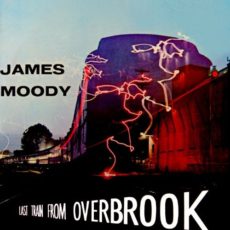
Fresh out of military service, on a recommendation from Leon Washington Sonny joined the Saunders group at the Capitol Lounge in Chicago. He was featured on Saunders’ first recordings as a leader for Savoy, Sultan, and behind Big Joe Turner on National. He performed on the records that Saunders made for OKeh Records from 1951–1953 and for Parrot and Blue Lake 1953–1954. In 1958 he was apart of the James Moody recording session on the Last Train From Overbrook on the Argo label.
Sonny Cohn survived several downsizings of the Red Saunders band, as well as the closure of the Club DeLisa, but eventually accepted an offer from Count Basie, with whom he worked from 1960 through 1984, and recording twenty-eight albums with the band..
After Basie’s death, he returned home and remained active for another two decades. Trumpeter Sonny Cohn, who never recorded as a leader, passed away on November 7, 2006 in Chicago at the age of 81.

#preserving genius
More Posts: trumpet
Daily Dose Of Jazz…
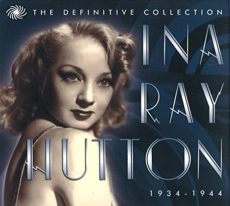
Ina Ray Hutton was born Odessa Cowan on March 13, 1916 in Chicago, Illinois. She began dancing and singing in stage revues at the age of eight and by the age of 13, Odessa was considered so advanced that she skipped eighth grade and went straight to high school at Hyde Park High School.
By the time she was 18 years old, Odessa became Ina Ray Hutton for the stage and was already a seasoned performer, having starred in Gus Edwards’ revue Future Stars Troupe at the Palace Theater, Lew Leslie’s Clowns in Clover. On Broadway she performed in George White’s revues: Melody, Never Had An Education, and “Scandals”, and then went onto The Ziegfeld Follies.
In 1934, she was approached by Irving Mills and vaudeville agent Alex Hyde to lead an all-girl orchestra, The Melodears, featuring trumpeters Frances Klein and Mardell “Owen” Winstead, pianist Ruth Lowe Sandler, saxophonist Jane Cullum, guitarist Marian Gange,and trombonist Alyse Wells during its existence. Hutton and her Melodears were one of the first all-girl bands to be filmed for Paramount shorts, including Accent on Girls and Swing Hutton Swing, as well as Hollywood feature films.
The group disbanded in 1939 and the following year she led an all-male orchestra that was featured in the 1944 film Ever Since Venus. This group disbanded in 1949. During the 1950s, she returned to the all-girl format for a variety television program, The Ina Ray Hutton Show, which ran from 1951 to 1956 on Paramount Television Network’s flagship station KTLA in Los Angeles, California.
Vocalist and bandleader Ina Ray Hutton retired from music in 1968 and passed away in Ventura, California on February 19, 1984 of complications from diabetes, at the age of 67.
Sponsored By

Voices From The Community
#preserving genius
More Posts: vocal