

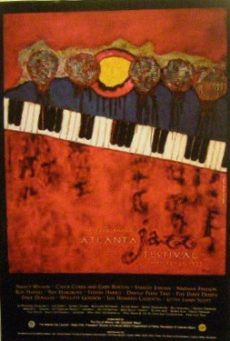
Atlanta Jazz Festival… 1999
It is now 1999 and the Memorial Day Weekend celebration of jazz in the city is May 23rd through the 31st and is happening all over the city at multiple venues: Piedmont Park, Churchill Grounds, Sambuca Jazz Cafe, Woodruff Park, Chastain Park Amphitheatre, Centennial Olympic Park, The Historic Gilbert House, Yin Yang Music Cafe, The Crow’s Nest and City Hall Atrium.
It is her sophomore production and Director Love is solidly establishing her jazz flavor as the century closes. Her festival programming is stellar and representative of her expansive knowledge of the music as she not only incorporates the cream of the Atlanta crop to perform but brings a host of national and international stars to the stages. In tow are Afroblue, Audrey Shakir, Bill Anschell, Chick Corea, Gary Burton, Dan Coy Trio, Danilo Perez Trio, Dave Douglas, David Freeman, Dennis Springs, Eclipse Jazz, Grout, In the Spirit, Jazz Convergence, Jeff Compton, Jez Graham Project, Kathleen Bertrand, Kompani, La Diaspora Folklorica, Little Jimmy Scott, Los Hombres Calientes, Marea Alta, Mike Kelly, Minority, Nancy Wilson, Nnenna Freelon, Phil Smith and the Atlanta Jazz Consortium, Roy Hargrove, Stanley Jordan, Stefon Harris, Swing Association, Take Notes, Tempest, The Dirty Dozen, West End Instrumental and Wycliffe Gordon.
Sponsoring this week of jazz are The Atlanta Coca-Cola Bottling Company, Visa, Anheuser-Busch, The Atlanta REnaissance Hotel-Downtown, Jazz Times, Jezebel, WRFG 89.3 FM, WCLK 91.9 FM, WJZF, Publix, The Atlanta Journal-Constitution, Creative Loafing and Money Gram.

#preserving genius
More Posts: festival,forty,free,history,jazz,music,tradition,years
Daily Dose Of Jazz…
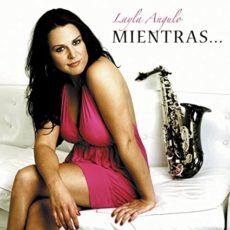
Layla Angulo was born on March 12, 1976 in Seattle, Washington into a long line of artists and musicians, and started playing the piano at age 6, the saxophone at age 10 and began performing in jazz clubs while high school. After graduation, she played in various funk, jazz, pop, and salsa groups. She performed as the horn section leader of various salsa bands around the Northwest and developed the idea to write her own music soon after.
By her early 20’s, Layla was living in Santiago de Compostela, Spain where she began building her Latin jazz career, performing her new music with Spanish and Cuban musicians. Following this stint in Europe she returned to the States, she recorded Live at the Triple Door in 2005 with a thirteen piece orchestra and performing original music. This jumped her career, garnered her two Honorable Mentions awards in the International Songwriting Competition and catapulted Costa Rican singer, Carlos Cascante, who became the singer for the Spanish Harlem Orchestra.
Her sophomore project and her first studio recording was titled Mientras where she wrote for her voice and enlisted a line up of all-star musicians including Oscar Stagnaro, Arturo O’Farrill, and Orlando “Maraca” Valle. Her third release TriAngulo combines the talents of New York’s top salsa, bachata and merengue musicians.
Angulo, who professionally goes by Layla, moved to New York City and toured with reggaeton superstar Don Omar, has toured with Tito Puente Jr., Beyonce’s horn players the Sugarhorns and played with many other Grammy award winning artists.
She is one of the only female saxophone players/singers/band directors in the world of Latin music today. Saxophonist, composer, singer and band director has won several songwriting competitions and continues to perform, record and tour.
Sponsored By

www.whatissuitetabu.com
#preserving genius
The Jazz Voyager
They say the best laid plans can change in the blink of an eye and oh, how true it is. I hopped a flight to Paris, France to catch my friend, saxophonist Mike Ellis and his group New Blue at the 45 Degrees Jazz Club. But sadly, another jazz venue has closed for good.
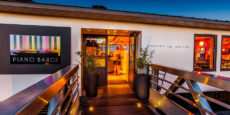
So since this Jazz Voyager has already landed in the City of Lights, I’m going to rent a car and drive four hours through the French countryside and see what I can discover that’s interesting as I head southwest to the coast for a little jazz on the water at the Piano Barge. Located in the Gulf of Morbihan in the small Breton city at Allée Loïc Caradec, 56000 Vannes, it is the best jazz club to emerge anywhere in the world these past two years.
An old boat turned into a chic bistro, Piano Barge is a dream come true for proprietress Dephine Grimont and the French jazz community. However, it does more than just host live sessions, some of its cabins are used as studios, with the goal of producing 20 to 30 new albums a year.
Reservations are recommended for the restaurant and can be made by calling +33 2 97 47 76 05. Open evenings from 6:00pm-12:00am Wednesday through Saturday.
Sponsored By

Voices From The Community
#preserving genius
More Posts: adventure,club,genius,jazz,music,preserving,restaurant,travel,voyager
Daily Dose Of Jazz…
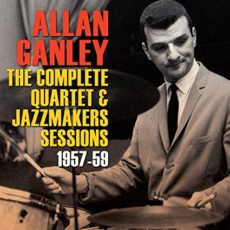
Allan Ganley was born on March 11, 1931 in Tolworth, Surrey, England and was a self-taught drummer. In the early 1950s Ganley played in the dance band led by Bert Ambrose. In 1953 he came to prominence as a member of Johnny Dankworth’s band, then the most popular modern jazz group in the UK. Throughout the 1950s, he worked with pianist Derek Smith, Dizzy Reece, clarinettist Vic Ash, Ronnie Scott and with visiting American musicians. Towards the end of the decade he was co-leader with Ronnie Ross of a small group known as the Jazzmakers.
By the early 1960s, Ganley was often performing with Tubby Hayes, with his small groups or occasionally assembling a big band. He was the house drummer at Ronnie Scott’s Jazz Club and played with numerous Americans including Dizzy Gillespie, Stan Getz, Jim Hall, Freddie Hubbard and Rahsaan Roland Kirk. By the early 1970s he took time out to study at Berklee College of Music in Boston, Massachusetts, then returned to the UK to form and lead a big band, which he maintained sporadically for ten years.
Throughout the Seventies and ’80s and Nineties, Allan appeared on many broadcasts and recording dates, playing jazz and effortlessly slipping from traditional to post-bop to big band to mainstream, all the while swinging with great subtlety. He accompanied pianists as different as Teddy Wilson and Al Haig and for singers from Carol Kidd to Blossom Dearie.
As an arranger, he provided charts for many leading British jazzmen and for the BBC Radio Big Band, thus enhancing the enormous yet understated contribution he made to the British jazz scene over the years. Drummer and arranger Allan Ganley passed away on March 29, 2008.
Sponsored By

Bronze Lens
#preserving genius
More Posts: drums
Daily Dose Of Jazz…
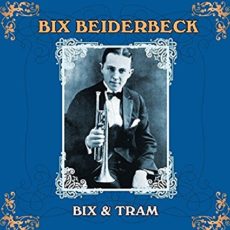
Bix Beiderbecke was born Leon Bismark Beiderbecke on March 10, 1903 in Davenport, Iowa and began playing piano at age two standing on the floor and playing with his hands over his head. At seven he was lauded in the Davenport Daily Democrat tas being able to play any selection he hears. At age ten he slipping aboard one or another of the excursion boats to play the Calliope or at home trying to duplicate the silent matinee melodies.
His love of jazz came from listening to records by the Original Dixieland Jazz Band his brother brought him and from the excursion boats that stopped on the Mississippi. Bix taught himself to play cornet largely by ear listening to Nick LaRocca’s horn lines, leading him to adopt a non-standard fingering creating his original sound.
While attending Davenport High School from 1919 to 1921 he played professionally with various bands, including those of Wilbur Hatch, Floyd Bean and Carlisle Evans, and in 1920 Beiderbecke performed for the school’s Vaudeville Night, singing in a vocal quintet called the Black Jazz Babies and playing his horn. However, due to his inability to read music he never got his union card.
Enrolled at the exclusive Lake Forest Academy, north of Chicago, Bix would often jump a train into Chicago, Illinois to catch the hot jazz bands at clubs and speakeasies, sometimes sit in with the New Orleans Rhythm Kings and go to the Southside to listen to Black musicians who he referred to as real jazz musicians. Soon after, Beiderbecke began pursuing a career in music, moved to Chicago, joined the Cascades Band and gigged around the city until the fall of 1923.
He first recorded with Midwestern jazz ensembles, The Wolverines and The Bucktown Five in 1924, after which he played briefly for the Detroit-based Jean Goldkette Orchestra before joining Frankie “Tram” Trumbauer for an extended gig at the Arcadia Ballroom in St. Louis. In 1926 Beiderbecke and Trumbauer joined Goldkette, touring widely and famously played a set opposite Fletcher Henderson at the Roseland Ballroom in New York City. He made his greatest recordings Singin’ the Blues and I’m Coming, Virginia in 1927 and the following year the pair left Detroit for New York City and the best-known dance orchestra in the country: the Paul Whiteman Orchestra.
During the Whiteman period Bix suffered a precipitous decline in his health, brought on by the demand of the bandleader’s relentless touring and recording schedule in combination with his persistent alcoholism. Support from family and Whiteman along with rehabilitation centers did not help to stem his drinking or decline.
Cornetist, jazz pianist, and composer Bix Beiderbecke, one of the most influential jazz soloists of the Twenties, along with Louis Armstrong and Muggsy Spanier, passed away of lobar pneumonia in his apartment in Sunnyside, Queens, New York on August 6, 1931 at the age of 28.
Sponsored By

#preserving genius