

Hollywood On 52nd Street
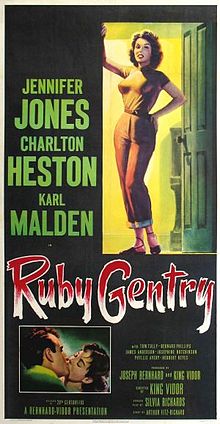
The song Ruby was composed by Heinz Eric Roemheld as the theme for the 1952 film Ruby Gentry. It subsequently became a jazz and pop standard, both as an instrumental and with lyrics by Mitchell Parish. The film was directed by King Vidor and starred Jennifer Jones as Ruby Corey/Gentry, Charlton Heston played Boake Tackman and Karl Malden held down the role of Jim Gentry. At the time of the film’s release the theme enjoyed much popularity in an orchestration by Les Baxter with harmonica solo by Danny Welton.
The Story: Ruby, a poor backwoods girl living in the small North Carolina town of Braddock, is still in love with Boake Tackman. During high school, Ruby had rebuffed his aggressive advances, and was taken in for a couple of years by kind wealthy businessman and his wife, who protected her and taught her the skills a lady would need. She moves back home when her father needed her help. Boake’s family used to be wealthy, but after generations of profligacy all he has left is the land he has had drained and farmed. He starts a relationship with her but plans to marry a local woman with a rich family. When Ruby hears the news, she marries her former benefactor, Mr. Jim Gentry, whose invalid wife recently died, despite not loving him.
Her background keeps her from being accepted by most of Jim’s peers, most of whom decline to attend their after-wedding party. Insecure, Jim becomes jealous of her relationship with Boake, has a fight, calls her a tramp and she leaves in tears. Apologies ensue and while sailing she admits her lack of loving him, while a loose rope results in Jim being knocked overboard by the boom, leaving Ruby widowed and distraught. Now she becomes the local gold-digger and murderess, the town rebuffs her and she gets harassing phone calls.
Retaliating, Ruby uses Jim’s money to begin a campaign against everyone who slighted her, calling in debts to close down people’s businesses as well as the newspaper that slandered her. Still holding a soft spot for Boake she returns his promissory note but again he rebuffs her kindness as a way to buy him and her out of the swamp. Once again, woman scorned and she floods Boake land, ruins his crop and once calm, apologizes. However, her estranged brother Jewel begins shooting at them, killing Boake and in turn Ruby kills her brother and then laments her decisions that have caused so much pain. Now alone, Ruby becomes the skipper of a fishing boat, forever looked down upon by the townspeople.
Sponsored By

www.whatissuitetabu.com

#preserving genius
Daily Dose Of Jazz…
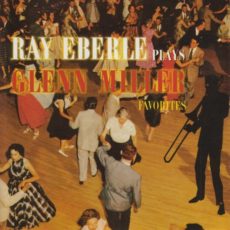
Raymond Eberle was born January 19, 1919 in Mechanicville, New York and followed in his elder brother Bob’s footsteps who fronted Jimmy Dorsey’s orchestra as a Big Band singer. With no formal training he started singing in his teens and in 1938, when Glenn Miller, looking for a male vocalist asked Bob if he had any siblings at home who could sing, he answered yes, and Ray was hired on the spot.
Ray went on to find success with Miller deeming the songs for the 1942 film Orchestra Wives, such as the jazz standard At Last, to be among his favorites. He also appeared in the Twentieth Century Fox movies, Sun Valley Serenade in 1941. From 1940-43 he did well on Billboard’s College Poll for male vocalist.
Miller ran a tight ship and often fired people after one negative incident. When stuck in traffic one day during a Chicago engagement, Ray was late for a rehearsal and Miller fired him on the spot, and replaced him in 1942 with Skip Nelson. After his departure from Miller, Eberle briefly joined Gene Krupa’s band before launching a solo career. He appeared on numerous television variety shows in the 1950s and 1960s, and later joined former Miller bandmate Tex Beneke’s orchestra in 1970 for a national tour, and reformed his own orchestra later in the decade.
He made several Universal films, including Mister Big, making a cameo appearance as himself. Eberle mostly sang ballads. He led his own orchestra called, The Ray Eberle Orchestra as well as the Serenade In Blue Orchestra from 1943 and maintained his band until his death.
Vocalist and bandleader Ray Eberle died of a heart attack in Douglasville, Georgia on August 25, 1979, aged 60.

#preserving genius
More Posts: vocal
Daily Dose Of Jazz…
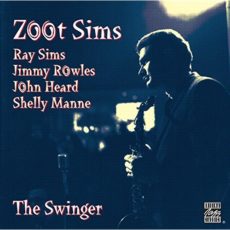
Ray C. Sims was born on January 18, 1921 in Wichita, Kansas, the older brother of Zoot Sims. He learned to play the trombone and coming of age he was a part of the Swing Era in jazz.
He first played with Jerry Wald, then with Bobby Sherwood, and in 1947 was with Benny Goodman and recorded How High The Moon on Capitol Records. From 1949 to 1958 he was a trombone soloist and vocalist in the Les Brown Orchestra before joining Harry James.
In 1955 he recorded with Les Brown on trombone and vocals, Bill Johnson, Benny Goodman, Harry James and Frank Sinatra, among others It’s A Lonesome Old Town. Ray was primarily a lead trombone or session player and over the course of his career played and recorded with Earle Spencer, Lyle Griffin, Anita O’Day, Dave Pell, Billy Eckstine, The Four Freshmen, Ray Anthony, Peggy Lee, Bill Holman, Jackie and Roy, Lena Horne, Georgia Carr, Red Norvo, John Towner Williams, Jerry Gray, Maxwell Davis, Ernie Andrews, Frank Capp and Corky Corcoran.
Trombonist and vocalist Ray Sims, who never led a session, passed away in 2000.

Uplift Someone’s World
#preserving genius
More Posts: trombone
The Jazz Voyager
Heading to the Buckeye state to catch the Wednesday night performance of the Blue Wisp Big Band at 8:30pm at Urban Artifact, 1660 Blue Rock Street, in Cincinnati, OH 45223 / 513-620-4729.
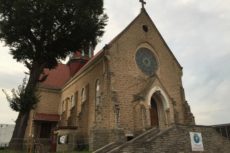
This craft brewery housed in a historic Northside church built in 1876 became the new home of the legendary big band after the Blue Wisp Jazz Cafe closed its doors in 2014.
Offering a taproom and listening space, the plan is to definitely stay over for more jazz slated for every Thursday night. Be advised, the weekends are relegated to other forms of music. Call ahead to discover the food options, as most, if not all, will be portable.
Sponsored By

Voices From The Community
#preserving genius
More Posts: adventure,club,genius,jazz,music,preserving,restaurant,travel,voyager
Daily Dose Of Jazz…
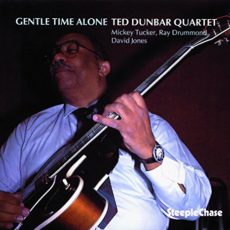
Earl Theodore Dunbar was born on January 17, 1937 in Port Arthur, Texas. He became interested in jazz at the age of seven and in the 1950s he joined several groups while studying pharmacy at Texas Southern University and during that period he became influenced by Wes Montgomery.
He trained as a pharmacist at Texas Southern University, but by the 1970s only did pharmacy work part-time. Dunbar was also a trained numerologist and had studied other aspects of mysticism. At one point he received accolades from Ebony and Down Beat.
In 1966 Ted moved to New York City and gained more experience. In 1972 he became one of the first jazz professors at Rutgers University and taught Kevin Eubanks, Vernon Reid and Peter Bernstein, as well as many others. He published four volumes on jazz.
He recorded five albums as a leader and another fifteen albums with Gene Ammons, Kenny Barron, Richard Davis, Gil Evans, Curtis Fuller, Albert Heath, Willie Jackson, Charles McPherson, David “Fathead” Newman, Don Patterson, Bernard Purdie, Sam Rivers, Johnny “Hammond” Smith, McCoy Tyner and Tony Williams among others. Guitarist and educator Ted Dunbar passed away on May 29, 1998 of a stroke in New Brunswick, New Jersey.
Jazz Is Global – Share
#preserving genius
More Posts: guitar