

Daily Dose Of Jazz…
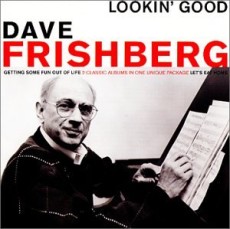
David Frishberg was born March 23, 1933 in Saint Paul, Minnesota. Resisting learning classical piano as a boy, he developed an interest in blues and boogie-woogie by listening to recordings of Pete Johnson and Jay McShann. As a teenager he played in the house band at the Flame in St. Paul where Art Tatum, Billie Holiday and Johnny Hodges appeared. After graduating from the University of Minnesota as a journalism major in 1955, he spent two years in the Air Force.
In 1957, Dave moved to New York City where he played solo piano at the Duplex in Greenwich Village. He first became known for his work with Carmen McRae, Ben Webster, Gene Krupa, Bud Freeman, Eddie Condon, Al Cohn and Zoot Sims.
He later found celebrity writing and performing his own, frequently humorous, songs, including his most famous My Attorney Bernie, and favorites I’m Hip, lyrics only, in collaboration with Bob Dorough, Blizzard of Lies, Do You Miss New York, Peel Me a Grape, Quality Time, Slappin’ the Cakes on Me, and Van Lingle Mungo, the lyrics of which entirely consist of the names of old-time baseball players.
Citing songwriter Frank Loesser as an influence, Frishberg has also worked strictly as a lyricist on a number of occasions collaborating with Johnny Mandel, Alan Broadbent, Al Cohn, Blossom Dearie, David Shire, Julius Wechter, Dan Barrett, Bob Brookmeyer, Gerry Mulligan and Johnny Hodges.
Dave’s tunes have been performed and/or recorded by Blossom Dearie, Rosemary Clooney, Shirley Horn, Anita O’Day, Michael Feinstein, Irene Kral, Diana Krall, Stacey Kent, John Pizzarelli and Mel Torme, among other.
He is also noted for composing the music and lyrics for I’m Just A Bill, the song about the forlorn legislative writ in the ABC Schoolhouse Rock series, as well as Walkin’ on Wall Street, a song that describes how the stock market works, and $7.50 Once a Week, a song about saving and balancing a budget.
Pianist, vocalist, composer and lyricist Dave Frishberg has recorded three albums as a leader, one solo project and has sat in the sideman chair with Jim Goodwin and Rebecca Kilgore on the Arbor Records label.

Uplift Someone’s World

Daily Dose Of Jazz…
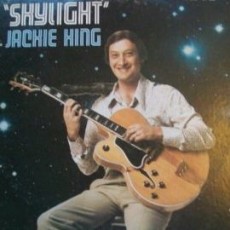
Jackie King was born on March 22, 1944 in San Antonio, Texas and took his first music lessons from his guitarist father, starting on mandolin and quickly switching to guitar, playing left handed. By the time he was 12, he was performing professionally around his hometown.
In the 1960s, childhood friend Doug Sahm convinced him to join him in San Francisco’s burgeoning psychedelic music scene. With saxophonist Martin Fierro, he formed the Shades of Joy, a jazz-rock fusion group that released a pair of albums, including music for the soundtrack of the cult film El Topo.
In demand as a sideman and session player, King backed Chet Baker and Sonny Stitt and recorded on albums by Merl Saunders and other artists. At the invitation of jazz guitarist and educator Howard Roberts, he joined the teaching staff of the Guitar Institute of Technology in Los Angeles, California. A year later he started his own Southwest Guitar Conservatory in San Antonio. And after seven years, he closed the school to devote more time to his performing career as a soloist and with Nelson’s band.
Jackie received an honorary master’s degree from San Francisco State University, served on the board of the Music Teachers’ Association of California, taught jazz guitar clinics, lectured at the Berklee School of Music and was featured in a series of instructional books and DVDs. He also wrote articles in Jazz Times, All About Jazz and Just Jazz Guitar.
During his career, he shared stages with such guitarists as Jerry Garcia, Stevie Ray Vaughan, Les Paul, Barney Kessel, Tal Farlow, Pat Martino, Herb Ellis and Lenny Breau. In 1999, he released the solo album “Moon Magic” and recorded an as yet unreleased album with jazz pianist Marian McPartland.
Guitarist, songwriter and educator Jackie King, who was equally at home playing jazz, rock or country music, passed away on January 27, 2016 after suffering a heart attack at his home in San Rafael, California. He was 71.
Jazz Is Global – Share
More Posts: guitar

Daily Dose Of Jazz…
Gary Giddins was born on March 21, 1948 in Brooklyn and raised on Long Island, New York. He graduated from Grinell College in Iowa in 1970 and began freelance work as a music and film critic. By 1974 he landed a position as a columnist with the Village Voice writing a column called Weather Bird, a position he held until 2003.
In 1986 Gary along with John Lewis, pianist and music director of the Modern Jazz Quartet, created the American Jazz Orchestra, which presented concerts using a jazz repertory with musicians such as Tony Bennett.
Of his many accolades and honors in writing, film and broadcasting Giddins has won a Grammy for liner notes on Sinatra: The Voice, six ASCAP–Deems Taylor Awards, Jazz Times Readers Poll, a Guggenheim Fellowship, a Peabody Award in Broadcasting, the National Book Critics Circle Award, the Ralph J. Gleason Music Book Award, ARSC Award for Excellence in Historical Sound Research and the Bell Atlantic Award for Visions of Jazz: The First Century in 1998.
He has authored Bing Crosby: A Pocketful of Dreams-The Early Years 1903-1940, Weatherbird: Jazz at the Dawn of Its Second Century, Faces in the Crowd, Natural Selection, and biographies of Louis Armstrong and Charlie Parker.
Jazz and film critic, author, and director, Gary Giddins is currently the Executive Director of the Leon Levy Center for Biography at the Graduate Center of the City University of New York.
Give A Gift Of Jazz – Share
Daily Dose Of Jazz…
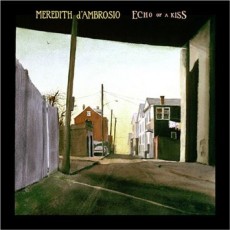
Meredith D’Ambrosio was born into a musical family in Boston, Massachusetts on March 20, 1941. She studied piano and voice from age six and ultimately studied at the Boston Museum School in 1958-59, pursuing a career in painting as well as music.
Meredith was offered the chance to tour Japan with John Coltrane but turned down the offer. Her first major recording for Spring Records didn’t happen for more than a decade later with her husband Eddie Higgins. Two more albums followed her debut recording three years later in the early Eighties for Shiah and Palo Alto Records. She has since released a dozen albums on the Sunnyside Records label from 1985 to 2006. During this period she recorded with Lee Konitz, Fred Hersch, Ben Riley, Erik Friedlander, Jay Leonhart and Gene Bertoncini among others.
She was voted in the Top Five for Talent Deserving Wider Recognition category for Female Vocalist in Down Beat International Critics Jazz Poll from 1982 to 1985 and from 1987-1991. In 1994, D’Ambrosio was the featured guest on Marian McPartland’s syndicated radio program Piano Jazz. Although she worked primarily as a jazz singer and pianist, she is also well known as a composer, lyricist, and teacher.
A respected visual artist, watercolorist, creator of eggshell mosaics and calligrapher, she took off from recording to concentrate on painting, touring, performing at festivals and teaching. She re-emerged in 2012 recording By Myself, a collection of 14 songs by the late composer Arthur Schwartz, her only album of 19 dedicated to a single composer and her solo piano accompaniment. Vocalist Meredith D’Ambrosio continues to perform, record, tour, teach and paint.
Inspire A Young Mind
Daily Dose Of Jazz…
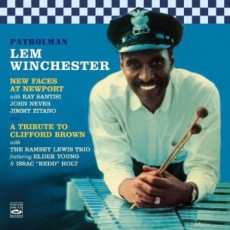
Lem Winchester was born in Philadelphia, Pennsylvania on March 19, 1928. He played piano, baritone and tenor saxophone before settling on the vibraphone. Formerly a police officer, he pursued music as a hobby in Wilmington, Delaware. He turned to music full-time after an appearance at the 1958 Newport Jazz Festival. He was soon working with some of the top names in jazz, making his debut recording with pianist Ramsey Lewis.
Winchester recorded a handful of albums as a leader, mostly for Prestige Records and made sideman appearances with Oliver Nelson, Jack McDuff, Shirley Scott, Benny Golson, Tommy Flanagan and Johnny “Hammond” Smith.
The career of hard bop vibraphonist Lem Winchester was cut short when he passed away from an unsuccessful demonstration of a trick with a revolver on January 13, 1961 in Indianapolis, Indiana. He was 32 years old.
Dose A Day-Blues Away
More Posts: vibraphone