

Daily Dose Of Jazz…
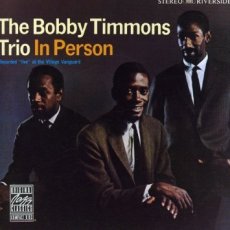
Bobby Timmons was born Robert Henry Timmons on December 19, 1935 in Philadelphia, Pennsylvania. Studying piano from the age of six by the age of 19 he was moving to New York, playing with the likes of Kenny Dorham’s Jazz Prophets, Chet Baker, Sonny Stitt and Maynard Ferguson. He became a member of Art Blakey’s Jazz Messengers from 58-59 touring Europe and became well known for his composition “Moanin”.
He joined Cannonball Adderley for a year, recorded two soul-jazz compositions that became hits “This Here” and “Dat Dere” and rejoined Blakey for a brief stint in the Sixties. Over the course of his career he recorded some 16 albums for Riverside, Milestone and Prestige record labels and recorded another twenty-three as a sideman with Art Blakey, Hank Mobley, Lee Morgan, Donald Byrd, Curtis Fuller, Nat Adderley, Kenny Burrell and the Young Lions.
However sophisticated and versatile a pianist he proved to be, Timmons’ success of his compositions, which have become jazz standards, could not compensate for his artistic frustrations and his battle with alcoholism. Pianist and composer Bobby Timmons passed away from cirrhosis at the age of 38 on March 1, 1974.

Jazz Is Global – Share
More Posts: piano,vibraphone
Daily Dose Of Jazz…
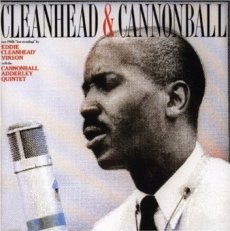
Eddie “Cleanhead” Vinson was born on December 18, 1917 in Houston, Texas and took up the alto saxophone in his youth. By the late 30s he joined Milton Larkin’s Orchestra and at various times sat next to Arnett Cobb, Illinois Jacquet, Cedric Haywood and Wild Bill Davis.
Exiting Larkin’s employment in 1941, Vinson picked up a few vocal tricks while touring with bluesman Big Bill Broonzy, moved to New York City joining and recording with Cootie Williams, and then struck out on his own in 1945, Eddie formed his own large band that performed, recorded and toured over the next ten years.
He signed with Mercury Records, and enjoying a double-sided hit in 1947 with his R&B chart-topper “Old Maid Boogie”, and the song that would prove to be his signature number, “Kidney Stew Blues”.
Vinson leaned towards jazz during the early 50s when his band included John Coltrane. In the early 1960s he moved to Los Angeles working with Johnny Otis and by the late 60s he was touring in a strict jazz capacity with Jay McShann and his career took an upswing. A 1970 appearance at the Monterey Jazz Festival with Otis spurred a bit of a comeback for Vinson and throughout the decade worked high-profile blues and jazz sessions for Count Basie, Johnny Otis, Roomful of Blues, Arnett Cobb and Buddy Tate.
During this period he also composed steadily, including “Tune Up” and “Four”, both of which have been incorrectly attributed to Miles Davis. Vinson recorded extensively during his fifty-odd year career and performed regularly in Europe and the United States.
Jump blues, R&B, jazz and bebop alto saxophonist Eddie “Cleanhead” Vinson, whose nickname came from a hair straightening incident in which the lye destroyed his hair, passed away on July 2, 1988 from a heart attack whilst undergoing chemotherapy in Los Angles, California.
Put A Dose In Your Pocket
Daily Dose Of Jazz…
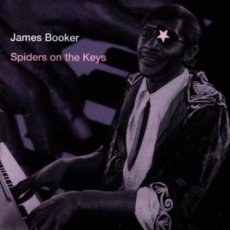
James Carroll Booker III was born on December 17, 1939 in New Orleans, Louisiana to piano playing Baptist ministers. He spent most of his childhood on the Mississippi Gulf Coast, where his father pastored and got a saxophone from his mother. However his interest lay stronger with the keyboard and he started playing organ in his father’s church.
Returning to New Orleans in his early teens, Booker attended the Xavier Academy Preparatory School, learning some elements of his keyboard style and playing Bach and Chopin among other classical composers, in addition to memorizing solos by Errol Garner and Liberace. He became a masterful interpreter of jazz and other pop music styles combining performance elements of stride, blues, gospel and Latin piano styles.
Booker made his recording debut in 1954 on the Imperial label, with “Doin’ the Hambone” and “Thinkin’ ‘Bout My Baby.” This led to some session work with Fats Domino, Smiley Lewis and Lloyd Price. In 1958, when just 18, James had the opportunity to play and astonish Arthur Rubenstein who revealed he could never play at that tempo. He would go on to matriculate through Southern University, record a few moderately successful singles, hit the Billboard charts, and venture into the drug world ultimately serving a brief sentence.
By the 70s he was recording for Paramount, then Island Records, performing at the Nice, Montreux and New Orleans Jazz & Heritage Festivals, touring Europe, house pianist at the Maple Leaf Bar, played and toured with Jerry Garcia, and his “Let’s Make A Better World” would be the last record produced in the former East Germany.
James Booker died on November 8, 1983, while seated in a wheelchair, waiting to be seen at the emergency room at New Orleans Charity Hospital. The cause of death was renal failure due to his life-long struggle with drug abuse and alcoholism.
Give The Gift Of Knowledge
Daily Dose Of Jazz…
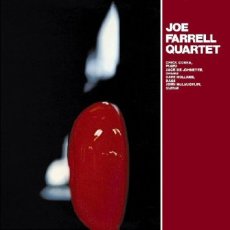
Joe Farrell was born Joseph Carl Firrantello on December 16, 1937 in Chicago Heights, Illinois and learned to play saxophone and flute. During the Sixties he played with The Thad Jones/Mel Lewis Orchestra and recorded with Charles Mingus, Andrew Hill, Jaki Byard, Players Association, and Elvin Jones.
In the 80s Joe released two albums with the group Fuse One, played sax and oboe on pop recordings by Hall & Oates, played with Airto and Flora Purim, his final recordings making their “Three-Way Mirror” project. He is best known for his series of albums as a leader for the CTI record label and for being an original member of Chick Corea’s Return To Forever.
Kanye West, Method Man, Redman and Common have sampled Farrell’s music “Upon This Rock”, without approval that subsequently resulted in a lawsuit by his daughter.
Tenor and soprano saxophonist and flautist Joe Farrell died of bone cancer on January 10, 1986 in Los Angeles, California at age 48.
Take A Dose On The Road
Daily Dose Of Jazz…
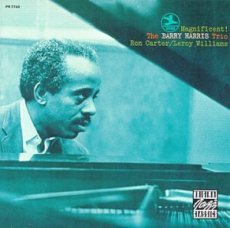
Barry Doyle Harris was born in Detroit, Michigan on December 15, 1929 and learned to play piano as a child. Mainly influenced by Art Tatum, Coleman Hawkins, Charlie Parker and Thelonious Monk, his playing style is similar to Bud Powell.
Moving to New York City in 1960, Harris played with Cannonball Adderley, Sonny Stitt, Coleman Hawkins, Illinois Jacquet, Dexter Gordon and Max Roach. During the 1970s, Harris lived with Monk and his family at the Weehawken, New Jersey home of the jazz patroness Baroness Pannonica de Koenigswarter. He performed piano duets with Tommy Flanagan in the 1989 Clint Eastwood documentary Thelonious Monk: Straight No Chaser and in 2000, he was profiled in the film Barry Harris – Spirit of Bebop.
As an educator Barry established the Jazz Cultural Theater teaching group music and piano lessons and hosting performances. Since 1991 he has collaborated with Toronto-based pianist and teacher Howard Rees in creating a series of videos and workbooks documenting his unique harmonic and improvisational systems and teaching process.
Barry Harris continues to perform and teach worldwide and holds weekly music workshop sessions in New York City for vocalists, students of piano and other instruments when not on the road.
Dose A Day – Blues Away
More Posts: piano