

Daily Dose Of Jazz…
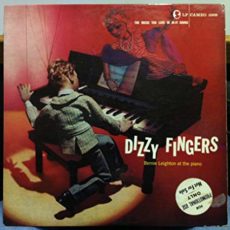
Bernie Leighton, born on January 30, 1921 in West Haven, Connecticut, first played piano professionally at the end of the 1930s. In the early Forties, he played with Bud Freeman, Leo Reisman, Raymond Scott and Benny Goodman before serving in the Army.
Following his discharge, he found work as a studio sideman through the Sixties with Dave Tough, Billie Holiday, Neal Hefti, Goodman again, Artie Shaw, John Serry, Sr., James Moody and Bob Wilber. He toured a year with Tony Bennett from 1972 to 1973.
While Leighton was best known as a sideman, he also recorded extensively as a leader, releasing albums on Keynote Records, Mercury Records, Columbia Records, Brunswick, Disneyland and Capitol. He also recorded a tribute to Duke Ellington released in 1974. He has a cameo role in the 1986 film Hannah and Her Sisters. Pianist Bernie Leighton passed away on September 16, 1994 in Coconut Creek, Florida.

More Posts: bandleader,history,instrumental,jazz,music,piano
Daily Dose Of Jazz…
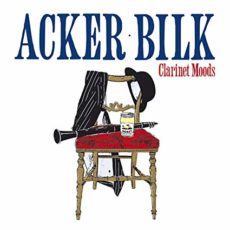
Known professionally as Acker Bilk, Bernard Stanley Bilk MBE was born in Pensford, Somerset on January 28, 1929. He earned the nickname “Acker” from the Somerset slang for friend or mate. His parents tried to teach him the piano but, as a boy, he found it restricted his love of outdoor activities, including football. He lost two front teeth in a school fight and half a finger in a sledding accident, both of which he said affected his eventual clarinet style.
Leaving school Bilk worked at a cigarette factory in Bristol, then three years with the Royal Engineers in the Suez Canal Zone. While there he learned to play the clarinet after his sapper friend, John A. Britten, gave him one bought at a bazaar. He later borrowed a better instrument from the army and kept it after demobilization and played with friends on the Bristol jazz circuit and in 1951 moved to London to play with Ken Colyer’s band. Disliking London he returned west and formed his own band in Pensford called the Chew Valley Jazzmen, which was renamed the Bristol Paramount Jazz Band when they moved to London in 1951. Booked for a six-week gig in Düsseldorf, Germany, the band developed their distinctive style complete with striped-waistcoats and bowler hats.
His return from Germany, Acker based himself in Plaistow, London, and his band played the London jazz clubs. It was here he became part of the late 1950s trad jazz boom in the United Kingdom. They had an eleven chart hit singles in the Sixties, played the Royal Variety Performance, and became an internationally known musician in 1962 when he added a string ensemble on one of his albums that won him an audience outside the UK. His composition Stranger on the Shore was used in a British television series of the same name. He went on to record it as the title track of a new album and the single stayed on the charts for 55 weeks.
He appeared in two theatrical motion pictures, recorded a series of albums in Britain that were also released successfully in the United States on the Atlantic Records subsidiary Atco, however, his success tapered off when British rock and roll made its big international impact beginning in 1964. In the cabaret circuit, he had a couple of more hits, continued to tour, appointed MBE in 2001 and was awarded the BBC Jazz Awards’ Gold Award.
Clarinetist and vocalist Acker Bilk, known for his breathy, vibrato-rich, lower-register style, passed away in Bath, Somerset, on November 2, 2014, at the age of 85.
More Posts: bandleader,clarinet,history,instrumental,jazz,musical,vocal
Daily Dose Of Jazz…
Charlie Holmes was born on January 27, 1910 near Boston, Massachusetts. He began playing alto saxophone at age 16 and emulated the style of his childhood friend, Johnny Hodges. He began playing professionally a week later and after moving to New York City he worked for a variety of groups, including Luis Russell in 1928.
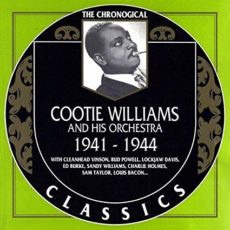
Between 1929 and 1930 he recorded with Red Allen and is best known for composing Sugar Hill Function. He would work with Russell again a few times and in 1932 joined the Mills Blue Rhythm Band. He was a member of John Kirby’s Sextet, Cootie Williams’ Orchestra, and Louis Armstrong’s band for much of the next two decades. He left music in 1951 and did not return for twenty years, only to work in Clyde Bernhardt’s Harlem Blues & Jazz Band and later played for the Swedish band Kustbandet.
Never taking on the role of a leader in any recording or group, swing era saxophonist Charlie Holmes, who also played clarinet and oboe for the Boston Civic Symphony Orchestra, passed away on September 19, 1985 in Stoughton, Massachusetts.
More Posts: bandleader,clarinet,history,instrumental,jazz,music,oboe,saxophone
Daily Dose Of Jazz…
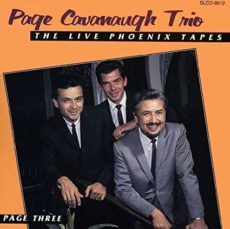
Walter Page Cavanaugh was born in Cherokee, Kansas on January 26, 1922 who began on piano at age nine and played with Ernie Williamson’s band in 1938–39 before moving to Los Angeles, California and joining the Bobby Sherwood band at age 20.
While serving in the military during World War II, he met guitarist Al Viola and bassist Lloyd Pratt, with whom he formed a trio. After the war’s end they performed together in the style of the Nat King Cole Trio, scoring a number of hits in the late 1940s, including The Three Bears, Walkin’ My Baby Back Home, and All of Me.
The trio appeared in the films A Song Is Born, Big City, Lullaby of Broadway with Doris Day and Romance on the High Seas, Day’s first film, in 1948. He recorded dozens of tracks with Doris Day, Frank Sinatra, Dinah Shore, June Christy, Mel Torme and other legendary singers.
In the early 1950s, Cavanaugh had a program, Page Pages You, on the short-lived Progressive Broadcasting System. Additionally, the trio played on Frank Sinatra’s radio program, Songs by Sinatra, and on The Jack Paar Show.
Cavanaugh played in Los Angeles, California nightclubs through the 1990s, both in a trio setting, with Viola for many years and as a septet, Page 7. He recorded with Bobby Woods & Les Deux Love Orchestra. He recorded for MGM, Capitol, RCA, Star Line, Tiara, and Dobre Records over the course of his career, releasing his final trio album, Return to Elegance, in 2006. Pianist Page Cavanaugh passed away on December 19, 2008 of kidney failure.
More Posts: bandleader,history,iano,instrumental,jazz,music

Daily Dose Of Jazz…
Floyd George Smith was born on January 25, 1917 in St. Louis, Missouri and learned to play the ukulele as a child before taking up guitar. As a teenager he studied music theory and spent his early career in territory bands, playing in groups such as Eddie Johnson’s Crackerjacks, the Jeter-Pillars Orchestra, the Sunset Royal Orchestra, the Brown Skin Models, and Andy Kirk’s 12 Clouds Of Joy. His composition Floyd’s Guitar Blues, recorded with Andy Kirk’s orchestra in 1939, has been claimed as the first hit record to feature a blues solo on electric guitar.
Enlisting during World War II, Floyd was stationed in Britain as a sergeant and he had the fortune to meet and play with Django Reinhardt in Paris. Following the war, he rejoined Andy Kirk’s band before forming his own small ensembles. He went on to play with Wild Bill Davis in the 1950s, recorded occasionally with drummer Chris Columbo’s bands during the late 1950s and early 1960s. He would later settle in Indianapolis, Indiana and formed his own jazz trio.
The 1970s, had Smith moving into writing songs and record production, working with Dakar/Brunswick Records in Chicago, for which he recorded a few singles. He produced two albums with R&B star, Loleatta Holloway for Aware Records of Atlanta, as well as two unreleased with John Edwards, who later became the lead singer of the Detroit Spinners. He produced two Top 10 R&B hits on Aware with Edwards and Holloway.
In the late 1970s, he produced tracks on several albums with Loleatta Holloway for Gold Mine/Salsoul Records, managed and later married her. Guitarist Floyd Smith, sometimes credited as Floyd Guitar Smith passed away in Indianapolis, Indiana on March 29, 1982 at the age of 65.
More Posts: composer,guitar,history,instrumental,jazz,music,producer