

Daily Dose Of Jazz…
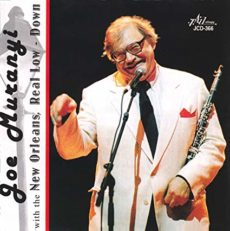
Joseph P. Muranyi was born in Martins Ferry, Ohio on January 14, 1928 and studied with Lennie Tristano, however, he was primarily interested in early jazz styles such as Dixieland and swing. After playing in a United States Army Air Forces band, he moved to New York City in the 1950s and attended the Manhattan School of Music and Columbia University.
During the 1950s he played under Eddie Condon, collaborating with Jimmy McPartland, Max Kaminsky, Yank Lawson, Bobby Hackett, and Red Allen. During that decade he also played with the Red Onion Jazz Band, Danny Barker, and Wingy Manone.
1963 saw him playing with The Village Stompers, a Dixieland band that reached the pop charts with its song Washington Square. From 1967 to 1971 he was the clarinetist with the Louis Armstrong All-Stars. After initially struggling to pronounce Muranyi’s Hungarian family name, Armstrong introduced him on stage as “Joe Ma Rainey”, to Muranyi’s own amusement. Following this stint, he played with Roy Eldridge, World’s Greatest Jazz Band, Cozy Cole, Lionel Hampton, Herman Autrey, Wild Bill Davison, Zutty Singleton, and others.
He worked extensively as a record producer and wrote liner notes for hundreds of albums. Clarinetist, producer, writer and critic Joe Muranyi, who was also an enthusiastic vocalist and played both soprano and tenor saxophone, passed away in Manhattan, New York on April 20, 2012.

Daily Dose Of Jazz…
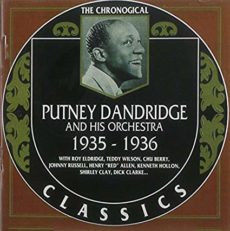
Putney Dandridge was born Louis Dandridge on January 13, 1902 in Richmond, Virginia, and began performing in 1918 as a pianist in a revue titled The Drake and Walker Show. 1930 saw him working as an accompanist for tap dancer Bill “Bojangles” Robinson, including appearances in the musical Brown Buddies. In 1931, he appeared in the cast of the musical revue Heatin’ Up Harlem, starring Adelaide Hall at the Lafayette Theatre in Harlem. In the 1932 American film, Harlem Is Heaven, Dandridge, on the piano and reciting lyrics in a speak set, accompanies Robinson as the dancer sings “Is You Is Or Is You Ain’t“.
After touring in Illinois and the Great Lakes region, Putney settled in Cleveland, Ohio, forming a band with guitarist Lonnie Johnson. This period lasted until 1934 when he attempted to perform as a solo act. He took his show to New York City, beginning a series of long residences at the Hickory House on 52nd Street and other local clubs. From 1935 to 1936, he recorded numerous sides under his own name, many of which highlighted some major jazz talents of the period, including Roy Eldridge, Teddy Wilson, Henry “Red” Allen, Buster Bailey, John Kirby, Chu Berry, Cozy Cole and more.
Appearing to vanish from the music scene in the late thirties, it has been speculated that he may have been forced to retire due to ill health. Pianist Putney Dandridge passed away on February 15, 1946 in Wall Township, New Jersey at the age of 44.
More Posts: piano
Daily Dose Of Jazz…
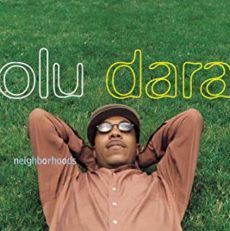
Olu Dara was born Charles Jones III on January 12, 1941 in Natchez, Mississippi. After moving to New York City In 1963, he changed his name to Olu Dara, which means “God Is Good” in the Yoruba language. In the Seventies and Eighties, he played alongside David Murray, Henry Threadgill, Hamiet Bluiett, Don Pullen, Charles Brackeen, James Blood Ulmer, and Cassandra Wilson. He formed two bands, the Okra Orchestra and the Natchezsippi Dance Band.
His first album, In the World: From Natchez to New York, released in 1998, revealed another aspect of his musical personality: the leader and singer of a band immersed in African-American tradition, playing an eclectic mix of blues, jazz, and storytelling, with tinges of funk, African popular music, and reggae. His second album Neighborhoods, with guest appearances by Dr. John and Cassandra Wilson, followed in a similar vein.
Dara played on the 1994 album Illmatic, on the song Dance, and he sang on the 2004 song Bridging the Gap, all by his son, rapper Nas. Besides recording two albums as a leader, cornetist, guitarist and singer Olu Dara has recorded fifty-four as a sideman with the likes of Doug Carn, Oliver Lake, Julius Hemphill, Nona Hendryx, The Be Good Tanyas, Rickie Lee Jones, Terumasa Hino, Jack McDuff, Dirty Dozen Brass Band, and James Newton, among others.
More Posts: bandleader,cornet,guitar,history,instrumental,jazz,music,vocal
Daily Dose Of Jazz…
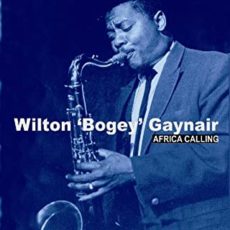
Wilton “Bogey” Gaynair was born on January 11, 1927 in Kingston, Jamaica, Gaynair was raised at Kingston’s Alpha Boys School, where fellow Jamaican musicians Joe Harriott, Harold McNair and Don Drummond were also pupils of a similar age.
Beginning his professional career playing in Kingston’s clubs backing such performers as George Shearing and Carmen McRae, he traveled to Europe in 1955, basing himself in Germany because of the plentiful live work that was offered. Bogey recorded only three times as a bandleader and two of those recordings came during visits to England, 1959’s Blue Bogey and Africa Calling in 1960, on Tempo Records but the latter went unreleased until 2005 due to the label’s demise.
Gaynair returned to Germany shortly after recording these sessions where he remained based for the rest of his life. He concentrated on live performance with such bands as the Kurt Edelhagen Radio Orchestra and played at the opening ceremony of the 1972 Summer Olympics in Munich. He was involved in extensive session work and was a guest artist on Ali Haurand’s Third Eye in 1977 but only recorded one more jazz album under his own name, Alpharian 1982. Among the numerous artists he performed with included Gil Evans, Freddie Hubbard, Shirley Bassey, Manhattan Transfer, Horace Parlan, Bob Brookmeyer, and Mel Lewis.
In September 1983, he suffered a stroke during a concert, and from then until his death, he was unable to play the instrument. Tenor saxophonist Wilton Bogey Gaynair passed away on February 13, 1995 in Cologne, Germany, aged 68.
More Posts: bandleader,composer,history,instrumental,jazz,music,saxophone
Daily Dose Of Jazz…
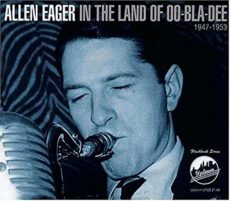
Allen Eager was born in New York City on January 10, 1927 and grew up in the Bronx. He could read at the age of three, learned to drive at the age of 9 with the help of his mother after she caught him driving a garbage truck near the hotels that his parents owned in the Catskill Mountains. He took clarinet lessons with David Weber of the New York Philharmonic at the age of 13. He briefly played with Woody Herman at the age of 15, and at the same age, he took heroin for the first time.
By sixteen he was playing in Bobby Sherwood band, then went on to play with Sonny Dunham, Shorty Sherock, and Hal McIntyre. Eager was then with Herman again for a year in 1943, Tommy Dorsey, and Johnny Bothwell in 1945. After World War II he became a regular on the 52nd Street in New York City leading his own ensemble from 1945–47. His recording debut as a leader was for Savoy Records in 1946 with pianist Ed Finckel, bassist Bob Carter, and drummer Max Roach.
Influenced by Lester Young, his playing style on tenor saxophone was, along with contemporary saxophonists Zoot Sims, Stan Getz, Al Cohn and others. Adopting the musical forms pioneered in bebop, he also adopted the drug dependency of a lot of the bebop players in the 1940s. Allen was a member of several bands led by black musicians including Coleman Hawkins, Fats Navarro, Tadd Dameron and Charlie Parker and recorded with trumpeter Red Rodney for Keynote Records in 1947.
He would go on to play with Gerry Mulligan, Terry Gibbs in 1952, and shortly after with Buddy Rich. He then briefly abandoned music and drugs, becoming a ski and horse riding instructor. In the Fifties, he returned to again led his own ensemble as a saxophonist, frequently playing with Howard McGhee. He lived in Paris for a couple of years, then returned to the U.S. in 1957, Eager recorded The Gerry Mulligan Songbook under Mulligan’s leadership, which was his last recording for 25 years.
After this, he essentially retired from jazz, pursuing skiing, competitive auto racing, and LSD experiments with Timothy Leary. In the late Sixties he settled in Florida with his family, played with Frank Zappa in the 1970s, and in 1982 Eager made a comeback with an album for Uptown Records, entitled Renaissance. He toured with Dizzy Gillespie in 1983, and with Chet Baker. Tenor and alto saxophonist Allen Eager passed away from liver cancer on April 13, 2003 in Daytona Beach, Florida.
More Posts: history,instrumental,jazz,music,saxophone