

Daily Dose Of Jazz…
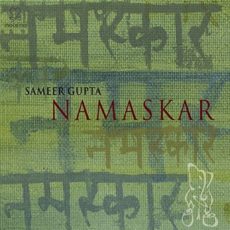
Sameer Gupta was born July 1, 1976 in San Francisco, California and is a percussionist, tabla player, and composer. He is the founder of the jazz ensemble The Supplicants and drummer for the Marc Cary Focus Trio.
Gupta has performed with Kosmic Renaissance, vidyA, Grachan Moncur III, Victor Goines, Vincent Gardner, Sekou Sundiata, Sonny Simmons, Marcus Shelby, Calvin Keys, Richard Howell, Dayna Stephens, and Julian Lage.
With his playing has been described as kinetic, bass-heavy, and tender, he made his recording debut in 2006 with Marc Cary on Focus, adding Marc Cary and Focus Trio Live in 2010. He released his debut album as a leader, Namaskar that same year, and has also recorded with Srinivas Reddy and Ross Hammond. Percussionist Sameer Gupta continues to compose, perform and record.
Sponsored By


#preserving genius
More Posts: drums,percussion,tabla
Daily Dose Of Jazz…
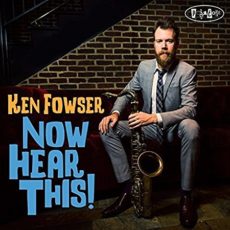
Ken Fowser was born in Philadelphia, Pennsylvania on June 30, 1982 and began playing the saxophone at age eleven, picking up his father’s old alto he used while in the Air Force band. Playing through elementary school, he studied privately with Tony Salicandro at the New Jersey Conservatory of Music, It was there that his love of jazz developed.
This was followed with studies at the university of the Arts Philadelphia and his insurgence into the local jazz scene where he began making a name for himself. Opportunities came along for him to perform with Mickey Roker, John Swana, Larry McKenna, Bootsie Barnes, Sid Simmons, Byron Landham, Billy James, and others.
Leaving Philly for William Paterson University he received his degree in music in 2005. A move to New York, graduate studies at SUNY Purchase College, private studies with Eric Alexander and Ralph Lalama, and received his degree in 2008. With his already established jazz in-roads in the City, it was an easy translation for Ken to co-lead with Behn Gillece and record his debut album Full View with special guest pianist David Hazeltine the following year on the Posi-tone label.
Saxophonist Ken Fowser hosts a weekly jam session at Small Jazz Club in New York City and continues to perform, compose and record.
Sponsored By

#preserving genius
More Posts: saxophone
Daily Dose Of Jazz…
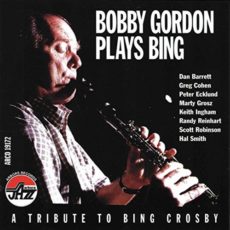
Bobby Gordon was born on June 29, 1941 in Hartford, Connecticut. A student of Joe Marsala and influenced by Pee Wee Russell, in 1962/63 he recorded three albums for the Dot label. At that time he was playing folk music and the music of Acker Bilk .
By the end of the Sixties Max Kaminsky took him to the New York City to the jazz club Jimmy Ryan’s and by the beginning of the 1970s, he was appearing regularly at Eddie Condon’s club. After working with Wild Bill Davison in Chicago, Illinois he moved to San Diego, California and became famous mainly for his recordings for the Jump and Arbors labels and his collaboration with Marty Grosz in the Orphan Newsboys .
Recording as a leader he worked with Keith Ingham, Dan Barrett, Adele Girard, Scott Robinson, Dave McKenna, Tony DeNicola and Bob Wilber. While lived in the San Diego area he accompanied Rebecca Kilgore and occasionally he performed at jazz parties and festivals. Clarinetist Bobby Gordon, who was a proponent of Hot Jazz, passed away on December 31, 2013.
Sponsored By
#preserving genius
More Posts: clarinet
Daily Dose Of Jazz…
Bobby White was born on June 28, 1926 in Chicago, Illinois. He made a name for himself as a drummer in Los Angeles, California beginning in the late 1940s, playing with trombonist Earle Spencer, trumpeter Harry James, saxophonist Charlie Barnett, and bassist Howard Rumsey, among others.
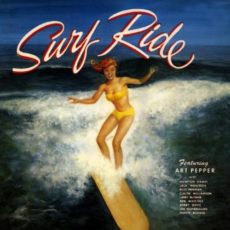
White played with tenor saxophonist Vido Musso from 1951 to 1952, then with alto saxophonist Art Pepper and trumpeter Chet Baker in 1953, and clarinetist Buddy DeFranco in 1954. While a fixture on the West Coast jazz scene in the 1950s , he was still active in the late 1990s, often performing at the Lighthouse, the Hermosa Beach club made famous by Rumsey’s various All-Star aggregations.
In 1999 he participated in a concert tribute to the Lighthouse celebrating the 50th anniversary of Rumsey’s first gig at the club. Retired from music, drummer Bobby White turns 91 this year.
Sponsored By

#preserving genius
More Posts: drums
Daily Dose Of Jazz…
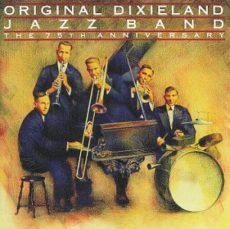
Antonio Sparbaro, better known as Tony Sbarbaro or Tony Spargo was born on June 27, 1897 in New Orleans, Louisiana to an immigrant Sicilian family. Early in his career he played with the Frayle Brothers Band, possibly as early as 1911 and the Reliance Band of Papa Jack Laine.
After doing side work with Merritt Brunies and Carl Randall he joined the Original Dixieland Jazz Band for their initial recordings in 1917. Tony became its leader in the 1940s and remained a member of the ensemble until its dissolution in the 1960s. At the time the band broke up he was the only founding member still in the group.
Sbarbaro composed for the group, writing the tune Mourning Blues among others. He remained a fixture of Dixieland jazz performance for most of his life, performed at the New York World’s Fair in 1941 and with Connee Boswell in the 1950s. Later in life in New Orleans he played with Miff Mole, Big Chief Moore, Pee Wee Erwin, and Eddie Condon. Quitting music in the Sixties due to the popularity of rock & roll, drummer Tony Sbarbaro passed away on October 30, 1969.

#preserving genius
More Posts: drums