

Daily Dose Of Jazz…
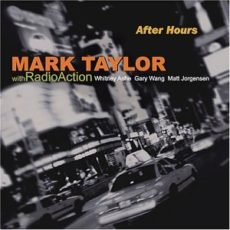
Mark Taylor was born on May 22, 1961 in Seattle, Washington. He earned his Bachelor’s degree from the University of Washington then moved to New York City to get his Masters from the Manhattan School of Music. While there he performed with an array of musicians including Dick Oatts, Jim McNeely, Bob Brookmeyer, Garry Dial, David Liebman, Don Sickler, Steve Turre, Sir Roland Hanna, Bob Mintzer, John Riley, Steve Slagle, and Ted Rosenthal and the Vanguard Jazz Orchestra.
Mark performs and records extensively with such diverse and award winning groups as Matt Jorgensen +451, Jim Knapp Orchestra, Frieze of Life, Victor Noriega Trio + 2, Tom Varner’s Tentet and Quintet, Thomas Marriott, Wayne Horvitz, Seattle Repertory Jazz Orchestra, and the Randy Halberstadt Quintet, as well as having appeared locally with Ray Charles, Quincy Jones, and Ernestine Anderson, Sam Yahel, Maria Schneider, the Seattle Symphony and Pacific Northwest Ballet, among many more.
As a leader, Taylor has released two projects on Origin Records titled After Hours and Spectre which was named NW Jazz Recording in 2009 and a year earlier was honored as the NW Jazz Instrumentalist, both by Earshot Jazz Magazine.
Putting on his educator cap, he has served on the music faculty at Pacific Lutheran University, has full schedule of private students and is a guest artist and clinician for festivals, workshops and clinics throughout the region. One of the most in demand saxophonists in the Pacific Northwest, alto saxophonist Mark Taylor continues to perform and record.
Sponsored By

Voices From The Community

#preserving genius
More Posts: saxophone
Daily Dose Of Jazz…
John William Barber was born May 21, 1920 in Hornell, New York outside Rochester and was also known as Bill Barber or Billy Barber. He started playing tuba in high school and studied at the Juilliard School of Music. After graduating, he travelled west to Kansas City, Missouri, where he played with the Kansas City Philharmonic and various ballet and theatre orchestras.[1]
Joining the United States Army in 1942 he played in Patton’s 7th army band for three years. After the war, he started playing jazz, joining Claude Thornhill’s big band where he became friends with trombonist Al Langstaff, Gil Evans and Gerry Mulligan in 1947. Bill became one of the first tuba players to play in a modern jazz style, playing solos and participating in intricate ensemble pieces.
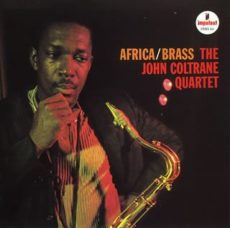
Barber became a founding member of Miles Davis’s nonet in 1949 in what became known as the Birth of the Cool recording sessions. He then worked in theatre pit orchestration of the King and I, Paradiso and the City Center Ballet before joining up with Davis and Gil Evans in 1957 to record albums such as Sketches of Spain, Miles Ahead, Quiet Nights and Porgy and Bess. He also performed on John Coltrane’s album Africa/Brass.
During the 1950s and Sixties her recorded several albums with Art Blakey, Bob Brookmeyer, Kenny Burrell, Gigi Gryce, Slide Hampton and Pete Rugolo. Completing a master’s degree from the Manhattan School of Music he chose to go into education and became an elementary school music teacher in Copiague, New York. He continued to play where possible including with the Goldman Band.
In 1992, he recorded and toured with a nonet led by Gerry Mulligan, reworking material from Birth of the Cool. From 1998 to 2004 he was part of The Seatbelts, New York musicians who played the music of the Japanese anime Cowboy Bebop.
Tubist Bill Barber, who never led a recording session, passed away of heart failure in Bronxville, New York on June 18, 2007.
Sponsored By

www.whatissuitetabu.com
#preserving genius
More Posts: tuba
Daily Dose Of Jazz…
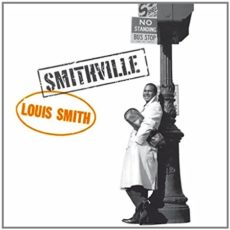
Edward Louis Smith was born May 20, 1931 in Memphis, Tennessee, and while studying at the University of Michigan, he played with visiting musicians such as Dizzy Gillespie, Miles Davis, Thad Jones and Billy Mitchell. He followed this array of musicians by going on to play with Sonny Stitt, Count Basie, Al McKibbon, Cannonball Adderley, Percy Heath, Philly Joe Jones, Lou Donaldson, Donald Byrd, Kenny Dorham and Zoot Sims.
He began his recording career with two albums for Blue Note, the first being Here Comes Louis Smith, originally recorded for the Boston-based Transition Records, featured Cannonball Adderley (then under contract to Mercury) playing under the pseudonym “Buckshot La Funke”, Tommy Flanagan, Duke Jordan, Art Taylor and Doug Watkins.
Smith’s initial music career was brief, opting to become a teacher at the University of Michigan and Ann Arbor’s public school system.He would later recorded for the SteepleChase label. in 2006 Louis suffered a stroke and was seen occasionally enjoying live jazz in the Detroit/Ann Arbor area, but he never returned to performing. He recorded fourteen albums as a leader and recorded Down Home Reunion with his cousin trumpeter Booker Little.
Trumpeter Louis Smith, who recorded both volumes of Blue Lights with Kenny Burrell and Live at Newport ‘58 with Horace Silver, passed away on August 20, 2016, at age 85 in Ann Arbor, Michigan.
Sponsored By

#preserving genius
More Posts: trumpet
Daily Dose Of Jazz…
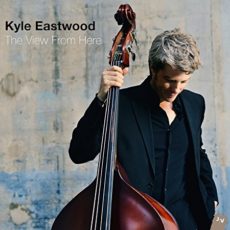
Kyle Eastwood was born on May 19, 1968 in Los Angeles, California and is the son of actor Clint Eastwood. Growing up with a father’s love of jazz for the music of Miles Davis, Dave Brubeck, Thelonious Monk and the Stan Kenton Big Band, he developed a similar love for jazz that was prominent in the home. This was coupled with a father and mother who played piano and a and grandmother who taught music at Northwestern University. Attending several Monterey Jazz Festivals in his youth with his dad, got him access backstage to meet people who a great influence on him like Dizzy Gillespie and Sarah Vaughan.
Eastwood began playing electric bass in high school, learning R&B, Motown, and reggae tunes by ear. After studying with French bassist Bunny Brunel, he began playing gigs around the New York and Los Angeles areas, eventually forming the Kyle Eastwood Quartet. In 1996 he contributed to Eastwood After Hours: Live at Carnegie Hall performance and ultimate recording, then two years later released his debut CD as a leader, From There to Here, on the Sony label. He moved on to record with the UK’s Candid Records and then to Rendezvous.
He has contributed music to nine films The Rookie, Mystic River, Million Dollar Baby, Flags of Our Fathers, Changeling, Gran Torino, Invictus and J. Edgar and has been nominated for a Chicago Film Critics Association Award for Original Score for the film Letters from Iwo Jima. He has also contributed to the score of the documentary Homme Less about homeless photographer Mark Reay. Bassist and bass guitarist Kyle Eastwood currently has eight albums released, tours around the world playing clubs and festivals and continues to write, compose, arrange and perform.
Sponsored By

#preserving genius
Daily Dose Of Jazz…
Mike Zwerin was born May 18, 1930 in New York on May 18, 1930. He studied at the High School of Music and Art and began leading bands in his teens, employing several up-and-coming musicians. At the age of 18, while on summer break from the University of Miami, he was the trombonist in Miles Davis’s nonet at the Royal Roost club in New York. This band was recorded performing the live sessions in 1948 and its music the following year culminated in the album that became immortalized as Birth of the Cool.
He abandoned his musical life for much of the 1950s but after a spell in France he returned to New York in 1958 and played the trombone in several big bands. However, in 1960 after his father’s death, he returned to the world of business and he took over as president of his dad’s company, the Capitol Steel Corporation. Over the next four years Mike kept a hand in jazz, working in John Lewis’s big band Orchestra USA, with whom he recorded and directed a small group. He also worked briefly with pianist Earl Hines but by the mid-1960s he withdrew from the business.
Zwerin moved to London in 1969 and then, in 1972, to Paris, which would be his home for the rest of his life. Nevertheless, he kept his hand in as a trombonist throughout the 1980s, working with his fellow expatriate Hal Singer and with the guitarist Christian Escoudé. In 1988 he toured with the Big Band Charles Mingus, played briefly with t Swiss bandleader George Gruntz and played with the French fusion band Telephone.
As a music critic and columnist he wrote for the Village Voice, Down Beat, Rolling Stone, Penthouse, the International Herald Tribune and Bloomberg News. He authored several books about his own life in the world of jazz, most notably The Silent Sound of Needles, about his struggles with drug addiction, Close Enough for Jazz and The Parisian Jazz Chronicles: An Improvisational Memoir, but his most ambitious book may be La Tristesse de Saint Louis: Swing Under the Nazis that included the story of the Kille Dillers and the Ghetto Swingers, two bands that played in concentration camps, and how jazz survived across Europe though banned by the Nazis and labeled degenerate music.
Throughout his career trombonist and bass trumpeter Mike Zwerin would perform and record with Miles Davis, Maynard Ferguson, John Lewis, Archie Shepp, Claude Thornhill and Bill Russo, arrange, direct and produce an album of Kurt Weill songs with the Sextet of Orchestra U.S.A., before passing away after a long illness on April 2, 2010 in Paris, France at the age of 79.
Sponsored By
#preserving genius