


Daily Dose Of Jazz…
Fred Anderson was born on March 22, 1929 in Monroe, Louisiana and learned to play the saxophone by himself when he was a teenager. Moving with his family to Evanston, Illinois in the 1940s he studied music formally at the Roy Knapp Conservatory in Chicago, Illinois and had a private teacher for a short time.
He was one of the founders of the Association for the Advancement of Creative Musicians (AACM) and an important member of the musical collective. In the early 1960s Fred formed his own group and performed his original compositions with drummer Vernon Thomas, bassist Bill Fletcher, and his partner for many years, trumpeter Billy Brimfield.
During this period he recorded several notable avant garde albums as a sideman with saxophonist Joseph Jarman, As If It Were the Seasons and Song For which included one of his composition Little Fox Run. By 1972 he put together the Fred Anderson Sextet, with trombonist George Lewis, reedist Douglas Ewart, bassist Felix Blackman, drummer Hamid Drake and Iqua Colson on vocals. Throughout the Seventies he toured Europe, recorded in Austria, and recorded his first record as leader, Another Place in Germany.
He opened the short-lived performance-workshop space Birdhouse in honor of Charlie Parker, and in 1983 took over ownership of the Velvet Lounge in Chicago, which quickly became a center for the city’s jazz and experimental music scenes. The club expanded and relocated in the summer of 2006. Before that, his eclectic Beehive bar in west Chicago was a draw where musicians from around the world drank beer and played, mostly for each other.
Though remaining active as a performer, Anderson rarely recorded for about a decade beginning in the mid-1980s but by the Nineties he resumed a more active recording schedule, both as a solo artist, and as a collaborator with younger performers. He mentored a host of young musicians not limited to Hamid Drake, Harrison Bankhead, David Boykin, Nicole Mitchell, Justin Dillard, Aaron Getsug, Josh Abrams, Fred Jackson, Jr., George Lewis, Karl E. H. Seigfried, Isaiah Sharkey, and Isaiah Spencer.
Chicago avant-garde tenor saxophonist Fred Anderson, who was rooted in the swing and hard bop idioms but incorporated innovations from free jazz, passed away on June 24, 2010.
Sponsored By


#preserving genius
More Posts: saxophone
Daily Dose Of Jazz…
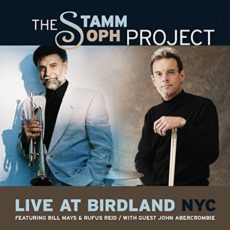
Edward Soph was born on March 21, 1945, in Coronado, California and was raised in Houston, Texas. In 1963 he e enrolled at North Texas State University, now the University of North Texas, as a music major, but switched his concentration to English during his sophomore year. While at UNT, he performed with the One O’Clock Lab Band, as well as summer tenures with the Glenn Miller Orchestra and Stan Kenton. Graduating in 1968 he joined Woody Herman upon a recommendation from Cannonball Adderley.
Moving to New York City in 1971, Ed began performing and recording freelance with the bands of Clark Terry, Bill Watrous and Woody Herman, Bill Evans, Marvin Stamm, Randy Brecker, Joe Henderson, Pat LaBarbera, Bill Mays, Cedar Walton, Dave Liebman, Chris Potter, Carl Fontana and Slide Hampton, among others.
As an educator Soph pursued a teaching career on the faculty at The Jamey Aebersold Jazz Workshops, The National Stage Band Camps and The University of Bridgeport. Returning to Texas in 1987 he is currently a Professor in the Jazz Studies and Performance divisions of the College of Music at the University of North Texas in Denton, Texas. Some of his students have been Ari Hoenig, Keith Carlock, Joel Rosenblatt, Jason Sutter and Dave Weckl.
Drummer Ed Soph is currently an Artist Clinician for Yamaha Corporation, the Avedis Zildjian Company, Evans Drumheads and Innovative Percussion. He continues to perform and record.

#preserving genius
More Posts: drums
Daily Dose Of Jazz…
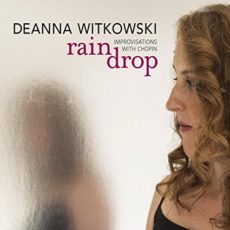
Deanna Witkowski was born on March 20, 1972 in New Hampshire, Ohio but was raised in Pennsylvania and upstate New York. She began her musical journey playing classical flute and piano long before discovering jazz. While studying at Wheaton College, Illinois, she turned to jazz, first as a saxophonist, then as pianist and composer. Jazz so captured her interest that she abandoned later studies at DePaul University, Chicago, to become a full time musician. Subsequently, she studied with Hilario Duran and Chucho Valdés, experiences that developed an interest in Afro Cuban music. In Chicago in the mid-90s she accompanied singer Linda Tate and was involved in the LaSalle Street Church’s annual jazz service.
Forming her first quintet in 1994 Deanna performed with them until a four month trip to Africa found her thousands of miles away teaching piano in Kenya. Two years later she returned to the States landing in Chicago, Illinois and recording a demo with her grant money. During this period she studied with several Cuban jazz musicians and the next year, she moved to New York City and became the music director at All Angels Episcopal Church, crafting jazz/gospel masses.
In 2000 released independently the Having to Ask album and began studying with Brazilian drummer Vanderlei Pereira. Leaving the church to follow her own musical path she continued writing and performing sacred music in her spare time, but she composed a piece for a jazz choir and reactivated her quintet.
In 2002 she won the annual Great American Jazz Piano Competition in Jacksonville, Florida. She backed vocalist Lizz Wright, leading her supporting band on tour in the USA and on a visit to Europe, played a duo with pianist Fred Hersch at New York’s Jazz Gallery, and with multi-instrumentalist James Finn, playing on his Great Spirit.
In the early to years of the new millennium, members of her regular trio have been bass players Jonathan Paul and Dave Ambrosio, and drummers Tom Hipskind and Vince Cherico. She has also taught extensively, including spells at colleges in Germany and Kenya. Post bop pianist Deanna Witkowski continues to compose, perform and record combining jazz, Latin folk, and modern classical composition.
Sponsored By
Voices From The Community
#preserving genius
More Posts: piano
Daily Dose Of Jazz…
Gene Taylor was born Calvin Eugene Taylor on March 19, 1929 in Toledo, Ohio. Beginning his career in Detroit, Michigan he worked with Horace Silver from 1958 until 1963, then joined the Blue Mitchell Quintet, with whom he recorded and performed until 1965.
From 1966 until 1968, he toured and recorded with Nina Simone, including a Taylor composition she recorded titled Why? (The King of Love is Dead), written following the assassination of Martin Luther King, Jr. He then began teaching music in New York City public schools.
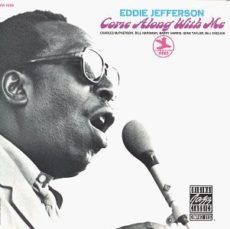
Working with Judy Collins from 1968 until 1976, Gene made numerous television appearances accompanying Simone and Collins. He went on to record with Junior Cook, Barry Harris, Coleman Hawkins, Junior Mance, Eddie Jefferson, Eric Kloss and Duke Pearson.
Double-bassist and songwriter Gene Taylor never led a recording session before passing away on December 22, 2001 in Sarasota, Florida where he had been living since 1990.
Sponsored By

www.whatissuitetabu.com
#preserving genius
More Posts: bass
Daily Dose Of Jazz…
Etienne Bouyer was born on March 18, 1982 in Saint-Denis on the island of Reunion and took violin lessons from age four to 11, opting to play the saxophone. In 1995 he played tenor saxophone in the big band of the Conservatoire d’Antibes and joined the Nice CNR in 1997, where he studied classical saxophone and contemporary music.
1999 saw Etienne gaining admittance to the Baccalauréat Général in Paris, France to study in the American School of Modern Music. For the next five years he studied saxophone, harmony, arrangement and composition, writing for big band and string quartet. Leading an active professional life while studying, he plays in numerous bands and orchestras of all styles including big band, salsa, gypsy and co-founded La Brocante, recording and performing in concert in France and Morocco.
In 2004 he joined the Didier Lockwood Music Center and where he studied with a host of musicians like André Villéger, Pierrick Pedron and Stéphane Guillaume among others. During this period Bouyer met many other musicians with whom he works regularly, taking part in the electro-jazz project Blözar and forming his quartet, the Etienne Bouyer Group with Pierre Antoine, Martin Berauer and Alexis Sébileau.
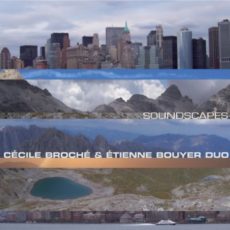
Following graduation he began teaching, studying privately in New York City with Dave Liebman and Sam Newsome, taking a week-long master class with Charlie Haden and began working with the Belgian violinist Cécile Broché, that led to recordings. He returned to Europe to study in Paris and Brussels, taking master classes with Bob Mintzer, François Jeanneau and creating the Collective Of Active Composing. Etienne has been a member of the Yuval Amihai Ensemble that won the Jazz Festival Tremplin in Saint-Germain-des-Prés.He has performed with Avishai Cohen, Rabih Abou-Khalil, Bojan Z, Kyle Eastwood and Manu Katché.
Tenor and soprano saxophonist Etienne Bouyer teaches at the Conservatory of Music and Dance of Châtenay-Malabry and the Conservatoire with Regional Radiation of Amiens Métropole. He currently Is the coordinator of the Jazz & Current Music Department at the Amiens Metropole Regional Conservatory and continues to perform, record and compose.
Sponsored By

#preserving genius
More Posts: saxophone