


Daily Dose Of Jazz…
Attila Cornelius Zoller was born on June 13, 1927 in Visegrád, Hungary and as a child was taught classical violin by his father, who was a professional violinist. By his teens, he switched to flugelhorn, then bass, and finally guitar.
Quitting school during the Russian occupation of Hungary following World War II, Attila began playing professionally in Budapest jazz clubs. He escaped Hungary in 1948 just before the permanent Soviet blockade of the country and began his serious music career after moving to Vienna in 1948. He formed a jazz group with accordionist and vibraphonist Vera Auer.
In 1954 Zoller left Austria for Germany in 1954, where he played with pianist Jutta Hipp, saxophonist Hans Koller and trombonist Albert Mangelsdorff. He was encouraged by Oscar Pettiford and Lee Konitz to move to America and did so in 1959 after winning a scholarship to the Lenox School of Jazz. There he studied with Jim Halland, roomed with Ornette Coleman and Don Cherry, whose influence sparked Zoller’s interest in free jazz.
Attila would go on to play and record with Chico Hamilton, Benny Goodman and Herbie Mann, Shirley Scott, Cal Tjader, Tony Scott, Jimi Hendrix, Stan Getz, Fred Nelson, Red Norvo, Jimmy Raney, Dave Pike, Herbie Hancock and Ron Carter, among others.
Zoller was the founding president of the Vermont Jazz Center (1985) where he also taught music until 1998. In 1995, he received the Lifetime Achievement Award from the New England Foundation for the Arts for his lifelong musical contribution to jazz. He was also a designer of musical instruments, patenting a bi-directional pickup for guitars in 1971 and helping to design his own signature line of guitars with different companies.
Guitarist Attila Zoller passed away on January 25, 1998 in Townshend, Vermont. He recorded more than two-dozen albums as a leader with Martial Solal, Hans Koller, Barre Phillips, Santi Debriano, Yoron Israel, Lee Konitz and Larry Willis among numerous others.
Enja Records released the tribute album of his music, Message To Attila in 2015 with Ron Carter, John Abercrombie, Mike Stern, Peter Bernstein, Pat Metheny, Jim Hall, Gene Bertoncini. He was awarded the Deutscher Filmpreis for Beste Filmmusik (best score) in Germany for the film Das Brot der frühen Jahre in 1962 and the Lifetime Achievement Award from the New England Foundation for the Arts.
Sponsored By

www.whatissuitetabu.com

More Posts: guitar
Daily Dose Of Jazz…
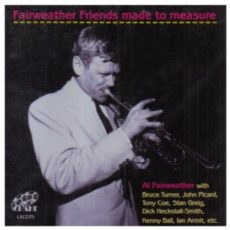
Al Fairweather was born Alastair Fairweather on June 12, 1927 in Edinburgh, Scotland. Following his education at the city’s Royal High School and Edinburgh College of Art, he served his National Service in Egypt.
In 1949 Fairweather started a band with his old schoolfriend Sandy Brown and in 1953 the pair went south to London along with Stan Greig. There they recorded a number of sides for Esquire Records as the Sandy Brown and later Fairweather-Brown All Stars.
When Brown went back to Scotland to complete his architecture studies, Al joined the Cy Laurie Jazz Band. His powerful, Louis Armstrong-inspired lead was a perfect foil for Laurie’s Johnny Dodds approach. From 1966 to 1968, he worked for clarinetist Acker Bilk.
Following a second career as an educator in Harrow, London, trumpeter Al Fairweather returned to Edinburgh in 1987, where he remained and played until his death on June 21, 1993 at the age of 66.

Dose A Day-Blues Away
More Posts: trumpet
Daily Dose OF Jazz…
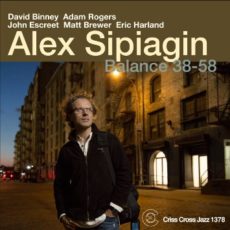
Alex “Sasha” Sipiagin was born June 11, 1967 in Yaroslavl, Russia. He began studying the trumpet at age 12, studying at the Moscow Music Institute and the Gnessin Conservatory in Moscow where he received his Baccalaureate. By 1990, he was a participant in the International Louis Armstrong Competition sponsored by the Thelonious Monk Institute in Washington D.C. where he won top honors.
Soon after Alex relocated to the jazz mecca of the world, New York City and soon became a favored player for various bands including the Gil Evans Orchestra, Gil Goldstein’s Zebra Coast Orchestra, the George Gruntz Concert Jazz Band, drummer Bob Moses’ band Mozamba, Mingus Big Band as well as the Mingus Dynasty and Mingus Orchestra, and the Dave Holland Big Band, Sextet and Octet groups.
In 2003 he recorded with Michael Brecker’s Quindectet touring also with the Michael Brecker Sextet. Sipiagin has also worked with Barbara Dennerlein, Eric Clapton, Dr. John, James Moody, Conrad Herwig, Aaron Neville, Elvis Costello, Michael Franks, Dave Sanborn, Deborah Cox, legendary producer Phil Ramone, Gonzalo Rubalcaba and many others.
Many of the recordings he has been a sideman have been nominated for or won a Grammy, as a soloist, Alex has recorded eleven recordings out to his credit, another four with Opus 5, and more than twenty-nine albums as a sideman. He has toured extensively throughout Europe, U.S., Japan and Russia with his own group.
As an educator he teaches at the Groningen Prince Claus Conservatory, Academy of Music, Basel, Switzerland as well holding a professorship at New York University.
Take A Dose On The Road
More Posts: flugelhorn,trumpet
Daily Dose Of Jazz…
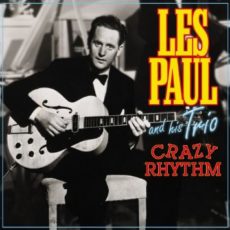
Les Paul was born Lester William Polsfuss on June 9, 1915 in Waukesha, Wisconsin. At the age of eight, he began playing the harmonica and after trying to learn the piano, he switched to the guitar, teaching himself how to play. It was during this time that he invented a neck-worn harmonica holder, allowing him to play both sides of the harmonica hands-free while accompanying himself on the guitar. By age thirteen, he was performing semi-professionally as a country music singer, guitarist, and harmonica player.
He began his first experiment with sound wanting to make himself heard by more people at the local venues, so he wired a phonograph needle to his guitar and connected it to a radio speaker, using that to amplify his acoustic guitar. As a teen Les created his first solid body electric guitar using a 2-foot piece of rail from a nearby train line. By age seventeen, he was playing with Rube Tronson’s Texas Cowboys and soon after he dropped out of high school and joined Sunny Joe Wolverton’s Radio Band in St. Louis, Missouri on KMOX.
Moving to Chicago in 1934 he continued to perform on radio, met pianist Art Tatum, whose playing influenced him. Paul formed a trio in 1937 with singer/rhythm guitarist Jim Atkins and bassist/percussionist Ernie “Darius” Newton. Four years later he was in New York in 1938 with a featured spot on Fred Waring’s Pennsylvanians radio show. Drafted into the Army working on the Armed Forces Radio Network, he backed Bing Crosby, The Andrews Sisters and performed as a leader. His guitar style was strongly influenced by the music of Django Reinhardt, whom he greatly admired, met and befriended after World War II and paid part of the funeral cost when Django died in 1953.
He would go on to play with Nat King Cole at the inaugural Jazz At The Philharmonic in 1944, record with Crosby and the Andrews Sisters and then nearly lose his career after his right arm was shattered in a near fatal car crash. Los Angeles doctors set his arm just under a ninety degree angle, giving him the ability to cradle and pick the guitar after a year and a half recovery.
Paul performed in the genres of jazz, country and blues, was also a songwriter, luthier, inventor and pioneer of the solid body electric guitar, utilized multi-tracking, overdubbing, tape delay and phasing effects in his recordings aided in his innovative playing style of licks, trills, chording sequences and fretting techniques that set him apart from his contemporaries and inspired many guitarists of the present day. With his wife Mary Ford he recorded in the 1950s, and together they sold millions of records.
Guitarist Les Paul has been honored with induction into the Rock and Roll Hall Of Fame, the National Inventors Hall of Fame, won several Grammy Awards, Grammy Trustees Award, with Mary Ford their How High The Moon was inducted into the Grammy Hall of Fame, National Medal of Arts, was inducted into the Big Band Hall of Fame and the Jazz Hall of Fame, received an Emmy Lifetime Achievement Award in Engineering, the Lifetime Achievement in Music Education from the Wisconsin Foundation for School Music, and a star on the Hollywood Walk of Fame, among numerous other honors.
Suffering from arthritis in the mid-1960s his condition worsened over his career and in his final years he lost the use of his right hand except for two fingers. On August 12, 2009 guitarist Les Paul passed away from complications from pneumonia at White Plains Hospital in New York.
Give The Gift Of Knowledge
More Posts: guitar

Daily Dose Of Jazz…
Kenneth Clare was born on June 8, 1929 in Leytonstone, London, England and played with Oscar Rabin on English radio in his early 20s. Following this, he played with Jack Parnell and then with Johnny Dankworth for an extended period in the 1950s and early 1960s. In the latter decade he played with Ted Heath and Ronnie Stephenson as well as playing in the studios as a member of Sounds Orchestral.
Clare played drums for the Kenny Clarke-Francy Boland Big Band in 1963 to 1966 when Clarke was unavailable. But from 1967 through 1971, when the band folded, he was a regular paired with Clarke in what became a two-drummer band for performances, concerts, and at least 15 recordings issued by various labels.
He accompanied singers including Ella Fitzgerald, Tony Bennett and Cleo Laine. On December 5, 1971 he performed in concert at Queen Elizabeth Hall with fellow drummers Buddy Rich and Louie Bellson. Drummer Kenny Clare, who also did extensive work for radio, television, film, and commercials, passed away December 21, 1984.
Put A Dose In Your Pocket
More Posts: drums