

Daily Dose Of Jazz…
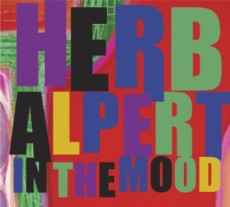
Herbert Alpert was born on March 31, 1935 and raised in the Boyle Heights section of East Los Angeles, California. His family was Jewish, emigrating from Radomyshl, now present day Ukraine and Romania. His father, a talented mandolin player, his mother taught violin, and his older brother a drummer. He began trumpet lessons at the age of eight and played at dances as a teenager. Acquiring an early wire recorder in high school, he experimented on this crude equipment.
Following graduation in 1952, he joined the U.S. Army and frequently performed at military ceremonies. After his service in the Army, Alpert tried his hand at acting, but eventually settled on pursuing a career in music. While attending the University of Southern California he became a member of the USC Trojan Marching Band, and appeared in the un-credited role as “Drummer on Mt. Sinai” in the film The Ten Commandments in 1056. In 1962, he had an un-credited part in a scene in the film Mr. Hobbs Takes A Vacation, playing a solo in a dance band.
In 1957, Alpert teamed up with Rob Weerts, co-wrote a number of Top 20 hits including Baby Talk for Jan & Dean and Wonderful World for Sam Cooke. By 1960 he was signed with RCA Records as a vocalist under the name of Dore Alpert.
In 1962 along with Jerry Moss they founded A&M Records and their very first hit was “The Lonely Bull” adapted from the mariachi bands and the cheers of bullfighting spectators. The title song reached No. 6 on the Billboard Pop Singles chart and became A&M’s first album with the original release number being #101.
By the end of 1964, with top session players he began touring with the Tijuana Brass. Television specials followed by 1967, as well as two albums, Whipped Cream and Other Delights and Going Places. The single “A Taste Of Honey” won a Grammy Award for Record of the Year.
The Brass would go on to perform the title tack to the first movie version of Casino Royale in 1967. His music would be used on The Dating Game, bringing him greater exposure. The band would win six Grammy Awards, fifteen of their albums went gold, fourteen platinum, and in 1966 outsold the Beatles.
Alpert’s only No. 1 single during this period, and the first No. 1 hit for his A&M label, was a solo effort of “This Guy’s In Love With You” by Bacharach/David. In the 1970s, 1980s, and 1990s, Alpert enjoyed a successful solo career. In 1979 he had his biggest instrumental hit titled “Rise”. He would go on to work with Jimmy Jam, Terry Lewis, Janet Jackson and Lisa Keith. He performs with Gato Barbieri, Rita Coolidge, Brian Culbertson, and others. With his wife kani Hall (Sergio Mendes fame), they have released the live album Anything Goes. In 2013, he released a new album, Steppin’ Out which won a Grammy.
Herb and Moss received a Grammy Trustees Award, a Grammy Lifetime Achievement Award, he was awarded the National Medal of Arts by President Obama in 2013, has a star on the Hollywood Walk Of Fame, and received the “El Premio Billboard” for his contributions to Latin music. Trumpeter, pianist, vocalist, composer, arranger, songwriter, record producer of jazz, Latin and pop music continues to perform, record and tour.

Give A Gift Of Jazz – Share

Daily Dose Of Jazz…
Ximo Tebar born Maximum Tébar in Valencia, Spain on March 30, 1963 and began playing the guitar at age seven. By seventeen he decided to pursue music professionally. Since then, he has toured and recorded throughout Spain, Europe and the Americas leading his own group or with Johnny Griffin, Benny Golson, Joe Lovano, Tom Harrell, Tete Montoliu, Anthony Jackson, Lou Bennett, Lou Donaldson, Louie Bellson, Joey DeFrancesco, Jan Ackerman and too many to mention.
He has played all the major festivals, won awards for best soloist two consecutive years of 1989-90, moved to New York City in 2003 and entered the jazz scene playing with the likes of Anthony Jackson, Arturo O’Farrill, Dave Samuels, in Clubs like Smoke, Dizzy’s and Birdland. Signing with Sunnyside Records he played on numerous sessions and produced recordings.
Considered by international critics specialized as the creator of the Son Mediterranean, his 14 discs consists of traditional jazz “The Jazz Guitar Trios” comprising 4 volumes recorded with the best organists including Joey DeFrancesco, Dr. Lonnie Smith, Lou Bennett, Idris Muhammad, Billy Brooks and many others.
Guitarist Ximo Tebar currently resides between Valencia and New York, tours, records, produces and holds master classes and seminars, is the director of his label Omix Records and artistic director of one of the most innovative projects in Spain, “Ivam Jazz Ensemble”, an initiative of the IVAM (Museum of Modern Art in Valencia) that promotes creation and experimentation programs about modern music and jazz continuously as an integrated part of the museum’s activities.
Jazz Is Global – Share
More Posts: guitar

Daily Dose Of Jazz…
Michael Leonard Brecker was born on March 29, 1949 in Philadelphia, Pennsylvania and raised in the suburb of Cheltenham Township. Exposed to jazz at an early age by his father, an amateur jazz pianist, he grew up as part of the generation of jazz musicians who saw rock music not as the enemy but as a viable musical option. He began studying clarinet then moved to alto saxophone in school, and eventually settling on the tenor as his instrument of choice.
Graduating high school he entered Indiana University for a year before moving to New York City in 1969. He carved out a niche for himself as a dynamic and exciting jazz soloist and first made his mark at age 21 as a member of the jazz-rock band Dreams that included his older brother, trumpeter Randy Brecker and drummer Billy Cobham. Though the band was short-lived it attracted Miles Davis to attend some of their gigs.
Brecker went on to work with Horace Silver and Billy Cobham before teaming with his brother to form the Brecker Brothers. Following the jazz-rock trends of the time, but with more attention to structured arrangements, a heavier backbeat, and a stronger rock influence, the band stayed together from 1975 to 1982, with consistent success and musicality.
Michael was in great demand as a soloist and sideman from mainstream jazz to mainstream rock and played on over 700 albums with James Taylor, Paul Simon, Steely Dan, Lou Reed, Donald Fagen, Dire Straits, Bruce Springsteen, Frank Zappa, Parliament Funkadelic and Joni Mitchell as well as Frank Sinatra, Herbie hancock, Chick Corea, Chet Baker, George Benson, Quincy Jones, Charles Mingus, Jaco Pastorious, McCoy Tyner and Elvin Jones. And that is the short list.
During the early 1980s, he was a member of NBC’s Saturday Night Live Band, co-led the group Steps Ahead, he recorded a solo album ning him back towards more traditional jazz. As a leader throughout the 1990s and 2000s, Michael won multiple Grammy Awards of which one was for Directions In Music: Live At Massey Hall with Herbie Hancock and Roy Hargrove. He consistently sold out his solo and group tours in major cities worldwide.
While performing at the Mount Fuji Jazz Festival in 2004, Brecker experienced a sharp pain in his back. Shortly thereafter in 2005, he was diagnosed with the blood disorder myelodysplastic syndrome or MDS. Unable to find a matching stem cell donor, and an experimental partial match that proved unsuccessful, he played his final public appearance with Herbie Hancock at Carnegie Hall in 2006.
On January 13, 2007, tenor saxophonist Michael Brecker passed away from complications of leukemia in New York City. He was awarded two posthumous Grammy awards for his involvement on his brother Randy’s 2005 album Some Skunk Funk, his final recording, Pilgrimage that same year, and again posthumously awarded two additional Grammy Awards for this album in the categories of Best Jazz Instrumental Solo and Best Jazz Instrumental Album, bringing his Grammy total to 15. He was awarded an Honorary Doctorate from Berklee College of Music and inducted into the Down Beat Jazz Hall of Fame.
Put A Dose In Your Pocket
More Posts: saxophone
Daily Dose Of Jazz…
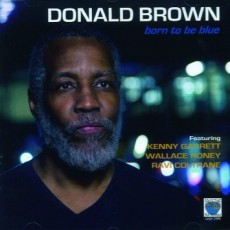
Donald Ray Brown was born on March 28, 1954 in Hernando, Mississippi but was raised in Memphis, Tennessee where he learned to play trumpet and drums in his youth. From 1972 to 1975 he studied at Memphis State University by which time he had made piano his primary instrument.
Donald was inducted into Art Blakey’s Jazz Messengers from 1981 to 1982, then took teaching positions at Berklee College of Music from 1983 to 1985. He went on to accept a position at the University of Tennessee in 1988.
Brown has recorded extensively as a leader amassing eighteen albums for Evidence, Muse, Sunnyside Records and since 1996 for the Space Time record label. As a sideman he was a part of the recording sessions for three Art Blakey albums – Killer Joe, Keystone 3 and Feeling Good. Jazz pianist Donald Brown continues to perform, record and tour.
Give The Gift Of Knowledge
More Posts: piano
Daily Dose Of Jazz…
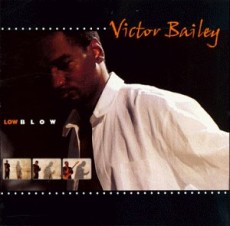
Victor Bailey was born on March 27, 1960 in Philadelphia, New Jersey. He attended Boston’s Berklee College of Music after being disqualified from naval service due to asthma.
Bailey has been extremely active on the jazz scene recording seven albums as a leader. However, he has been more prolific as a sideman recording and touring with the likes of jazz legends and musicians such as Sonny Rollins, Miriam Makeba, Larry Coryell, Lenny White, Kenny Garrett, Roy Haynes, Kenny Kirkland, Sadao Watanabe, Hamiet Bluiet, Kevin Eubanks, Bobby Broom and Steps Ahead among numerous others.
Victor has also worked with Mary J. Blige, LL Cool J, Sting, Madonna, Lady Gaga, Tom Brown, Najee, Olu Dara and Patrice Rushen. He has a Victor Bailey Signature acoustic bass released by Fender, as well as the Victor Bailey Jazz Bass (Artist Series), available in 4, 5-string, fretted and fretless versions. Jazz bassist Victor Bailey, best known for his contributions to Weather Report during their final years from 1982 to 1986, continues to perform, record and tour.
Take A Dose On The Road
More Posts: bass