

Daily Dose Of Jazz…
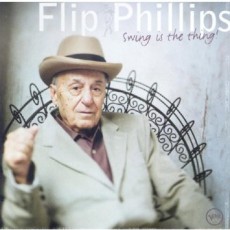
Flip Phillips was born Joseph Edward Filipelli on March 26, 1915 in Brooklyn, New York. In the mid-1940s, he was one of the anchors of the Woody Herman band, and also played with the Woodchoppers, a small spin-off group that Herman led. After this period he went out on his own and joined Jazz at the Philharmonic. His deep, strong and articulate playing with a very full sound contrasted him to his successors such as Stan Getz in the subsequent Herman bands.
Phillips recorded extensively for Clef Records, now Verve, in the 1940s and 1950s, including a 1949 album of small-group tracks under his leadership, with Buddy Morrow, Tommy Turk, Kai Winding, Sonny Criss, Ray Brown and Shelly Manne. He accompanied Billie Holiday on her 1952 Billie Holiday Sings album. He became a frequent player at the Odessa Jazz Party in Odessa, Texas from 1971 to 1991.
Tenor saxophonist and clarinet player Flip Phillips, best known for his work with Jazz At The Philharmonic from 1946 to 1957, passed away in Fort Lauderdale, Florida on August 17, 2001 at the age of 86.

Dose A Day – Blues Away
Daily Dose Of Jazz…
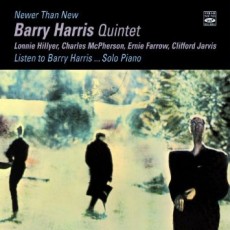
Lonnie Hillyer was born on March 25, 1940 in Monroe, Georgia but moved with his family to Detroit at age three, and began studying music at 14 under Barry Harris. By 1960, he moved to New York City where he played with Charles Mingus, Yusef Lateef and Clifford Jarvis. His association with Mingus lasted more than a decade, performing on records such as “My Favorite Quintet” and “Let My Children Hear Music”.
In 1966, Lonnie and fellow Detroit friend Charles McPherson formed a quintet performed together during the years following. Around 1983 he and former Monk tenor saxophonist Charles Rouse formed a jazz quintet “Bebop Quintessence”, with drummer Leroy Williams, pianist Hugh Lawson and bassist Ben Brown.
Over the years of his career Hillyer performed with Thelonious Monk, Art Blakey, Philly Joe Jones, Willie Bobo, Barry Harris, Walter Davis Jr., Abbey Lincoln, Eric Dolphy and Pharoah Sanders among others.
Jazz trumpeter Lonnie Hillyer, who was strongly influenced by Dizzy Gillespie, Charlie Parker and Thelonious Monk and other bebop legends of the era, passed away of cancer on July 1, 1985 in New York City.
Inspire A Young Mind
More Posts: trumpet
Daily Dose Of Jazz…
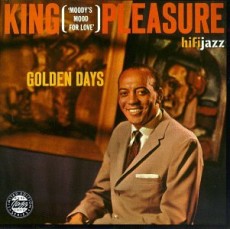
King Pleasure was born Clarence Beeks on March 24, 1922 in Oakdale, Tennessee. He moved to New York City in the mid-1940s and while working as a bartender, he became a fan of bebop music. He first achieved popularity by singing the Eddie Jefferson penned vocalese classic Mood’s Mood For Love, based on a 1949 James Moody saxophone solo to “I’m In The Mood For Love”. On a night in late 1951 at Amateur Night at the Apollo Theater, he won the competition and where Clarence Beeks became King Pleasure that night in Harlem.
Pleasure’s 1952 recording, featured vocalist Blossom Dearie, was his first after signing a contract with Prestige Records and is considered a jazz classic. He and Betty Carter also recorded a famous vocalese version of “Red Top”, a jazz classic penned by Kansas City’s Ben Kynard and recorded by Gene Ammons and others. Other notable recordings include “Parker’s Mood”, the year before Charlie Parker died in 1955, and Ammons’s “Hittin’ The Jug”, retitled as “Swan Blues” in 1962.
He would record with the Modern jazz Quartet, sans Milt Jackson, J.J. Johnson, Kai Winding, Lucky Thompson, with backup vocals by Eddie Jefferson and Jon Hendricks along with The Three Riffs. In Los Angeles in 1960 he was recording with Teddy Edwards and Harold Land. But by this time his popularity was waning and he faded into obscurity. However, his early work influenced Jon Hendricks, Annie Ross, Bob Dorough, Mark Murphy, Al Jarreau, The Manhattan Transfer and others.
Jazz vocalist King Pleasure, an early master of vocalese, where a singer sings words to a famous instrumental solo passed away on March 21, 1982, three days before his 60th birthday.
Give A Gift Of Jazz – Share
More Posts: vocal
Daily Dose Of Jazz…
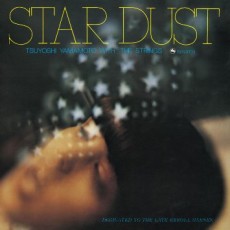
Tsuyoshi Yamamoto was born on March 23, 1948 in Niigata, Japan. He started to play the piano when he was in primary school. In junior high school, he played the trumpet. His interest in jazz began when he first heard Art Blakey’s tunes in the French movie, “Les Liaisons Dangereuses”. It inspired him to return to the piano, to perfect his technique.
Yamamoto was largely self-taught as a pianist, although he did have piano lessons as a child. He attended Nihon University and as a student there, he played professionally, first as an accompanist to pop singer Micky Curtis and the Samurais touring Europe in 1967.
In 1973 Tsuyoshi formed his own band while polishing his piano skills and gleaning influence from Bobby Timmons, Wynton Kelly, Red Garland and Randy Weston. The next year, he became house pianist at Misty, a Tokyo jazz club and recorded his debut as leader.
He played major international festivals in the late 1970s. While living in New York for a year he performed with Dizzy Gillespie, Carmen McRae, Sam Jones, Billy Higgins, Sonny Stitt and Elvin Jones (his favorite drummer) among others. He has recorded fourteen albums as a leader and sideman and continues to perform and record.
Tsuyoshi Yamamoto has a very melodic technique and phrasing with a use of block chords in ballads. The composer and pianist continues to perform and record.
Jazz Is Global – Share
More Posts: piano
Daily Dose OF Jazz…
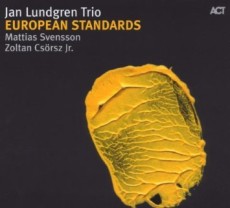
Jan Lundgren was born on March 22, 1966 in Olofstrom, Sweden and raised in Ronneby in the south of the country. He began learning the piano at the age of five and moved to Malmo in 1986 to study at the Academy of Music. He graduated in 1990, later becoming a lecturer at the Academy.
His group, the Jan Lundgren Trio broke through in 1997 with the album Swedish Standards, winning Orkesterjournalen’s Golden Record prize in the same year. In 2007, he became the first Scandinavian jazz pianist to be named an International Steinway Artist.
Since the early ‘90s, Jan has worked with a variety of Sweden’s leading artists both in the studio and/or at concerts such as Povel Ramel, Putte Wickman, Bengan Janson, Jason Diakité, Peter Asplund and Monica Zetterlund to name a few. He has also worked with Johnny Griffin, Mark Murphy, Herb Geller, Joe LaBarbera, Scott Hamilton, Andy Martin, Bill Perkins, Peter Washington, Billy Drummond, Deborah Brown, Lee Konitz, and Stacey Kent among numerous others.
Lundgren has recorded some 40 discs as a leader, under his own name since 1994 on labels including ACT, Fresh Sound, Marshmallow, Sittel, Four Leaf Clover, Volenza, Alfa, Gemini and Bee Jazz. As a sideman, Lundgren has been involved in dozens of other recordings across a broad range of labels.
In 2010, together with Thomas Lantz, Jan founded the annual Ystad Sweden Jazz Festival, for which he is Artistic Director. YSJF, has hosted Quincy Jones, Hugh Masekela, Dee Dee Bridgewater, Hiromi, Pat Martino, Youn Sun Nah, Benny Golson, Enrico Pieranunzi, Tomasz Stanko, Kenny Barron, Elina Duni, Fabrizio Bosso, Kurt Rosenwinkel, Bobo Stenson, Nils Landgren, Benny Green and Eliane Elias, Charles Lloyd, John Scofied, Abdullah Ibrahim, Dianne Schuur, Joshua Redman, Enrico Rava and Roy Hargrove. Pianist Jan Lundgren continues to perform, record and tour.
Put A Dose In Your Pocket
More Posts: piano