

Daily Dose Of Jazz…
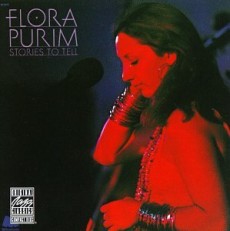
Flora Purim was born on March 6, 1942 in Rio de Janeiro to Jewish parents who were both classical musicians, her father a violinist and her mother a pianist. She discovered jazz when her mother played 78 vinyl rpms of Dinah Washington, Billie Holiday, Frank Sinatra, Bill Evans, Oscar Peterson, and Erroll Garner while her husband was out of the house.
Purim began her career in Brazil during the early 1960s. During this period, she made a recording of bossa nova standards by Carlos Lyra and Roberto Menescal titled Flora e M.P.M. Later in the decade she became lead singer for the Quarteto Novo, led by Hermeto Pascoal and Airto Moreira.
Flora mixed jazz with radical protest songs to defy the repressive Brazilian government of that time and a 1964 military coup led to censorship of song lyrics. Shortly before leaving Brazil she married Airto and arriving in New York in 1967, they became immersed in the emerging Electric Jazz. They toured Europe with Stanley Clarke, Stan Getz and Gil Evans. In 1972, alongside Clarke and Joe Farrell, they were, for the first two albums, members of Return To Forever. That year the band released their debut self-titled album Return To Forever, followed the same year as Light as a Feather.
In 1973, Purim released her first solo album in the United States, titled Butterfly Dreams. She was chosen by the Down Beat reader’s poll as one of the top five jazz singers. She worked with Carlos Santana and Mickey Hart and throughout the 1970s, Flora released a string of albums for the Milestone label, became involved with the Uruguayan band Opa, (which means “hi” in Uruguay), Purim collaborated in vocals in the band’s second album Magic Time, and in return, Opa played in “Corre Niña” on Flora’s album Nothing Will Be as It Was…Tomorrow .
In the 1980s Purim toured with Dizzy Gillespie’s United Nation Orchestra, culminating with Gillespie’s Grammy Award-winning album Dizzy Gillespie and the United Nation Orchestra – Live at the Royal Festival Hall, London. The Nineties saw her singing on the Grammy Award-winning album Planet Drum by Mickey Hart, the release of her own album and world tour, Speed of Light and a new band with contributions from Billy Cobham, George Duke, Alphonso Johnson, Giovanni Hidalgo and others.
Through the 1990s, Purim worked on a number of Latin projects, collaborated with P.M. Dawn on the album Red Hot + Rio. She has a huge catalogue of music that showcases her rare six-octave voice renders a vocal style influenced by Sarah Vaughan and Ella Fitzgerald, drifting from lyrics to wordlessness without ever losing touch with the melody and rhythm. She broadened her repertoire to include traditional mainstream jazz, bebop and doing numbers in 4/4 time instead of the traditional Brazilian 2/4 beat. She is a 4-time winner Down Beat’s Best Female Jazz Vocalist and 2-time Grammy nominee for Best Female Jazz Performance and has been named “Order of Rio Branco” by Brazil President Fernando Henrique Cardoso. She continues to perform, record and tour.

Take A Dose On The Road
More Posts: vocal
Daily Dose Of Jazz…
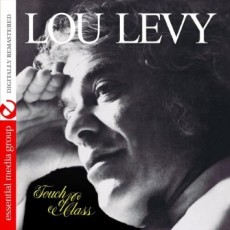
Louis A. Levy, generally known as Lou Levy, was born on March 5, 1928 in Chicago, Illinois and started playing piano when he was twelve. His chief influences were Art Tatum and Bud Powell. A professional at age nineteen, he played with George Auld, Sarah Vaughan, Chubby Jackson, Boyd Raeburn and Woody Herman’s Second Herd during the late Forties. Still with Woody Herman by 1950, he moved on to play with Tommy Dorsey, Flip Phillips before leaving music for a few years.
Lou returned to music and gained a strong reputation as an accompanist to singers, working with Peggy Lee, Ella Fitzgerald, June Christy, tony Bennett, Anita O’Day and Pinky Winters. He would also go on to play with Shorty Rogers, Stan Getz, Sonny Stitt, Coleman Hawkins, Bob Cooper, Bennie Wallace, Terry Gibbs, Benny Goodman, Quincy Jones, Supersax, and most of the major West Coast players.
Over the course of his career he recorded as a leader for Nocturne, RCA, Jubilee, Philips, Interplay and Verve leaving behind a catalogue of fourteen albums as a leader and another eighty-one as a sideman.
Bebop and cool jazz pianist Lou Levy died of a heart attack in Dana Point, California at the age of 72 on January 23, 2001.
Dose A Day – Blues Away
More Posts: piano
Daily Dose Of Jazz…
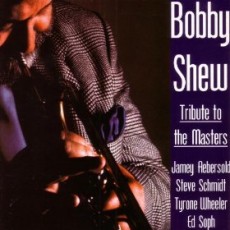
Bobby Shew was born Robert Shew on March 4, 1941 in Albuquerque, New Mexico. He began playing the guitar at the age of eight but by ten switched to the trumpet. By thirteen he was playing at local dances with various groups and at fifteen put together his own group. This gave him the opportunity to play dances, concerts, jazz coffee houses and dinner clubs.
After leaving college in 1960 he was drafted into the U.S. Army and played trumpet with the NORAD band in Colorado Springs and on tour. After leaving the Army he joined the big bands of Tommy Dorsey and Woody Herman, Della Reese and followed by the Buddy Rich Big Band in the mid to late 1960s.
By 1972 Bobby had moved from Las Vegas to Los Angeles where he became a top shelf studio musician. He also played with some of the top big bands of the era through the end of the 1970s: Toshiko Akiyoshi, Lew Tabackin, Louis Bellson, Maynard Ferguson and numerous others. In addition to playing on several notable Big Band recordings starting in the 1960s, he recorded several albums as leader starting with his 1978 debut recording Telepathy.
Shew has held the position of Trumpet chairman of the International Association of Jazz Educators, has authored numerous books on trumpet performance and technique, andis on the Board of Directors of the International Trumpet Guild.
Trumpeter and flugelhorn player Bobby Shew, now living near his hometown of Albuquerque, spends time mentoring jazz musicians in the area and leading the local Albuquerque Jazz Orchestra. As an educator he is a member of the faculty at the Skidmore Summer Jazz Institute, a two-week residential jazz workshop primarily for high school students, located in Saratoga Springs, New York. He continues to perform, record and tour.
Inspire A Young Mind
More Posts: flugelhorn,trumpet
Daily Dose Of Jazz…
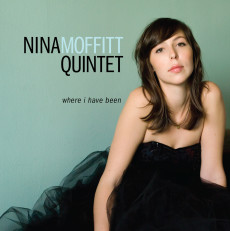
Nina Moffitt was born on March 3, 1987 in Brooklyn, New York and began piano lessons at the age of five. She took up percussion in her father’s church ensemble and finally became a vocalist by leading the church congregation throughout her formative years. Attending the LaGuardia Arts High School of Performing Arts in Manhattan, she studied classical music, gospel, jazz, and new music composition. Simultaneously she studied jazz voice privately at the Brooklyn Conservatory of Music.
By 2005 Moffitt was singing with the All City Jazz Band at Lincoln Center, was granted an Honorary Mention from the National Foundation for Advancement in the Arts in the category of jazz voice, and performed as a backup singer with pop star Josh Groban.
Graduating from Oberlin College with honors for her work in cultural and linguistic anthropology, not only did Nina study with world renowned Oberlin Conservancy professors like Lorraine Manz and Marcus Belgrave, she performed with the Oberlin Jazz Ensemble for four years, led jazz worship services at First Church of Oberlin and Trinity Church in Cleveland.
She cites Joni Mitchell, Sarah Vaughan, Wayne Shorter, and Nina Simone as her influences and has added bossa nova phrasing to her arsenal having studied Portuguese in Brazil. Vocalist Nina Moffitt has recorded her debut album Where I Have Been with her quintet and continues to perform with her band in the New York area.
Give A Gift Of Jazz – Share
More Posts: vocal
Daily Dose Of jazz…
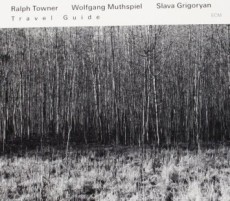
Ralph Towner was born on March 1, 1940 in Chehalis, Washington. Born into a musical family, his mother a piano teacher and his father a trumpet player, Towner learned to improvise on the piano at the age of three. He started trumpet lessons at the age of five, but did not take up guitar until attending the University of Oregon.
Ralph first played jazz in New York City in the late 1960s as a pianist and was strongly influenced by the renowned jazz pianist Bill Evans. He began improvising on classical and 12-string guitars in the late 1960s and early 1970s; and formed alliances with musicians who had worked with Evans, including flautist Jeremy Steig, Eddie Gomez, Marc Johnson, Gary Peacock ad Jack DeJohnette.
He began his career as a conservatory-trained classical pianist, who picked up guitar in his senior year in college, then joined world music pioneer Paul Winter’s Consort ensemble in the late 1960s. Leaving Winter along with band mates Paul McCandless, Glen Moore and Colin Walcott, they formed the group Oregon, mixing folk, Indian classical, avant-garde jazz and frr improvisation.
Around the same time, Towner began a longstanding relationship with ECM Records, releasing virtually all of his non-Oregon recordings since his 1972 debut as a leader Trios / Solos. As a sideman he has ventured int jazz fsion with Weather Report on the 1972 album I Sing The Body Electric.
Unlike most jazz guitarists, Ralph only uses 6-string nylon-string and 12-string steel-string guitars. He tends to avoid high-volume musical environments, preferring small groups of mostly acoustic instruments that emphasize dynamics and group interplay. He make significant use of overdubbing, allowing him to play piano or synthesizer and guitar on the same track. During the Eighties he used more synthesizer but has returned to the guitar in recent years.
Composer, arranger, bandleader and multi-instrumentalist Ralph Towner, who plays 12 string guitar, classical guitar, piano, synthesizer, percussion and trumpet, has an impressive catalogue of some five-dozen recordings spread between his role as a leader, with Oregon, and as a sideman with Paul Winter and Weather Report among others. He continues to perform, record and tour.
Put A Dose In Your Pocket
More Posts: guitar,percussion,piano,synthesizer,trumpet