

Daily Dose Of Jazz…
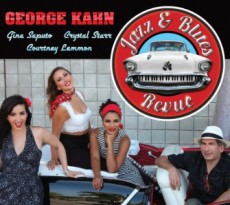
George Kahn was born on January 7, 1952 and grew up in New Rochelle, New York, studying classical music from the age of nine. He began composing while in high school and was always interested in improvisational music. As a Composition Major at Brandeis University, he studied the music of Charles Ives, John Cage and Karlheinz Stockhausen.
In his last years at Brandeis, being particularly affected by John Coltrane’s Kulu Se Mama, which opened his mind towards what was possible in music. After graduating, he lived on Cape Cod for a couple of years, did some gigs in Boston, toured the East Coast with a disco band and eventually moved to California in 1976.
Kahn worked in an improvising New Age group for a few years, studied arranging with Spud Murphy, and performed in a variety of settings. In the latter half of the 1990s he made his move, forming the Playing Music label and Sudhana Music Publishing. Since then he has released six CDs.
George performs frequently in the Los Angeles area, including an annual Jazz For The Homeless fundraiser for the charity PATH (People Assisting The Homeless) and benefits for public school music programs and looks forward to touring again in the near future.
Consistently creative, pianist George Kahn has received critical acclaim for his 2008 “Cover Up!” and continues to perform, subsequently releasing “Jazz & Blues Revue”, an 8–piece band with three vocalists in 2014.

Take A Dose On The Road
More Posts: piano
Daily Dose Of Jazz…
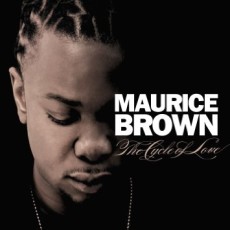
Maurice Brown was born on January 6, 1981 in Harvey, Illinois. Showing a remarkable affinity for the trumpet, he performed with Ramsey Lewis at Chicago’s Symphony Center while matriculating through Hillcrest High School. Following graduation, he received a full scholarship to attend Northern Illinois University, and later continued his studies at Southern University in Baton Rouge, Louisiana, where he worked with famed clarinetist Alvin Batiste.
Relocating to New Orleans shortly thereafter, Maurice began sitting in with numerous jazz veterans, including Clark Terry, Johnny Griffin, Ellis Marsalis and Lonnie Plaxico. He recorded as a sideman with Curtis Fuller, Fred Anderson, Roy Hargrove, Michelle Carr and Ernest Dawkins among others.
In 2001 Brown would win first place in the National Miles Davis Trumpet Competition and in 2003 he released his first album as a bandleader, heading his own quintet for Hip to Bop. The project showed an amazing affinity for bop-inflected jazz, along with a willingness to expand the genre’s lexicon through innovative techniques like playing trumpet solos through a wah-wah pedal.
Trumpeter Maurice Brown continues to live in New Orleans, playing both with his quintet and a hip-hop/funk combo called Soul’d U Out.
Dose A Day – Blues Away
More Posts: trumpet
Daily Dose Of Jazz…
Myra Melford, born on January 5, 1957 in Evanston, Illinois is an avant-garde and post bop jazz pianist and composer. Raised in a house designed by Frank Lloyd Wright, at 3 she started playing the piano on her own, climbing onto the piano bench and improvising. She began taking lessons when she was in kindergarten and developed a strong relationship with her teacher, classically trained boogie-woogie player Erwin Helfer. He introduced her to classical composers such as Bach before moving on to contemporary composers, such as Bartok. He would later teach her to play the blues.
High school saw Myra attending Northwestern University extension program, enrolling in Evergreen State College in Olympia, Washington and studying environmental science. Although she wasn’t listening to jazz she knew it involved improvisation and a sign in a local restaurant for jazz piano lessons sparked her interest in music again. Shortly thereafter she changed her major to music and in 1980 attended Cornish College of the Arts under the tutelage of Art Lande and Gary Peacock.
While living in Olympia, Melford met prominent avant-garde musicians including Oliver Lake, Anthony Braxton Marty Ehrlich and Leroy Jenkins, whose performance with Amina Claudia Myers and Pharaoh Sanders intensified her commitment to improvisation.
A move in 1984 landed Medford in New York City where she studied composition with saxophonist Henry Threadgill, also studied privately with pianists Jaki Byard and Don Pullen, performed with Threadgill Jenkins and Butch Morris. In the late 80s she performed and recorded with flutist Marion Brandis, forming a trio and accelerating her career in the 90s as part of the first Knitting Factory tour of Europe. She recorded three albums with Lindsay Horner and Reggie Nicholson – Jump, Now & Now, and Alive in the House of Saints.
Later in the 90s, Myra moved toward larger groupings with diverse instrumentation, added trumpeter Dave Douglas and reed player Marty Ehrlich and created a quintet, the Myra Melford Extended Ensemble. She also formed a second five-piece, the Same River, and the self-titled debut album was released on Gramavision in 1996, followed by 1999’s Above Blue on Arabesque. She has performed with the Art Ensemble of Chicago, and with Equal Interest, playing harmonium instead of piano.
Since 2000, Melford has formed and recorded as a trio, spent time in India studying harmonium, formed another ensemble to present her Indian studies, relocated to Berkeley, California accepting a professorship at UC Berkeley in contemporary improvisation. She formed Trio M and released another debut album in 2007 followed by a sophomore project in 2012
Myra has received a Guggenheim Fellowship, Doris Duke Charitable Foundation’s Performing Artist Award, and Alpert Award in the Arts for Music, Jazz Journalist Association Pianist and Composer of the Year among others and has a small but impressive catalogue of eight albums and continues to perform, record and educate.
Inspire A Young Mind
Daily Dose Of Jazz…
Nigel Hitchcock was born in Rustington, England on January 4, 1971 and began to play alto sax at the age of eight. In 1982 he and his elder brother Clive joined the National Youth Jazz Orchestra and after one year he took the lead alto chair, holding it for five years. During this time the orchestra toured with different musicians such as Vic Damone, Buddy Greco and Al Martino.
By 16, Hitchcock moved to London and began his career as a session musician and also had recorded TV jingles, movie soundtracks and pop solos. 1989 saw him joining the contemporary saxophone quartet Itchy Fingers and touring throughout Europe and Southeast Asia for 18 months. While with the group he received three jazz awards: the Schlitz Awar for Rising Star; the Cleo Laine Personal Award for Best Young Musician; and the Pat Smythe Trust Award.
With that behind him Nigel left the band and returned to continue working as a pop and session musician. This has given him the opportunity to work with many artists, among other, Tom Jones, Wet Wet Wet, Beverly Craven, Ray Charles, Swing Out Sister, Joe Cocker, Cher, Robbie Williams, Claire Martin, Mark Isham, Mark Knopfler and the London Symphony Orchestra. He has also released his debut solo album “Snake Ranch Sessions”.
Give A Gift Of Jazz – Share
More Posts: saxophone
Daily Dose Of Jazz…
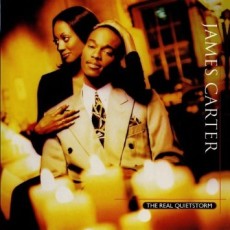
James Carter was born January 3, 1969 in Detroit, Michigan and learned to play under the tutelage of Donald Washington, becoming a member of his youth jazz ensemble Bird-Trane-Sco-NOW!! As a young man, he attended Blue Lake Fine Arts Camp and become the youngest faculty member at the camp. He first toured Europe (Scandinavia) with the International Jazz Band in 1985 at the age of 16.
By 1988, while at the Detroit Institute of Arts, Carter was a last-minute addition for guest artist Lester Bowie, which turned into an invitation to play with his new quintet in New York that following November at the now defunct Carlos 1 jazz club. This New York invite was pivotal in his career, putting him in musical contact with the world, and he moved to the city two years later.
James has won Down Beat magazine’s Critics and Readers Choice award for baritone saxophone several years in a row. He has performed, toured and played on albums with Lester Bowie, Julius Hemphill, Frank Lowe & the Saxemble, Kathleen Battle, the World Saxophone Quartet, Cyrus Chestnut, Wynton Marsalis, Dee Dee Bridgewater and the Mingus Big Band. On his 2000 album Chasin’ the Gypsy, he recorded with his cousin, jazz violinist Regina Carter.
An authority on vintage horns, Carter owns an extensive collection of them. He continues to be a prominent force as a performer and recording artist on the jazz scene since the late 1980s, playing saxophones, flute and clarinets.
Jazz Is Global – Share