

Daily Dose Of Jazz…
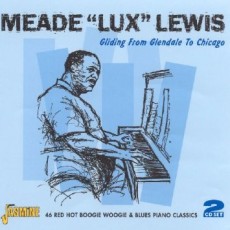
Meade Lux Lewis was born Meade Anderson Lewis on September 4, 1905 in Chicago, Illinois. As a child, he was greatly influenced by pianist Jimmy Yancey.
His 1927 rendition of “Honky Tonk Train Blues” for Paramount Records marked his recording debut and his best-known work. His early recordings included Adrian Rollini, Frankie Trumbauer, classical harpsichordist Sylvia Marlowe, theater organist George Wright and drummer Cozy Cole. His performance at John Hammond’s historic “From Spirituals to Swing” concert at Carnegie Hall in 1938 brought Lewis to public attention.
He went on to perform with Albert Ammons and Pete Johnson, played an extended engagement at Café Society, toured as a trio, and inspired the formation of Blue Note Records in 1939. Their success led to a decade long boogie-woogie craze with big band swing treatments by Tommy Dorsey, Will Bradley and others.
He became the first jazz pianist to double on celeste, recorded with Edmond Hall and Charlie Christian, also, then continued to Chicago and California. Lewis appeared in the movies “New Orleans”, “Nightmare” and “It’s A Wonderful Life” playing piano in the scene where George Bailey gets thrown out of Nick’s Bar.
Pianist and composer Meade Lux Lewis, who played the swing, blues and boogie-woogie styles, died in a car accident in Minneapolis, Minnesota on July 7, 1964.

Put A Dose In Your Pocket
More Posts: piano
Daily Dose Of Jazz…
Judy Bady was born on September 3, 1956 in Benton Harbor, Michigan. She went on to matriculate through William Paterson University with a degree in Music Studies. One hears the influence of her great predecessors with her vocal artistry, having a dramatic & rich vocabulary of musically composed American song. After a couple of auspicious performances with Bobby McFerrin at his concert performances, he advised her to leave Kalamazoo and pursue her singing career.
Moving to New York City in 1988 and delved into the artistic scene. Four years later she again appeared with McFerrin in an impromptu duet at the JVC Jazz Festival, again the following year for several songs at the Blue Note
She has performed and/or recorded with such luminaries as Hamiet Bluiett, Doug Carn, Andrew Cyrille, Jon Faddis, Billy Harper, Jon Hendricks, John Hicks, Oliver Lake, Bill Lee, Bobby McFerrin, Rene McLean, Hilton Ruiz, Paul Serrato and Francesca Tanksley, among others.
The vocalist, actress and writer has won multiple Down Beat music awards including Best Jazz Vocalist and was featured in the international award-winning documentary, “Jazzwomen: The Female Side of Jazz”.
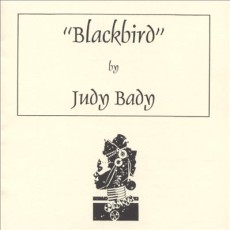
Vocalist Judy Bady, with an emotional range from tender to swinging in her singing, recorded her debut album as a leader and titled it “Blackbird” in 2003. She continues to perform and record.
Give The Gift Of Knowledge
More Posts: vocal
Daily Dose Of Jazz…
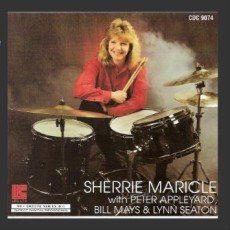
Sherrie Maricle was born Sharon Lee Maricle on September 2, 1963 in Buffalo, New York. She began playing drums professionally performing locally with Slam Stewart while studying music at SUNY-Binghamton. She then attended New York University where she completed a Masters in Jazz Performance and a Doctorate of Philosophy in Jazz Performance and Composition.
Maricle directed Saturday jam sessions at the Village Gate from 1987 until the venue closed in 1993. Beginning in 1987, she also began collaborating and leading small groups with Peter Appleyard. In the late 1980’s, she was appointed director of percussion studies at NYU.
By the 1990’s Sherrie was performing with the New York Pops, Clark Terry, Al Grey and began working with the group DIVA, currently leading the DIVA Jazz Orchestra, the DIVA Jazz Trio, and the quintet Five Play.
As an educator she teaches on the jazz faculty of the New York State Summer Music Festival, as well as running her own private drum and percussion studio. In 2009, she received the Lifetime Achievement Award at the Mary Lou Williams Women in Jazz Festival. Drummer Sherrie Maricle continues to perform, tour and record.
Take A Dose On The Road
More Posts: drums
Daily Dose Of Jazz…
Essiet Okon Essiet was born on September 1, 1956 in Omaha, Nebraska to Nigerian parents. His father worked for the U.S. and Nigerian governments, moving the family from city to city. While living in Wisconsin he began studying violin at age 10 later switching to bass viola at 14.
As a child, his wide travels with his family gave him early exposure to many cultures, folkways, languages, and religions fostered his worldview of strength through diversity. This gave Essiet the ability to fluently mix styles, though he predominantly plays in the modern idiom.
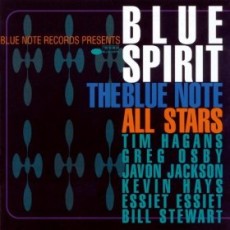
Essiet was Art Blakey’s last bassist, playing with him for 2 years and recording on three sessions. He has performed with Freddie Hubbard, Cedar Walton, Benny Golson, Mulgrew Miller, Jeff “Tain” Watts, Bobby Watson, Billy Higgins, Kenny Kirkland, Joe Henderson, Johnny Griffin, Kevin Mahogany, Kurt Elling and Geri Allen and the Blue Note All Stars to name a few.
Since 1985 he has been at the Conservancy in The Hague as a lecturer. One of the most in demand bassist in jazz, Essiet currently leads Ibo, a Nigerian jazz project.
Dose A Day – Blues Away
More Posts: bass
Daily Dose Of Jazz…
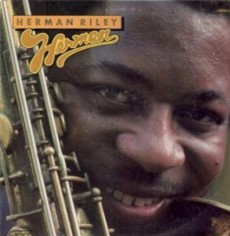
Herman Riley was born on August 31, 1933 in Algiers, Louisiana across the river from the French Quarter in New Orleans into a family setting where his mother Nell Brooks was a hard swinging jazz and gospel singer. He attended the L.B. Landry High School and under the influence of his music teacher William Houston, heard local jazzmen playing at assemblies and school dances.
In his mid-teens Herman took to the saxophone after seeing Illinois Jacquet but inspired by the locals he organized a jazz combo with his friends and took part in his school orchestra and marching band. It wasn’t long before he “was on the street, playing professionally”, taking short-lived gigs with R&B bandleaders like Ivory Joe Hunter, Guitar Slim and Paul Gayten. By the time he was majoring on cello and bassoon at Southern University in Baton Rouge, Louisiana, Riley had completed eight years of study of European music.
After two non-musical years in the US army and a short spell in New York, he ended up in San Diego, California, pursuing his music studies at City College, while playing in clubs and taking private lessons. After winning an award as outstanding solo artist at the 1962 California colleges’ jazz festival at Monterey, Riley felt confident enough to make for Los Angeles.
Recruited for some of LA’s better jazz groups, he played and recorded with Dolo Coker, Bobby Bryant, Smokey Robinson and the Miracles, Martha and the Vandellas, The Supremes, Della Reese, Sammy Davis Jr, Gene Ammons, Bobby Hutcherson and Blue Mitchell among others. Over the course of his illustrious career Riley added flute, oboe, cor anglais, clarinet and bass clarinet to the arsenal of saxophones that he carried to meet the demands of studio sessions. He toured with Quincy Jones, Benny Carter, Lionel Hampton, Mercer Ellington, Monk Montgomery, Jimmy Smith, Etta James, as well as with the Count Basie, Bill Berry and Juggernaut big bands. Quiet in manner and self-effacing, bebop and blues tenor saxophonist Herman Riley died on April 14, 2007 at the age of 73.
Inspire A Young Mind
More Posts: saxophone