


Daily Dose Of Jazz…
Dakota Staton was born on June 3, 1930 in the Homewood section of Pittsburgh, Pennsylvania is also known by her Muslim name Aliyah Rabia. She studied music at the Filion School of Music. She regularly performed as a vocalist with the Joe Wespray Orchestra in the Hill district, a jazz hotspot.
Spending the next several years on the nightclub circuit she played Detroit, Indianapolis, Cleveland and St. Louis. While in New York she came to the attention of Capitol Records producer Dave Cavanaugh. Signing her, they released a series of albums that led to her winning Down Beat’s Most Promising New Comer award in 1955.
Dakota’s biggest hit was The Late, Late Show that went to #4 on the charts in 1957 garnered her international acclaim. The album was followed with In The Night with George Shearing, Dynamic and Dakota At Storyville.
In 1958, she wed Antiguan trumpeter Talib Ahmad Dawud, a Muslim and noted critic of Elijah Muhammad and by the mid-sixties relocated to England. Vocalist Dakota Staton continued to record semi-regularly, her recordings taking an increasingly strong gospel and blues influence until her death on April 10, 2007.
More Posts: vocal

Daily Dose Of Jazz…
Matthew Garrison was born June 2, 1970 in New York. The son of double bassist Jimmy Garrison, he spent the first eight years of his life immersed in a community of musicians, dancers, visual artists and poets. After the death of his father (John Coltrane’s bassist), his family relocated to Rome, Italy where he began to study piano and bass guitar.
In 1988 Matthew returned to the United States and lived with his godfather Jack Dejohnette for two years, studying intensively under him and bassist Dave Holland. In 1989 he received a full scholarship to attend Berklee College of Music in Boston. Along with his studies, he began his professional career with the likes of Gary Burton, Bob Moses, Betty Carter, Mike Gibbs and Lyle Mays to mention a few.
Garrison moved to Brooklyn, New York in 1994 and since then has performed, toured and recorded with artists such as Herbie Hancock, Whitney Houston, Joe Zawinul, Chaka Khan, Meshell Ndege Ocello, Joni Mitchell, Wayne Shorter, Jack Dejohnette, Steve Coleman, Bill Cosby, Paul Simon, Cassandra Wilson, Wallace Roney, Geri Allen, John Mclaughlin, Tito Puente, John Scofield, Pat Metheny and many others.
In 1998 Matthew founded record label and production company, GarrisonJazz Productions, through which he currently produces, promotes and markets his music. Since 2000 he has released two compact discs and a live performance DVD. He is noted for playing his signature series Fodera bass, having created and developed a pizzicato technique that uses four fingers. He continues to perform and record.
More Posts: bass

Daily Dose Of Jazz…
Lennie Niehaus was born June 1, 1929 in St. Louis, Missouri. A musical family heralded a concert pianist sister and a father who was an excellent violinist who started his son on the violin at seven, then switched to the bassoon. At 13 he began learning the alto saxophone and clarinet.
Always interested in composing and writing music Lennie studied music in college and in 1946 began playing professionally with Herb Geller, Herbie Steward and Teddy Edwards in 1946. Six months later he joined Stan Kenton, then drafted in 1952 but two years late rejoined Kenton after his discharge.
Leaving Kenton in 1959, Niehaus began composing, moved back to Los Angeles and arranged for the King Sisters, Mel Torme, Dean Martin, and Carol Burnett. Three years later saw him orchestrating for film composer Jerry Fields, a relationship that yielded more than sixty TV shows and films.
He orchestrates his own pieces and never forgets his jazz roots in film, writing jazz and using jazz musicians like Marshall Royal, Bill Perkins, Pete Jolly, Mike Land, and Clint Eastwood. He was the musical director for the Charlie Parker bio-feature, Bird.
After many years of not playing his alto saxophone at all, Niehaus returned to performing, reportedly in top form. He continues to arrange, compose and play alto on the West Coast jazz scene.
Daily Dose Of Jazz…
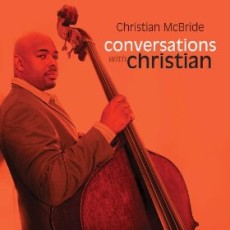
Christian McBride was born May 31, 1972 in Philadelphia, Pennsylvania into a family of bassists, his father Lee Smith and great uncle Howard Cooper who served as his early mentors.
Widely considered to be one of the best bassists of his generation in the jazz community, McBride has performed and recorded with Freddie Hubbard, Joe Henderson, McCoy Tyner, Herbie Hancock, Pat Metheny, Diana Krall, Roy Haynes, Joshua Redman, Chick Corea and Sonny Rollins to name a few as well as in the hip hop, soul, pop and classical genres with The Roots, Kathleen Battle, Carly Simon, Sting, James Brown and others.
Since 2000 Christian has fronted his own band and has become one of the least predictable bands if not intoxicating. Equally adept on the electric bass he was part of The Philadelphia Experiment with Uri Caine and Ahmir “Questlove” Thompson. He took over the relinquished Creative Chair of Jazz with the L.A. Philharmonic from Dianne Reeves, that he held until Herbie Hancock took over four years later in 2010. He is co-director of the new National Jazz Museum in Harlem.
McBride released his first big band album, titled “The Good Feeling” in 2011 for which he won his third Grammy for Best Large Jazz Ensemble Performance.
He currently leads four groups – “Inside Straight” featuring alto/soprano saxophonist Steve Wilson, vibraphonist Warren Wolf, pianist Peter Martin and drummer Carl Allen; a trio with pianist Christian Sands and drummer Ulysses Owens, Jr.; an 18-piece big band, and an experimental group called “A Christian McBride Situation” with pianist/keyboardist Patrice Rushen, turntablists DJ Logic and Jahi Sundance, saxophonist Ron Blake and vocalist Alyson Williams.
More Posts: bass

Daily Dose Of Jazz…
Pee Wee Erwin was born on May 30, 1913 in Falls City, Nebraska. Erwin started on trumpet at age four. He played in several territory bands before joining the groups of Joe Haymes from 1931-1933 and Isham Jones from 1933 to 1934.
By 1934 Pee Wee moved to New York City where he became a prolific studio musician, performing on radio and in recording sessions. He played with Benny Goodman in 1934-35, then with Ray Noble in 1935. The next year he joined Goodman again, taking Bunny Berigan’s empty chair. In 1937 he again followed Berigan, this time in Tommy’s Dorsey’s orchestra, where he remained until 1939.
Erwin led his own big band in 1941-42 and 1946. In the 1950s he played Dixieland in New Orleans, and in the 1960s formed his own trumpet school with Chris Griffin; among its graduates was Warren Vache. Erwin played up until the year of his death, recording as a leader for United Artists in the 1950s and issuing six albums in 1980 and ’81, the last two years of his life.
Trumpeter Pee Wee Erwin passed away on June 20, 1981 in Teaneck, New Jersey.
More Posts: trumpet