
Daily Dose Of Jazz…
Rio De Gregori was born on September 22, 1919 in Zurich, Switzerland. He began taking classical piano lessons at the age of seven and at fourteen he began buying records by Duke Ellington and other jazz musicians. Although his parents wanted to make him a classical pianist, his interest were leaning towards jazz.
Rio first played with Willie Mac Allen in 1939, then with James Boucher, The Lanigiros, Jo Grandjean and René Weiss during the early to mid Forties. He was with the big band of Fred Böhler until 1945 when he founded his own dance orchestra bringing with him some of the best Swiss jazz musicians, Stuff Combe, Bob Jaquillard, Jean Pierre Dupuis, Luc Hoffmann, Raoul Schmassmann and Kurt Weil. He also featured Glyn Paque as a guest soloist.
He disbanded his big band and worked in a trio setting or as a soloist. Performing in Ascona, Switzerland, he met vocalist Suzanne Doucet and composed and arranged for her. Moving to Munich, Germany De Gregori played under the name Rio Gregory and opened a nightclub.
Because of his harmonious flair De Gregori enjoyed an excellent reputation as a pianist recordings. As an arranger he was commissioned by Fred Böhler and other orchestral conductors. He recorded four albums as a leader over the course of his career. Pianist and vocalist Rio De Gregori passed away on May 22, 1987 in Munich, Germany.
Sponsored By


Daily Dose Of Jazz…
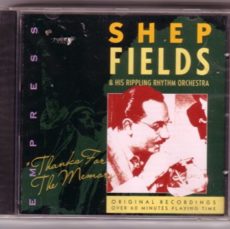
Shep Fields was born Saul Feldman in Brooklyn, New York on September 12, 1910, He played the clarinet and tenor saxophone in bands during college. In 1931 he played at the Roseland Ballroom and by 1933 he led a band that played at Grossinger’s Catskill Resort Hotel. In 1934 he replaced the Jack Denny Orchestra at the Hotel Pierre in New York City. He left the Hotel Pierre to join a roadshow with the dancers,Veloz and Yolanda. In 1936 his performance at Chicago’s Palmer House was broadcast on the radio.
The sound of his wife was blowing bubbles into her soda became his trademark that opened each of his shows. Holding a contest in Chicago for fans to suggest a new name for the band and with “rippling” suggested in more than one entry, Fields came up with “Rippling Rhythm.”
By 1936 he received a recording contract with Bluebird Records and had hits Cathedral in the Pines, Did I Remember? and Thanks for the Memory. In 1937 Fields replaced Paul Whiteman in his time slot with a radio show called The Rippling Rhythm Revue with Bob Hope as the announcer. In 1938, Fields and Hope were featured in his first feature-length motion picture, The Big Broadcast of 1938.
In 1941 Fields revamped the band into an all-reeds group, with no brass section. “Shep Fields and His New Music,” featuring band vocalist Ken Curtis. He reverted to Rippling Rhythm in 1947.
He disbanded the group in 1963, moved to Houston, Texas and became a disc jockey, later worked at Creative Management Associates with his brother Freddie. Shep Fields, who made a mark during the Big Band era, passed away on February 23, 1981 at Cedars-Sinai Medical Center in Los Angeles, California from a heart attack.

Dose A Day-Blues Away
Daily Dose Of Jazz…
Joe Deniz was born José William Deniz on September 10, 1913 in Butetown, Cardiff, Wales to a Black American mother and a Cape Verdean father. He learned the ukulele first, before upgrading to the fuller fretboard and along with his two brothers they all made their mark on the UK jazz dance scene. He started playing on the docks in Butetown, now known as Tiger Bay, where he played impromptu calypsos for the sailors for small change. As his skill increased so he would join other vagrant musicians traveling through the ethnic centers of Cardiff, playing engagements at houses in exchange for drinks. Eventually a nucleus of black musicians came together with Victor Parker, George Glossop and Don Johnson, finding work in Soho clubs.
After a brief sojourn to his home town, Deniz returned as drummer at the Nest, an after hours London club visited by Afro-Caribbean musicians and where he met Fats Waller and his idol, Django Reinhardt. He went on to join Ken ‘Snakehips’ Johnson’s Black Orchestra as his guitarist, remaining until 1941 when Johnson was killed in a Café De Paris bombing. He was injured at the time and had lifelong discomfort in his leg from shrapnel. He found session work with many top-flight band leaders, as well as violinist Stéphane Grappelli. His personal fame also rose via solos with Harry Parry’s Radio Rhythm Club Sextet.
Turning away from jazz, he joined his brothers in the Latin-styled Hermanos Deniz, before joining the West End run of Ipi Tombi, a South African musical which featured his duets with his brother Frank. He retired from music in 1980, contenting himself with his memories, passion for DIY and running a successful business. Guitarist and drummer Joe Deniz, never recorded as a leader but as a member of the Hermanos Deniz group, passed away April 24, 1994.
Sponsored By
Daily Dose Of Jazz…
Lauderic Rex Caton was born on August 31, 1910 in Arima, Trinidad and Tobago, the fourth son and last among the eight children of Robert Caton, who was of Saint Lucian descent, and Margaret Caton. An autodidact on guitar, he was also proficient on saxophone, double bass, and banjo, and began playing professionally at the age of 17.
After spending time in Guadeloupe and Martinique, he moved to Europe in 1938, playing in Paris with Martinican musician Oscar Alemán. He then moved to Brussels and played with Ram Ramirez, Jean Omer, Harry Pohl, and Jamaican Joe Smith. While in Antwerp, Caton played with Gus Clark and Tommy Brookins.
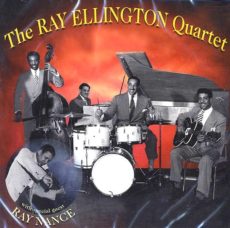
Influenced by Lonnie Johnson and Charlie Christian, he began amplifying his guitar in 1940. Lauderic played in England with Don Marino Barreto and during his tenure met and befriended saxophonist Louis Stephenson, who became a frequent collaborator. He led a house band at Jig’s Club working with Cyril Blake, Johnny Claes, Bertie King, Harry Parry, Dick Katz, and Coleridge Goode. By the 1940s he played with Ray Ellington and Ray Nance, playing under the pseudonym Lawrence Rix for legal reasons.
Guitarist Lauderic Caton went on to teach and build custom amplifiers. He passed away in London, England on February 19, 1999 at age 88 and was interred in Port Of Spain, Trinidad.
Dose A Day-Blues Away
More Posts: guitar
Daily Dose Of Jazz…
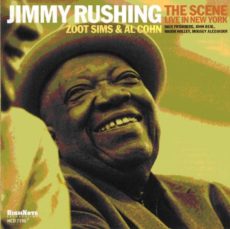
James Andrew Rushing was born on August 26, 1901 in Oklahoma City, Oklahoma into a family with musical talent and accomplishments. His father, Andrew, was a trumpeter and his mother, Cora and her brother were singers. He studied music theory with Zelia N. Breaux at Douglass High School, and was unusual among his musical contemporaries, having attended college at Wilberforce University.
Rushing was inspired to pursue music and eventually sing blues by his uncle Wesley Manning and George “Fathead” Thomas of McKinney’s Cotton Pickers. Touring the midWest and California as an itinerant blues singer in 1923 and 1924, he eventually moved to Los Angeles, California, where he played piano and sang with Jelly Roll Morton. He also sang with Billy King before moving on to Page’s Blue Devils in 1927. He, along with other members of the Blue Devils, defected to the Bennie Moten band in 1929.
When Moten died in 1935 Jimmy joined Count Basie for what would be a 13-year tenure. Due to his tutelage under his mentor Moten, he was a proponent of the Kansas City jump blues tradition as heard in his versions of Sent For You Yesterday and Boogie Woogie for the Count Basie Orchestra. After leaving Basie,, as a solo artist and a singing with other bands.
When the Basie band broke up in 1950 he briefly retired, then formed his own group and his recording career soared. He also made a guest appearance with Duke Ellington for the 1959 album Jazz Party. In 1960, he recorded an album with the Dave Brubeck Quartet, known for their cerebral cool jazz sound. Rushing appeared in the 1957 television special Sound of Jazz, singing one of his signature songs I Left My Baby backed by many of his former Basie band compatriots. In 1958 he was among the musicians included in an Esquire magazine photo by Art Kane, later memorialized in the documentary film A Great Day in Harlem.
In 1958 Jimmy toured the UK with Humphrey Lyttelton and his band, appeared in the 1969 Gordon Parks film The Learning Tree, and by 1971 was diagnosed with leukemia, that sidelined his performing career. On June 8, 1972 vocalist Jimmy Rushing, who was known as a blues shouter, balladeer and swing jazz singer, passed away in New York City. He was one of eight jazz and blues legends honored in a set of United States Postal Service stamps issued in 1994. Among his best known recordings are “Going to Chicago” with Basie, and “Harvard Blues”, with a famous saxophone solo by Don Byas.

Miami