


Daily Dose Of Jazz…
Double bassist John Levy was born April 11, 1912 in New Orleans but was raised in Chicago, Illinois. In 1944 he left Chicago for the bright lights of New York and played bass with Ben Webster, Erroll Garner, Milt Jackson and Billie Holiday. In ’49 he became the original bassist for the George Shearing Quintet and took on the responsibility as his road manager.
1951 saw him turning to business and opening John Levy Enterprises, Inc. becoming the first black personal manager in pop and jazz. By the sixties his roster was boasting clients including Nancy Wilson, Cannonball Adderley, George Shearing, Joe Williams, Shirley Horn and Ramsey Lewis.
In 1997, John Levy was inducted into the International Jazz Hall Of Fame and in 2006 was named a Jazz Master by the National Endowment for the Arts. Bassist and personal manager John Levy passed away on January 20, 2012 at age 99 in Altadena, California.
Daily Dose Of Jazz…
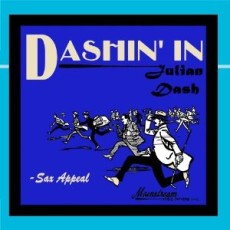
Tenor saxophonist Julian Dash was born on April 9, 1916 in Charleston, South Carolina. He first played the alto saxophone and made his debut in the Charleston Nighthawks in 1935, then switched to tenor that year playing with the Revellers and the Bama State Collegians at Alabama State Teachers College from 1935-36 followed with a move to New York to study embalming.
Dash headed his own group from 1936 to 38 then replaced Paul Bascomb in the Erskine Hawkins Orchestra, an association that lasted into the 50’s. After the group disbanded Julian became a part-time player, worked with Buck Clayton in 1953, worked with Marlowe Morris in the sixties, led his own quintet in 1970-71 prior to retiring in 1971. Julian Dash, tenor saxophonist who was based in swing music and co-wrote the classic hit Tuxedo Junction, passed away on February 25, 1974.

More Posts: saxophone
Daily Dose Of Jazz…
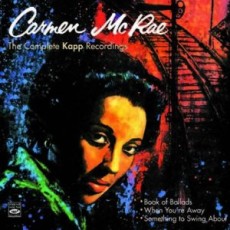
Carmen Mercedes McRae was born on April 8, 1920 in Harlem, New York City to Jamaican immigrant parents. She began studying piano at eight and the music of Louis Armstrong and Duke Ellington filled her home. Drawing inspiration from Billie Holiday, whom she met at 17, she developed and established her own distinctive voice. As a teenager she came to the attention of longtime Holiday collaborator Teddy Wilson and his composer wife, Irene Kitchings Wilson and through their influence Billie recorded her early composition “Dream of Life”.
In her late teens and early twenties, McRae worked as a secretary, sang as a chorus girl, played piano at Harlem’s famous Minton’s Playhouse where she met Dizzy Gillespie, Oscar Pettiford and Kenny Clarke. By 1944 she was playing piano with Benny Carter, working with Count Basie and made her first recording as a pianist with Mercer Ellington between 1946-47. But it was her meeting of Milt Gabler that got her signed to Decca and over the next five years she produced twelve albums.
A four-year stint in Chicago from 1948 to 1952 gave her, in her own words, “Those years in Chicago gave me whatever I have now… That’s the most prominent schooling I ever had.” Upon her return to New York she landed the record contract that launched her career and got her voted best new female vocalist by Down Beat magazine.
Carmen McRae enjoyed an opulent career that would span fifty years producing memorable albums with composer Noel Coward, Sammy Davis Jr., Dave Brubeck, George Shearing, Louis Armstrong, Cal Tjader and Betty Carter. She never performed without singing at least one song associated with Lady Day and recorded tribute albums to Billie Holiday, Thelonious Monk and Sarah Vaughan. She sang in jazz clubs throughout the U.S. and around the world, performed at the North Sea and Montreux Jazz Festivals and was a seven-time invitee to the Monterey’s Jazz Festival. She recorded over 60 albums and it was her behind-the-beat phrasing and ironic interpretations of lyrics that made her memorable.
Refusing to quit smoking, she was forced to retire in 1991 due to emphysema and on November 10, 1994 Carmen McRae, singer, composer, pianist and actress died in Beverly Hills, California from a stroke following complications from respiratory illness. She was 74.

Daily Dose Of Jazz…
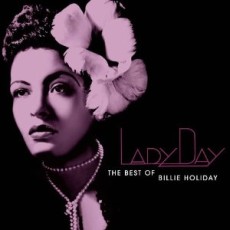
Billie Holiday was born Elinore Harris on April 7, 1915 in Philadelphia, Pennsylvania to a single mother who often left her to be raised by relatives. Surviving a tumultuous childhood in and out of reform schools, it was while working in a brothel at fourteen that she first heard the songs of Louis Armstrong and Bessie Smith. She soon teamed up with tenor saxophonist Kenneth Hollan and changing her name to Billie Holiday, her first taken from an actress she admired and taking her father Clarence last name. For the next two years played clubs like Grey Dawn, Pod’s and Jerry’s and the Brooklyn Elks Club. Replacing Monette Moore in 1933 at Govan’s gave producer John Hammond his first opportunity to hear her and he quickly set up a recording session with Benny Goodman who had heard her two years earlier.
By 1935 she was recording with Teddy Wilson which produced “What A Little Moonlight Can Do” and Miss Brown To You” and established Billie as a major vocalist. Under the Brunswick label during the 1930’s and 40’s, Wilson and Holiday revolutionized improvising melodies to fit the emotion of the lyric and these recordings caught singers attention nationwide who began imitating Billie’s light, rhythmic style.
Among the musicians who accompanied her frequently was her friend tenor saxophonist Lester Young, who dubbed her “Lady Day” and she in turn nicknamed him “Prez”. She also worked with Count Basie and Artie Shaw during this period; the latter arrangement of working with an all-white band went against the tenor of the times. Throughout her career she co-wrote notable jazz standards “God Bless The Child”, Don’t Explain”, Fine and Mellow”, “Lady Sings The Blues” and made “Easy Living” and “Strange Fruit” her signatures. Turbulence followed her from her childhood into adulthood with failed marriages, drug addiction, incarceration and the revocation of her cabaret card prohibiting her from working in New York City.
Arrested for drug possession while she lay dying of cirrhosis of the liver in New York City’s Metropolitan Hospital, she passed away on July 17, 1959. Billie Holiday’s well-trained ear, distinct delivery, masterful improvisation and infallible technique left a profoundly essential impressive catalogue of music that has influenced countless generations of jazz singers.

More Posts: vocal
Daily Dose OF Jazz…
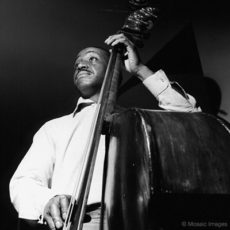
Gene Ramey, born April 4, 1913 in Austin, Texas, began playing trumpet in college but switched to the sousaphone when he played with George Corley’s Royal Aces, The Moonlight Serenaders and Terence Holder. It wasn’t until his move to Kansas City in 1932 that he took up the bass, studying with Walter Page.
Becoming a fixture in the Kansas City jazz scene, the double bassist played with Jay McShann’s orchestra from 1938 to 1943. Never a leader but a most sought after sideman, especially once he moved to New York, Ramey played with the who’s who of jazz including but not limited to Lester Young, Coleman Hawkins, Charlie Parker, Count Basie, Ben Webster, Hot Lips Page, Horace Silver, Thelonious Monk and Miles Davis.
His transition into bebop was easily accomplished due to the countless hours of daily practice with his friend Bird. They developed their style without drums, piano or other horns and Ramey was soon the first bassist to play the whole harmony chord while Bird ran his changes. Ramey is credited with stating that long before the jazz world started calling it bop he and Bird had created this pattern.
Ramey had a prolific career as a bassist for over three decades, never losing touch with Dixieland or swing as witnessed in his solos on recording sessions. Returning to Austin in 1976 his short-lived retirement led to lessons to local bassists, then to live performances and full-time musicianship until a heart attack caused his death on December 8, 1984.

More Posts: bass