Daily Dose Of Jazz…
Benny Harris was born on April 23, 1919 in New York City. His first major gig as a trumpeter was in 1939 with Tiny Bradshaw. He would go on to play with Earl Hines in 1941 and 1943, and worked New York’s 52nd Street bebop circuit in the 1940s.
Harris collaborated with Benny Carter, John Kirby, Coleman Hawkins, Don Byas and Thelonious Monk. He was with Boyd Raeburn from 1944-45 and Clyde Hart in 1944; he and Byas worked together again in 1945. He played less in the late 1940s, though he appeared with Dizzy Gillespie in 1949 and Charlie Parker in 1952. After this Harris quit music entirely.
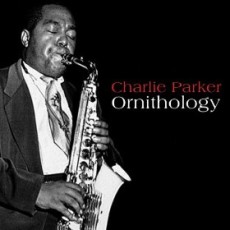
Never a well-known soloist, Benny is better known for such compositions as “Crazeology” and “Ornithology”, the latter being a signature Charlie Parker tune; “Reets and I”, a Bud Powell favorite; and “Wahoo”, a tune associated with Duke Pearson.
Benny Harris, bebop trumpeter and composer died on May 11, 1975 in San Francisco, California.

More Posts: trumpet
Daily Dose Of Jazz…
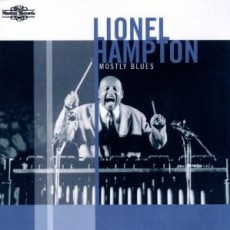
Lionel Leo Hampton was born on April 20, 1908 in Louisville, Kentucky and was raised by his grandmother. The multi-instrumentalist spent his early childhood first in Birmingham, Alabama and then in Kenosha, Wisconsin before his family settled in Chicago by the time he was ten. During his teen years he took up the xylophone, fife and drums. It was drums that kicked started his career in music playing with the Chicago Defender Newsboy’s Band.
Towards the end of the Roaring Twenties Hampton moved to California playing with the Dixieland Blues-Blowers, the Les Hite band and recording with The Quality Serenaders. But it was in 1930 when Louis Armstrong invited Hampton to play vibes during one of his California dates that his career as a vibraphonist and the popularity of the instrument began. But it was later that his star would shine when Johnny Hammond brought Benny Goodman to see Hampton play and invited him to join his group.
Over the course of his lifetime Lionel Hampton led his own orchestras, played with Bing Crosby, Billie Holiday, Teddy Wilson, Gene Krupa, Wes Montgomery, Illinois Jacquet, Dinah Washington Arnett Cobb, Charlie Parker, Quincy Jones, Buddy Rich, Slam Stewart and the list of jazz luminaries is to numerous.
Hampton, a vibraphonist, pianist, percussionist, bandleader and actor was inducted into the Alabama Jazz Hall of Fame in 1992, received the Papal Medal from Pope Paul VI, has toured and performed around the world, had his vibraphone of 15 years placed in the National Museum of American History and the University of Idaho renamed their music school for Hampton, becoming the first university to do so for a jazz musician.
One of the first jazz pioneers of the vibes and a giant whose career spanned over six decades, Lionel Hampton passed away of heart failure at the age of 94 on August 31, 2002.
More Posts: vibraphone
Daily Dose Of Jazz…
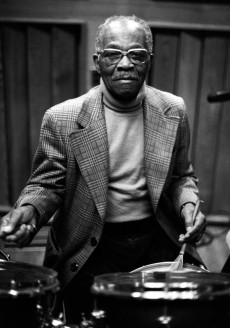
Thomas “Tommy” Benford was born in Charleston, West Virginia on April 19, 1905 the younger brother of tuba player Bill Benford. He studied drums and music at the Jenkins Orphanage in Charleston, South Carolina and went on tour with the school band traveling to Europe in 1914. By 1920 he was working with the Green River Minstrel Show. He returned to Europe in 1932 becoming part of the expatriate community, for the next nine years toured and played with all the great jazz musicians who came to the continent.
He returned to the United States in 1941 and throughout his long career Benford played and recorded with Jelly Roll Morton, Duke Ellington, Fats Waller, Eddie South, Coleman Hawkins Bill Coleman, Joe Turner, Django Reinhardt, Sidney Bechet, Noble Sissle and Willie “The Lion” Smith. He is credited with helping Chick Webb to play drums and shaped early jazz drumming alongside Sid Catlett.
For the last several decades of his life he was a member of the Harlem Blues and Jazz Band and with Bob Greene’s World of Jelly Roll Morton. Jazz drummer Tommy Benford passed away at the age of 88 on March 24, 1994 in Mount Vernon, New York.

More Posts: drums
Daily Dose Of Jazz…
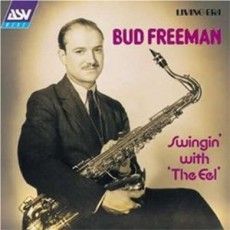
Lawrence “Bud” Freeman was born on April 13, 1906 in Chicago, Illinois and became one of the most influential and important jazz tenor saxophonists of the Big Band era. During high school in 1922 he became one of the original Austin High School Gang playing the C-melody saxophone alongside Jimmy McPartland and Frank Teschemacher. Two years later he switched to tenor and influenced by the New Orleans Rhythm Kings and Louis Armstrong the Gang would formulate their own style that would become part of the emerging Chicago jazz sound.
In 1927 Freeman moved to New York and worked as a session player and band member with Red Nichols, Roger Wolfe Kahn, Ben Pollack Joe Venuti and Eddie Condon in 1933 producing one of his most notable performances on the recording of “The Eel” which would later become Bud’s nickname for his long snake-like improvisations.
Bud’s smooth and full-tenor sax style with a heavy robust swing was the signature that got him gigs with the Tommy Dorsey and Benny Goodman orchestras along with leading his own Summa Cum Laude Orchestra. During WWII he joined the Army and led the band in the Aleutian Islands. Returning to New York after his discharge, for the next couple of decades he led his own groups, worked with Eddie Condon, Buck Clayton, ruby Braff, Vic Dickerson and Jo Jones. He was a member of the World’s Greatest Jazz Band off and on, moved to England in 1974, performing, touring and recording throughout Europe. He returned to Chicago and continued to work well into his eighties.
Tenor saxophonist, clarinetist, composer and bandleader Bud Freeman passed away on March 15, 1991 in his hometown of Chicago. He was posthumously inducted into the Big Band and Jazz Hall Of Fame in 1992.

Daily Dose Of Jazz…
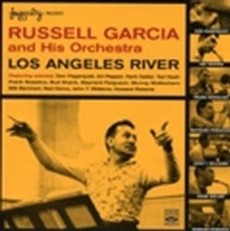
Russell Garcia was born April 12 1916 in Oakland, California but for most of his life has resided in New Zealand. The self-taught musician with only a few lessons in high school could read music from a very young age. He began his career at age five when one of his brothers bought him a $5 cornet. In school he started up a jazz band so he could play his horn and it became an outlet for his compositions and arrangements.
When Garcia was eleven the Oakland Symphony Orchestra performed his arrangement of Stardust and by high school was playing five nights a week. After a year at San Francisco State University he dropped out and went on the road with several big bands. Finding no satisfaction in his progress he went to Hollywood and studied composition, harmony, orchestration, counterpoint and form with the best teachers and took lessons on every instrument so he could write for each with a deeper awareness. During that time while still in his twenties he conducted the West Hollywood Symphony Orchestra, preparing him for things to come.
Russell’s big break came in 1939 when he took the job of composer/conductor for “This Is Our America” and impressed then director Ronald Reagan, who in turn, recommended him to NBC. From that point on worked poured in. He worked with Henry Mancini on the Glenn Miller Story, Charlie Chaplin, Universal Studios, arranged and conducted Louis Armstrong and Ella Fitzgerald’s “Porgy & Bess”, then followed up with three more albums with Armstrong.
Always the innovator Garcia left Hollywood for jazz and using experimental frameworks assembled his groundbreaking four-trombone band with famed brass players Frank Rosolino, Tommy Pederson, Maynard Ferguson and Herbie Harper and Marty Paich. He recorded over sixty albums under his own name, as well as composing for Stan Kenton’s cutting edge Neophonic Orchestra. He collaborated with Frances Faye, Anita O’Day, Mel Torme, Andy Williams, Judy Garland, Orson Welles, Julie London and Oscar Peterson.
In 1966 he walked away from his success in music to advocate world peace, a promise he made to himself after surviving World War II’s Battle of the Bulge. He continues to lecture and record around the globe and has authored what is considered the definitive textbooks on composition, “The Professional Arranger Composer Books I and II” used in universities and conservatories worldwide. Composer and arranger Russell Garcia passed away on November 19, 2011.