

Daily Dose Of Jazz…
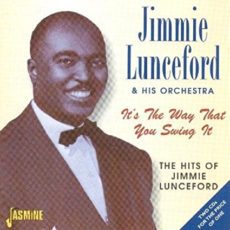
James Melvin Lunceford was born on June 6, 1902 on a 53 acre farm in the Evergreen community, west of the Tombigbee River, near Fulton, Mississippi. They moved seven months after his birth to his other’s hometown of Oklahoma City, Oklahoma and as a child he learned several instruments. By high school they were living in Denver, Colorado where he studied music under Wilberforce J. Whiteman, father of bandleader Paul Whiteman. He went on to continue his studies at Fisk University. By 1922, he was playing alto saxophone in a local band led by the violinist George Morrison which included Andy Kirk, another musician destined for fame as a bandleader.
In 1927 he organized a student band at Manassas High School in Memphis, Tennessee called the Chickasaw Syncopators, and later changed to the Jimmie Lunceford Orchestra. Under the new name, the band started its professional career in 1929 and made its first recordings in 1930. He gained recognition as the first public high school band director in Memphis. After a period of touring, the band accepted a booking at the Harlem nightclub The Cotton Club in 1934 for their revue ‘Cotton Club Parade’ starring Adelaide Hall. His orchestra, with their tight musicianship and the often outrageous humor in their music and lyrics, made an ideal band for the club, and his reputation began to steadily grow.
The band’s style of playing was based its ensemble work and for using a two-beat rhythm, called the Lunceford two-beat, as opposed to the standard four-beat rhythm, a distinction made possible by the imaginative arrangements by trumpeter Sy Oliver. Comedy and vaudeville also played a distinct part in Jimmie’s presentation incorporating costumes, skits and jabs at mainstream white bands.
Over the next decade the orchestra recorded on the Decca and Vocalion labels, toured Europe extensively, lost arranger Oliver to the Dorsey band and appeared in the movie Blues In The Night. Unfortunately, most of Lunceford’s sidemen were underpaid and left for better paying bands, leading to the band’s decline.
On July 12, 1947 while signing autographs at a local record store in Seaside, Oregon, saxophonist, flautist and bandleader Jimmie Lunceford collapsed and passed away on the way to the hospital. Accounts from other bandmates who also got sick within hours of the meal, substantiate the claims that they were poisoned by a disgruntled restaurant owner unhappy with having to serve Negroes. However the official autopsy has his caused of death as coronary occlusion.

#preserving genius
Daily Dose Of Jazz…
Carl Briggs Pruitt was born on June 3, 1918 in Birmingham, Alabama and began his career as a pianist, but switched to bass in 1937. For a brief time he played around Pittsburgh, Pennsylvania and then went on to work through the Forties with Roy Eldridge, the Jeter-Pillars Orchestra, Lucky Millinder, Maxine Sullivan, Cootie Williams, and Mary Lou Williams.
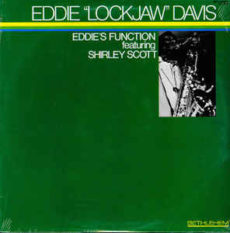
The 1950s saw Pruitt touring with Earl Hines and the Sauter-Finegan Orchestra, but was mostly active as a sideman and session musician on recordings with Shorty Baker, Arnett Cobb, Eddie “Lockjaw” Davis, Bill Doggett, Wynonie Harris, Bull Moose Jackson, Roland Kirk, George Shearing, Sahib Shihab, and Hal Singer among others.
Pruitt did not perform or record frequently in the 1960s or 1970s, but he did play with Woody Herman at the Montreux Jazz Festival in 1967 and recorded with Ray Nance in 1969. He toured France with Doc Cheatham and Sammy Price in 1975.
Double-bassist Carl Pruitt passed away in June of 1977.
Sponsored By


#preserving genius
More Posts: bass
Daily Dose Of Jazz…
Frank Signorelli was born in New York City on May 24, 1901 and was a founding member of the Original Memphis Five at age sixteen in 191. He went on to join the Original Dixieland Jazz Band briefly in 1921. By 1927 he was playing in Adrian Rollini’s New York ensemble, and subsequently worked with Eddie Lang, Bix Beiderbecke, Matty Malneck and Paul Whiteman.
1935 saw him as a part of Dick Stabile’s All-America Swing Band and from 1936 to ‘38 he played in the revived version of the Original Dixieland Jazz Band. He recorded with Phil Napoleon in 1946 and with Miff Mole in 1958.
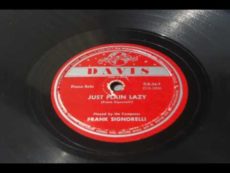
As a songwriter, Signorelli composed I’ll Never Be The Same, initially called Little Buttercup by Joe Venuti’s Blue Four, Gypsy that was recorded by Paul Whiteman and his Orchestra, Caprice Futuristic, Evening, Anything, Bass Ale Blues, Great White Way Blues, Park Avenue Fantasy, Sioux City Sue, Shufflin’ Mose, Stairway to the Stars and A Blues Serenade which was recorded by Signorelli in 1926, Glenn Miller and his Orchestra in 1935 and Duke Ellington’s version in 1938.
On December 9, 1975, pianist Frank Signorelli, who never led a recording session, passed away in New York City, New York.

More Posts: piano
Daily Dose Of Jazz…
John William Barber was born May 21, 1920 in Hornell, New York outside Rochester and was also known as Bill Barber or Billy Barber. He started playing tuba in high school and studied at the Juilliard School of Music. After graduating, he travelled west to Kansas City, Missouri, where he played with the Kansas City Philharmonic and various ballet and theatre orchestras.[1]
Joining the United States Army in 1942 he played in Patton’s 7th army band for three years. After the war, he started playing jazz, joining Claude Thornhill’s big band where he became friends with trombonist Al Langstaff, Gil Evans and Gerry Mulligan in 1947. Bill became one of the first tuba players to play in a modern jazz style, playing solos and participating in intricate ensemble pieces.
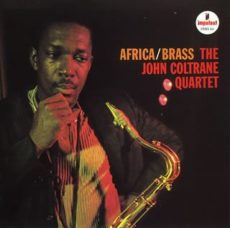
Barber became a founding member of Miles Davis’s nonet in 1949 in what became known as the Birth of the Cool recording sessions. He then worked in theatre pit orchestration of the King and I, Paradiso and the City Center Ballet before joining up with Davis and Gil Evans in 1957 to record albums such as Sketches of Spain, Miles Ahead, Quiet Nights and Porgy and Bess. He also performed on John Coltrane’s album Africa/Brass.
During the 1950s and Sixties her recorded several albums with Art Blakey, Bob Brookmeyer, Kenny Burrell, Gigi Gryce, Slide Hampton and Pete Rugolo. Completing a master’s degree from the Manhattan School of Music he chose to go into education and became an elementary school music teacher in Copiague, New York. He continued to play where possible including with the Goldman Band.
In 1992, he recorded and toured with a nonet led by Gerry Mulligan, reworking material from Birth of the Cool. From 1998 to 2004 he was part of The Seatbelts, New York musicians who played the music of the Japanese anime Cowboy Bebop.
Tubist Bill Barber, who never led a recording session, passed away of heart failure in Bronxville, New York on June 18, 2007.
Sponsored By

www.whatissuitetabu.com
#preserving genius
More Posts: tuba

Daily Dose Of Jazz…
Warren Smith was born on May 17, 1908 in Middlebourne, West Virginia and and taught by hi s multi-instrumentalist father, he began playing piano from age seven. He learned cornet and saxophone before settling on the trombone.
Starting out in Harrison’s Texans, a territory band in the 1920s, Smith followed with an extended half-dozen year run in Abe Lyman’s employ in the 1930s. He worked with Bob Crosby in Indianapolis, Indiana during late in the 1930s before returning to work with Lyman briefly and closing out the decade.
Moving to Chicago, Illinois in the Forties, he settled in with Bud Jacobson and Bob Scobey, before heading to the West Coast to work with Jess Stacy and Lu Watters. In 1955 he toured with Duke Ellington, then played with Joe Darensbourg from 1957 to 1960. Through the Sixties he performed with Wild Bill Davison and Red Nichols.
On August 28, 1975 in Santa Barbara, California swing and mainstream trombonist Warren Smith, who never led a recording session but was fortunate to be able to make his living performing, passed away of natural causes at age 67.
Sponsored By

#preserving genius