

Daily Dose Of Jazz…
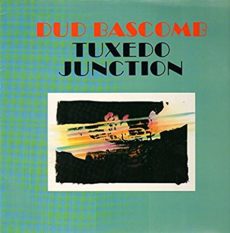
Wilbur Odell “Dud” Bascomb was born on May 16, 1916 in Birmingham, Alabama, the youngest of a family of ten children, and brother of tenor saxophonist Paul Bascomb. He played piano as a child but settled on trumpet, first playing with Erskine Hawkins at the Alabama State Teachers’ School, now Alabama State University in 1932. It was here that Hawkins led the Bama State Collegians band. Remaining with Hawkins until 1944, he soloed with him on many of his most well-known recordings.
Eventually he moved on to play in his brother’s septet, that became a big band later in the decade. He played briefly with Duke Ellington in 1947. During the 1950s Bascomb played for three years at Tyle’s Chicken Shack in New Jersey, leading a quintet which counted Lou Donaldson among its members.
He toured Japan three times with Sam Taylor and Europe with Buddy Tate in the 1960s, in addition to touring and recording with James Brown. He recorded sparingly as a leader and his Savoy Records sessions in 1959-60 were not issued until 1986.
Trumpeter Dud Bascomb passed away on December 25, 1972 in New York City. He was inducted into the Alabama Jazz Hall of Fame in 1979.

#preserving genius
More Posts: trumpet
Daily Dose Of Jazz…
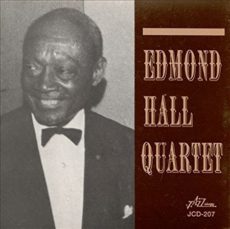
Edmond Hall was born on May 15, 1901 in Reserve, Louisiana, into a musical family. His father, Edward, played the clarinet in the Onward Brass Band, joined by Edmond’s maternal uncles, Jules Duhe on trombone, Lawrence Duhe on clarinet, and Edmond Duhe on guitar. The Hall brothers, Robert, Edmond, and Herbert, all became clarinetists, but Edmond was first taught guitar by his uncle Edmond. When Hall finally picked up the clarinet, he played it within a week.
Tired of working as a farm-hand, by 1919 he left for New Orleans where he signed up with the band of Bud Rousell, then with trombonist Jack Cary and blues cornetist Chris Kelley. His first big break came in late 1920, when he went to a dance at Economy Hall, saw Buddy Petit and discovered his clarinet player had left the band and the following Saturday Hall was sitting in with Petit’s band as a replacement until 1922.
Arriving in Pensacola, Florida in 1923, there was a series of band as he joined Lee Collins, then Mack Thomas, the Pensacola Jazzers, where Hall met the young trumpeter Charles “Cootie” Williams, on to “Eagle Eye” Shields, the Alonzo Ross DeLuxe Syncopators, finally in 1928 with pianist Arthur “Happy” Ford.
1929 saw Edmond moving back to New York he joined Charlie Skeet’s band, followed by Claude Hopkins and an invitation to play the Savoy Ballroom. By 1935 he left Hopkins and took residency in Billy Hicks’ Sizzling Six. Hall’s new sound on the clarinet led him to recording with the big stars and in 1937 he had his first recording session with Billie Holiday, sitting alongside tenor saxophonist Lester Young. Leaving Hicks he stepped into Café Society, joining Joe Sullivan’s band in late 1937. In between the regular job at the Cafe Society he recorded with Bud Freeman, Teddy Wilson, Charlie Christian, Henry “Red” Allen, J.C. Higginbotham, Art Tatum, Big Joe Turner, Hot Lips Page, Zutty Singleton, Meade Lux Lewis, Big Sid Catlett, Josh White, Ida Cox, Coleman Hawkins, Helen Ward, Vic Dickenson, Sidney de Paris, Wild Bill Davison, Eddie Heywood, Roy Eldridge and Jack Teagarden among others.
In 1941 Edmond led his first recording session as a leader, joined Teddy Wilson’s outfit, and made recordings as Edmond Hall’s Blue Note Jazzmen, the Edmond Hall Sextet, the Edmond Hall Celeste Quartet, Edmond Hall’s Star Quintet, Ed Hall and the Big City Jazzmen, and Edmond Hall’s Swingtet. Very popular among the musicians and critics and was frequently invited to the New York Town Hall Concerts led by Eddie Condon.
By 1944 Hall began fronting his own band, becoming a draw for Café Society. More recording dates followed for the famous Commodore Records and Blue Note labels. While business at the Café Society was exceedingly good, Hall appeared at Town Hall Concerts in between. Hall relocated successfully with his band to the Café Society Uptown and would also play for World War II servicemen.
Throughout his career he would perform with pianist George Wein, Louis Armstrong’s All Stars, tour Europe, settle in Los Angeles, California to shoot the film High Society with Grace Kelly and Bing Crosby, and appear on the Ed Sullivan Show. In 1952, Hall, Buzzy Drootin and Ralph Sutton appeared as the Ralph Sutton Trio in Saint Louis, where they played the Encore Lounge for several weeks and were the first mixed trio there. He received the Esquire Magazine Silver Award for clarinet, a certificate for nomination as one of the outstanding jazz artists of 1961 from Playboy Magazine and was awarded as the best Clarinetist by the English Melody Maker.
Clarinetist and bandleader Edmond Hall, who also played alto and baritone saxophones and is perhaps best known for the 1941 chamber jazz song Profoundly Blue, which is regarded as a pre-World War II jazz classic, passed away on February 11, 1967 in Boston, Massachusetts.
Sponsored By

Voices From The Community

#preserving genius
Daily Dose Of Jazz…
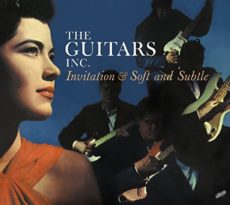
Alton Reynolds Hendrickson was born May 10, 1920 and grew up in Eastland, Texas before moving to the West Coast. In 1940 he worked for Artie Shaw and performed in Fred Astaire ‘s second chorus. By the mid-1940s he was in the coast guard but in the post-war period he played guitar in the bands of Freddie Slack, Ray Linn and Benny Goodman, whose sextet he also belonged to.
As a baritone Hendrickson was recorded on Goodman’s On a Slow Boat to China , which became a big hit in the USA in 1947. The 1950s saw him as a busy studio session player for both film and television soundtracks, The Danny Kaye Show, as well as for pop productions from Columbia Records since 1959. He worked in the productions of The Weavers and The Monkees, with country singer Sheb Wooley and jazz pianist Dodo Marmarosa.
In the field of jazz and popular music his was involved from 1940 to 1986 to 493 recording sessions with Rosemary Clooney, Bing Crosby, Doris Day, Lee Hazlewood, Eartha Kitt, Frankie Laine, Henry Mancini, Ann-Margret, Dean Martin, Ella Mae Morse, Harry Nilsson, Louis Prima, Elvis Presley Shorty Rogers, Bud Shank and Frank Capp’s Juggernaut big band.
Retiring to Oregon in the late Eighties he authored the Encyclopedia of Bass Chords, Arpeggios and Scales and Al Hendrickson Jazz Guitar Solos: Complete Book. Guitarist Al Hendrickson, who also played banjo, mandolin and was a vocalist, passed away on July 19, 2007 in North Bend Oregon.
Sponsored By

#preserving genius
More Posts: guitar
Daily Dose Of Jazz…
Floyd O’Brien was born May 7, 1904 in Chicago, Illinois and first played trombone with the Austin High School Gang in the 1920s and later in the decade he played with Earl Fuller, Floyd Town, Charles Pierce, Thelma Terry, and Husk O’Hare. Between 1930-31 he worked in a pit band at a theater in Des Moines, Iowa.
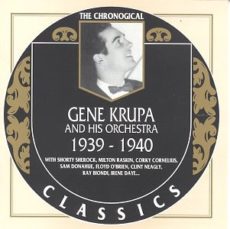
O’Brien moved to New York City and played with Mal Hallett, Joe Venuti, Smith Ballew, Mike Durso, Phil Harris, Gene Krupa and Bob Crosby between 1932 and 1942. Relocating to Los Angeles, California in 1943 he played with Eddie Miller, Bunk Johnson, Shorty Sherock, Jack Teagarden, and Wingy Manone.
By 1948 Floyd was back in Chicago performing with with Bud Freeman, Art Hodes and Danny Alvin. He recorded with Freeman as early as 1928 and other recordings include sessions with Eddie Condon, Fats Waller, Mezz Mezzrow, George Wettling, Charles LaVere, Albert Nicholas and Smokey Stover.
Trombonist Floyd O’Brien, whose lone session as a bandleader yielded two singles for Jump Records in 1945 and were also released under Charles LaVere’s name, passed away on November 26, 1968.
Sponsored By

www.whatissuitetabu.com
#preserving genius
More Posts: trombone
Daily Dose Of Jazz…
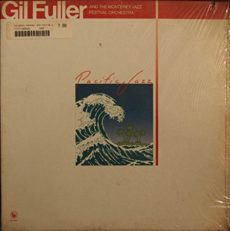
Walter Gilbert Fuller was born on April 14, 1920 in Los Angeles, California and is no relation to the jazz trumpeter and vocalist Walter “Rosetta” Fuller. In the 1930s and 1940s he did extensive work writing and arranging for bandleaders such as Les Hite, Floyd Ray, Jimmie Lunceford, Billy Eckstine, and Tiny Bradshaw.
He also worked with Benny Carter, Benny Goodman, Woody Herman, Count Basie, Machito and Tito Puente. Following World War II, Gil found himself increasingly in demand as a bebop arranger along with fellow modern arrangers Tadd Dameron, Gil Evans, and George Russell. Fuller’s work with Dizzy Gillespie was of particular note, yielding the tunes “Manteca”, “Swedish Suite”, and “One Bass Hit”. He is the composer of the jazz standard ballad “I Waited For You”, co-credited with Dizzy Gillespie.
Fuller started his own publishing company in 1957, and while he continued to work with some jazz musicians including Stan Kenton in 1955 and again in the 1960s, he also branched out into film music and pop with Ray Charles, among others.
Arranger Gil Fuller recorded a few albums before he passed away on May 26, 1994 in San Diego, California.
Sponsored By

#preserving genius
More Posts: arranger