Daily Dose Of Jazz…
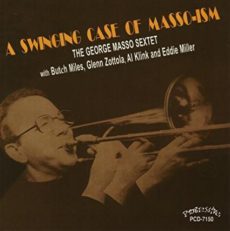
George Masso was born November 17, 1926 in Cranston, Rhode Island. Most notable for his work from 1948 to 1950 as a member of the Jimmy Dorsey band, but finding the life of a professional jazz musician financially difficult, Masso quit performing following his work with Dorsey and began teaching.
Returning to music in 1973, George recorded and/or performed with Bobby Hackett and Benny Goodman. In 1975 he became member of the World’s Greatest Jazz Band and by the late 1980s and early 1990s, he had recorded with George Shearing, Barbara Lea, Ken Peplowski, Scott hamilton, Warren Vache, Bobby Rosengarden, Woody Herman, Spike Robinson, Bob Haggart, Totti Bergh, Harry Allen and Yank Lawson.
He recorded numerous albums leading sessions on the Sackville, Nagel-Heyer, Arbors, Famous Door, World Jazz and Dreamstreet labels over the course of his career. Trombonist, bandleader, vibraphonist, and composer George Masso, who specialized in swing and Dixieland, rarely performs at 90 years old.

More Posts: trombone,vibraphone
Daily Dose Of Jazz…
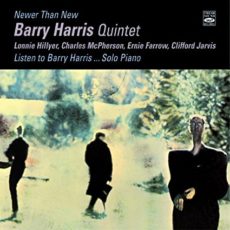
Ernie Farrow was born on November 13, 1928 in Huntington, West Virginia and is the half-brother to Alice Coltrane. It is said that he was responsible for introducing her to jazz. He had his own bands throughout high school and emerged in the professional jazz scene in the first half of the ’50s, working with a series of demanding bandleaders including Terry Gibbs and Stan Getz.
Farrow’s relationship with Yusef Lateef began around 1956, performing alongside Hugh Lawson and drummer Louis Hayes and recording a dozen albums with him from 1957 to 1964. Over the course of his short career he also worked with Barry Harris and John Williams among others.
A few years later he began leading his own group, based out of Detroit and was a strong influence on his younger piano-playing sister. In the ’60s he was featured on bass in a terrific classic jazz piano trio fronted by Red Garland.
Best known as a bassist, he however, started on piano before adding bass and drums. Multi-instrumentalist Ernie Farrow, who played piano, double bass, and drums, passed away on July 14, 1969.

Daily Dose Of Jazz…
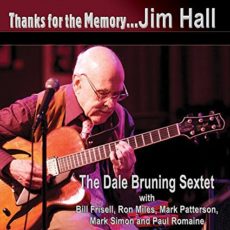
Dale Bruning was born on November 8, 1934 in Carbondale, Pennsylvania and as a small child played piano. When he was in high school he moved to the guitar and went on to become adept at playing tuba, double bass, vibraphone and drums. He was influenced by a wide range of jazz and classical musicians and composers. It was on guitar, however, that he went on the road with various small groups before playing for four years in US Navy bands.
In 1961, he led the house band on The Del Shields Show on NBC in Philadelphia, Pennsylvania that attracted him considerable attention. He performed during the Fifties and following decades were Dennis Sandole, his mentor and principal tutor, Jim Hall, Red Norvo, Dave McKenna, Dizzy Gillespie, Erroll Garner, Marian McPartland, Michael Moore, Gus Johnson, Bill Frisell, and Chet Baker.
He also recorded with bassist Ted Alexander, Nicky DeMatteo and Tony Luis in the late 1950s to early Sixties, and with Rich Chiaraluce in the early 70s. Moving to Denver, Colorado for domestic reasons, he has remained a resident and became an educator in 1960. His playing is inventive in conception and fluid in execution albeit regional in recognition. Though he won many awards, it was not until the late NIneties that Bruning’s reputation began to spread both nationally and internationally.
His book published in 1997, The Dale Bruning Jazz Guitar Instruction Book Series, Vol. I: Phrasing and Articulation, along with new albums received critical acclaim. His profile rose with a series of theme concerts, conceived in collaboration with writer-producer Jude Hibler, that celebrated the music of Duke Ellington, Hoagy Carmichael, Harold Arlen, Harry Warren, Johnny Mandel, Michel Legrand, Cole Porter and Kurt Weill, among others.
Guitarist Dale Bruning continues to educate, has also composed several songs, is an accomplished arranger and continues to perform.

More Posts: guitar
Daily Dose Of Jazz…
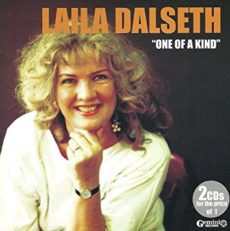
Laila Dalseth was born on November 6, 1940 in Bergen, Norway and after an early debut in her hometown she joined the Oslo jazz scene, and recorded with among others Kjell Karlsen, Egil Kapstad and Helge Hurum’s big band.
Dalseth recording debut in the Seventies was with the Metropol Jazz, participated in Stokstad/Jensen Trad.Band, in a band with Per Borthen, as well as at Teatret Vårtin the play Havhesten through the decade. She has with her own band released Listen Here!, One of a Kind and then Everything I Love, all on the Gemini Records label. Her group, L. D. Quintet consisted of husband Totti Bergh on saxophone, Per Husby on piano, Kåre Garnes on bass and Tom Olstad on drums.
Dalseth was awarded Buddyprisen, and three times was awarded the Spellemannprisen i klassen jazz, for Just Friends 1975, Glad There is You 1978 and Daydreams 1984. She was internationally recognized for the record Time for Love with Red Mitchell and Travelling Light with Al Cohn both in 1986, The Judge and I in 1991 with Milt Hinton, A Woman’s Intuition 1995 with her own sextet featuring Philip Catherine, We Remember You 1986/2003 with Al Cohn, and Everything I Love in 2004. Five of these releases were critically ranked among the Ten best jazz albums of the year» by the American jazz magazine Cadence.
Jazz vocalist Laila Dalseth continues to perform and record at the age of 77.
More Posts: vocal
Daily Dose Of Jazz…
Eggy Ley was born Derek William Ley on November 4, 1928 in London, England and first played drums and boogie-woogie piano. During his military service in the Royal Air Force he discovered and began playing the soprano saxophone.
In 1952 he played with Mick Collier’s Chicago Rhythm Kings followed by stints with Eric Silk and Stan Sowden. Then he put together his own Trad-Jazz band, which received a long guest appearance at the New Orleans Bar in Hamburg, Germany in 1955. Eggy kept the band going throughout Germany and Scandinavia until 1962, and recorded several records, with Benny Waters and for different labels, of which the Blues for St. Pauli became a hit in Germany.
Playing regularly with his band in London, Ley also produced for Radio Luxembourg and between 1969 and 1983 he produced for the British Forces Broadcasting Service. During the 1970s he co-directed the band Jazz Legend with Hugh Rainey and also recorded together with Cy Laurie.
In 1982, he founded his band Hot Shots, ran the Jazzin’ Around newspaper and toured overseas before emigrating to Canada in the late 1980s. Soprano and alto saxophonist Eggy Ley, considered one of the first British soprano saxophonists in jazz, passed away as a result of a heart attack on December 20, 1995 in Delta, British Columbia, Canada.