

Daily Dose Of Jazz…
Dan Morgenstern was born October 24, 1929 in Munich, Germany and was raised in Vienna, Austria and Copenhagen, Netherlands before arriving in the United States in 1947. He wrote for Jazz Journal from 1958–1961, then edited several jazz magazines: Metronome in 1961, Jazz from 1962–1963, and Down Beat from 1967-1973.
In 1976, he was named director of Rutgers–Newark’s Institute of Jazz Studies, where he continued the work of Marshall Stearns and made the Institute the world’s largest collection of jazz documents, recordings, and memorabilia.
Over the course of his career, Morgenstern has arranged concerts including the Jazz in the Garden series at the Museum of Modern Art, produced and hosted television and radio programs, taught jazz history at universities and conservatories, and served as a panelist for jazz festivals and awards across the U.S. and Europe.
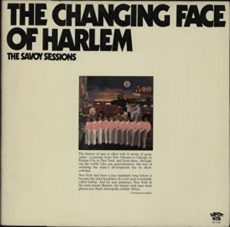
Widely known as a prolific writer of comprehensive, authoritative liner notes, he has received eight Grammy Awards for Best Album Notes since 1973 for Art Tatum’s God Is in the House, Coleman Hawkins’ The Hawk Flies, Savoy Records Collection The Changing Face of Harlem, Erroll Garner: Master of the Keyboard, Clifford Brown, Brownie: The Complete Emarcy Recordings of Clifford Brown, Louis Armstrong, Portrait of the Artist as a Young Man, Fats Waller, If You Got to Ask, You Ain’t Got It!, and The Complete Louis Armstrong Decca Sessions.
He has authored two books that have won ASCAP’s Deems Taylor Award: Jazz People in 1976 and Living with Jazz in 2004. In 2007, he received the A.B. Spellman Jazz Masters Award for Jazz Advocacy from the National Endowment for the Arts. Writer, editor, archivist and producer Dan Morgenstern continues his career at 87 years of age.

Daily Dose Of Jazz…
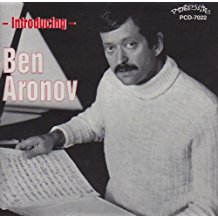
Benjamin James Aronov, known as Ben or Benny, was born October 16, 1932 in Gary, Indiana. He played in local jazz and dance ensembles as a teenager in Tulsa, Oklahoma. He was a student at the University of Tulsa from 1951 to 1952, then was conscripted into the U.S. Army, stationed in Texas and played in a military band.
In 1954 he relocated to Los Angeles California and began playing at The Lighthouse, as well as with musicians such as Terry Gibbs, June Christy, and Lena Horne. But by 1961 Ben moved to New York City, enrolled at the Manhattan School of Music, and graduated with a bachelor’s degree in music in 1966.
Following this, he worked with Al Cohn, Benny Goodman, Jim Hall, Morgana King, Lee Konitz, Peggy Lee, Liza Minnelli, George Mraz, Mark Murphy, the National Jazz Ensemble, Ken Peplowski, Tom Pierson, Zoot Sims, Carol Sloane, and Warren Vache. For 18 years he was the pianist in the Broadway production of Cats from 1982 to 2000.
After leaving Broadway pianist Ben Aronov moved to Aix-en-Provence, France, where he remained until he passed away on May 3, 2015.

More Posts: piano
Daily Dose Of Jazz…
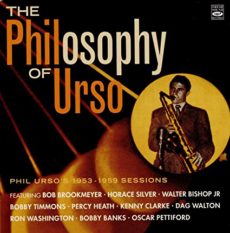
Phil Urso was born on October 2, 1925 in Jersey City, New Jersey and learned clarinet as a child, but switched to tenor sax while in high school. He served in the Navy during World War II and then moved to New York City in 1947.
Once he landed in the mecca for jazz from 1948 to 1954 he played with Elliot Lawrence, Woody Herman, Terry Gibbs, Miles Davis, Oscar Pettiford , Jimmy Dorsey, and Bob Brookmeyer.
In 1955, he first began working with Chet Baker, and was a prominent contributor to Baker’s Pacific Jazz releases in 1956. Urso and Baker would collaborate sporadically for some 30 years. He also recorded with Walter Bishop Jr., Horace Silver, Percy Heath, Kenny Clarke and Bobby Timmons among others.
He went on to work with Claude Thornhill late in the 1950s, but receded from national attention in later decades. Moving to Denver, Colorado he continued performing locally into the 1990s. Tenor saxophonist Phil Urso passed away on April 7, 2008 in Denver.
More Posts: saxophone
Daily Dose Of Jazz…
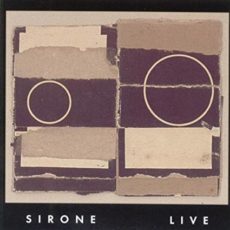
Sirone was born Norris Jones on September 28, 1940 in Atlanta, Georgia. In the late Fifties and early 1960s he worked with The Group alongside George Adams while also recording with R&B musicians such as Sam Cooke and Smokey Robinson.
Moving to New York City in the middle of the 1960s, he co-founded the Untraditional Jazz Improvisational Team with Dave Burrell. He also worked with Marion Brown, Gato Barbieri, Pharoah Sanders, Noah Howard, Sonny Sharrock, Sunny Murray, Albert Ayler, Archie Shepp, Billy Bang, and Sun Ra.
He co-founded the Revolutionary Ensemble with Leroy Jenkins and Frank Clayton in 1971; Jerome Cooper later replaced Clayton in the ensemble, which was active for much of the decade. In the 1970s and early 1980s Sirone recorded with Clifford Thornton, Roswell Rudd, Dewey Redman, Cecil Taylor, Zusaan Kali Fasteau, Charles Gayle and Walt Dickerson.
In the 1980s, he was member of Phalanx, a group with guitarist James “Blood” Ulmer, drummer Rashied Ali, and tenor saxophonist George Adams. From 1989 he lived in Berlin, Germany where he was active with his group Concord with Ben Abarbanel-Wolff and Ulli Bartel. Bassist and composer Sirone, who was involved in theater and film, passed away on October 21, 2009.

More Posts: bass
Daily Dose Of Jazz…
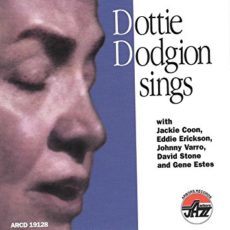
Dottie Dodgion was born Dorothy Rosalie Giaimo on September 23, 1929 in Brea, California. Growing up in the San Francisco Bay Area as a child, she sang in the band led by her drummer father and as a teenager sang with Charles Mingus. She began playing drums in the 1950s though she was discouraged by her husband Monty Budwig, but receiving encouragement to play from Jerry Dodgion, she subsequently divorced Budwig to marry Dodgion.
She worked with Carl Fontana in Las Vegas, Nevada toward the end of the decade and then relocated to New York City in 1961. There she played in Benny Goodman’s ensemble for about a week, then moved on to work with Marian McPartland and Eddie Gomez, Billy Mitchell and Al Grey, Wild Bill Davison, and Al Cohn and Zoot Sims over the course of the 1960s. In the early 1970s she worked with Ruby Braff and Joe Venuti, then played alongside her husband in Germany with Walter Norris and George Mraz.
Dottie and Jerry separated in the late Seventies and she moved to p style=”text-align: justify;”>Washington, D.C. for a time, where she was musical director for the club The Rogue and Jar. After moving back to New York City she worked in the 1980s with Melba Liston, George Wein, Michael and Randy Brecker, Frank Wess, Jimmy Rowles, Carol Sloane, Pepper Adams, Tommy Flanagan, Roland Hanna, Sal Nistico, Herb Ellis, Chris White, Bob Cranshaw, Joe Newman, and Harold Danko. After returning to the Bay Area in 1984 she played regularly at the Monterey Jazz Festival.
Drummer and singer Dottie Dodgion stopped being active in jazz at age 87. She died five years later on September 17, 2021, in a hospice in Pacific Grove, California, after suffering a stroke.
<