Daily Dose Of Jazz…
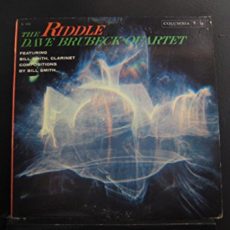
William Overton Smith was born on September 22, 1926 in Sacramento, California and grew up in Oakland, California, where he began playing clarinet at the age of ten. He put together a jazz group to play for dances at 13, and at the age of 15 he joined the Oakland Symphony. Idolizing Benny Goodman, after high school he completed a brief cross-country tour with a dance band that ended his romance for the life of a traveling jazz musician. He gave two weeks’ notice when the band reached Washington, D.C. and encouraged by an older band member to get the best education he could, he headed to New York.
Beginning his formal music studies at the Juilliard School of Music, he played New York jazz clubs like Kelly’s Stables at night. However, uninspired by the Juilliard faculty, he returned to California and at Mills College he met pianist Dave Brubeck, and became a member of the Dave Brubeck Octet, and later occasionally subbed for saxophonist Paul Desmond in the Dave Brubeck Quartet.
Winning the Prix de Paris presented Smith the opportunity for two years of study at the Paris Conservatory, and in 1957, he was awarded the prestigious Prix de Rome and spent six years in that city. He has since received numerous other awards, including two Guggenheim grants.
As an educator at the University of Southern California, he began a thirty-year career at the University of Washington School of Music in Seattle, where he taught music composition and performance. He co-led the forward-thinking Contemporary Group, first with Robert Suderburg and then with trombonist Stuart Dempster, from 1966 to 1997 and at 91 clarinetist Bill Smith is currently professor emeritus.

More Posts: clarinet
Daily Dose Of Jazz…
Jerry Hahn was born on September 21, 1940 in Alma, Nebraska and began playing the guitar at age 7. By 11 he was playing professionally with the Bobby Wiley Rhythmaires, appearing daily on Wichita’s first television station, KEDD.
He went on to study music at Wichita State University. Moving to San Francisco, California in 1962, he played with John Handy in 1964 and recording a live album with him at the Monterey Jazz Festival in 1966, then toured with the 5th Dimension in 1968 before joining Gary Burton in 1968 with Roy Haynes and Steve Swallow, With Burton he recorded three albums and toured the United States, Europe, Canada and Japan.
He began his recording career with his debut album Ara-Be-In as a leader in 1967 and led the Jerry Hahn Brotherhood in 1970, a country-blues jazz-rock ensemble, that was one of the trailblazers of the jazz-rock movement. In 1972, Jerry went back to Wichita, Kansas, where he became a full-time member of the Wichita State University faculty and established the degree program in jazz guitar.
1986 saw him relocating to Portland, Oregon where he joined the Bennie Wallace Quartet, recording and touring the United States, Europe and Japan. In 1992 he moved to Denver, Colorado, where he taught at the Colorado Institute of Art and in 1995 Jerry returned to Portland and joined the faculty of Portland State University and developed the curriculum for the Jazz Guitar program.
Jerry wrote a five-year monthly column for Guitar Player magazine titled Jerry Hahn’s Guitar Seminar, penned The Jerry Hahn Method for Jazz Guitar, published by Mel Bay Publications in 2003 and can also be heard on the movie sound track for White Men Can’t Jump.
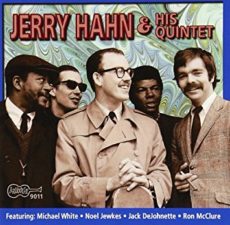
He has recorded eight albums as a leader and over the years has been seen working with Michael White, Jack DeJohnette, Noel Jewkes, Ron McClure, Paul Simon and Ginger Baker among others. Guitarist Jerry Hahn is a contributor to the emerging fusion movement and continues to conduct clinics and work on new publications and recordings.

More Posts: guitar
Daily Dose Of Jazz…
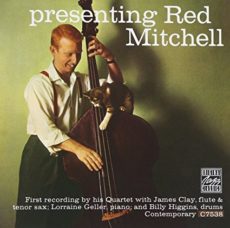
Born Keith Moore Mitchell, Red Mitchell came into this world on September 20, 1927 in New York City and was raised in New Jersey. His father loved music, his mother poetry and his first instruments were piano, alto saxophone, and clarinet. Receiving an engineering scholarship from Cornell University by 1947 he was in the Army playing bass. The next year he was in a jazz trio in New York City.
Red became known as for performing and recording with Mundell Lowe, Chubby Jackson, Charlie Ventura, Woody Herman, Red Norvo and Gerry Mulligan. After joining the West Coast jazz scene in the early 1950s in Los Angeles, California, he played with André Previn, Shelly Manne, Hampton Hawes, Billie Holiday, Stan Seltzer, Ornette Coleman, and others. He also recorded with Gene Ammons, Chet Baker, Louis Bellson, Paul Bley, Bob Brookmeyer, Buddy Collette, Maynard Ferguson, Tommy Flanagan, Jimmy Giuffre, Herbie Harper, Paul Horn, Stan Kenton, Barney Kessel, Karin Krog, Johnny Mandel, Jack Montrose, Gerry Mulligan, Bill Perkins, Richie Kamuca, Shorty Rogers, Dick Rosmini, Pete Rugolo, George Russell, Bud Shank, Clark Terry, Magni Wentzel and Pierre Strom.
He also worked as a bassist in the TV and film studios, occasionally appearing on screen and in the documentaries about Tal Farlow and Zoot Sims. Saxophonist Harold Land and Mitchell founded and co-led a quintet in the early 1960s. In 1966, Red began tuning his bass in fifths like the violin and his tuning method opened up many possibilities for bassists. Moving to Stockholm, Sweden in 1968, He won a Swedish Grammy Award in 1986 and again in 1991 for his recorded performances as a pianist, bassist, and vocalist, and for his compositions and poetic song lyrics.
During this period, Red performed and/or recorded with Clark Terry, Lee Konitz, Herb Ellis, Jim Hall, Joe Pass, Kenny Barron, Hank Jones, Ben Webster, Bill Mays, Warne Marsh, Jimmy Rowles, Phil Woods, Putte Wickman and collaborated in duos, most notably with pianist Roger Kellaway after the mid-1980s among others.
Returning to the United States and settling in Salem, Oregon, double bassist, pianist, composer, lyricist and poet Red Mitchell left three dozen albums as a leader and another sixty-six before passing away at age 65 on November 8, 1992.

More Posts: bass
Daily Dose Of Jazz…
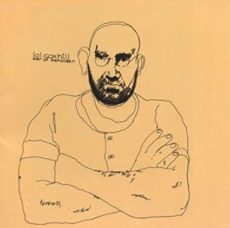
Lol Coxhill was born George Lowen Coxhill on September 19, 1932 in Portsmouth, Hampshire, UK. Growing up in Aylesbury, Buckinghamshire he bought his first saxophone in 1947 at 15. After national service he became a busy semi-professional musician, touring US airbases with Denzil Bailey’s Afro-Cubists and the Graham Fleming Combo.
The 1960s saw Lol playing with Rufus Thomas, Mose Allison, Otis Spann, and Champion Jack Dupree. He also developed his practice of playing unaccompanied solo saxophone, often busking in informal performance situations. He performed mostly as a sideman or as an equal collaborator, rather than a conventional leader with a trio or quartet. Instead he had many intermittent but long-lasting collaborations with like-minded musicians.
In the late 1960s and early 1970s, he was a member of the Canterbury scene bands Carol Grimes and Delivery and then Kevin Ayers and the Whole World. He became known for his solo playing and for duets with pianist Steve Miller and guitarist G. F. Fitzgerald. Coxhill collaborated with Mike Oldfield, Morgan Fisher, Chris McGregor’s Brotherhood of Breath and its musical descendant The Dedication Orchestra, Django Bates, the Damned, Hugh Metcalfe, Derek Bailey and performance art group Welfare State among numerous others.
He often worked in small collaborative groups with semi-humorous names Typically these bands performed a mix of free improvisation interspersed with ballroom dance tunes and popular songs. There was a humor in his music though the free playing was not intended as a joke. He performed at the Bracknell Jazz Festival, and following a performance at Bracknell he recorded the melodramatic monologue Murder in the Air.
Soprano saxophonist Lol Coxhill, who also played the sopranino saxophone and was a free improviser and raconteur, passed away on July 10, 2012.

More Posts: saxophone
Daily Dose Of Jazz…
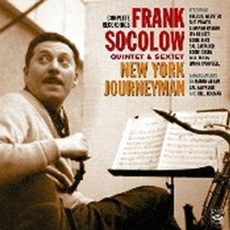
Frank Socolow wa born on September 18, 1923 in New York City and began his career in the early 40s playing in swing bands led by Georgie Auld, Ted Fio Rito, Roy Stevens, Van Alexander and Shep Fields. In 1944 he landed the first of three stints that spanned into the late Fifties with the Boyd Raeburn Orchestra and recording a number of records.
1945 saw Frank recording his first of two sessions as a leader with Freddie Webster and a young Bud Powell for Duke Records. He would go on to join Buddy Rich’s short-lived big band, toured Scandinavia 1947-48 with Chubby Jackson, then joined Artie Shaw’s big band 1949-50. Throughout the late 40s and the 50s he recorded with a wide variety of artists including Johnny Bothwell, Charlie Ventura, Gene Krupa, Sal Salvador, Maynard Ferguson, Terry Gibbs, Phil Woods, Cecil Payne, Manny Albam, Hal McKusick, Johnny Richards, Bill Russo, Joe Morello, and Bobby Scott.
His second record session as leader and only full album release, Sounds by Socolow, came in 1956 for Bethlehem Records, with arrangements by Bill Holman, Manny Albam, and Sal Salvador, the latter also contributing guitar. Tenor saxophonist and oboist Frank Socolow passed away on April 30, 1981 in New york City.