

Daily Dose Of Jazz…
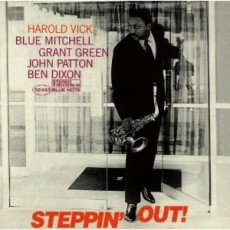
Harold Vick was born on April 3, 1936 in Rocky Mount, North Carolina. His uncle, reed player Prince Robinson gave him a clarinet when he was thirteen and two years later he switched to the tenor saxophone. He rose to prominence playing with organ combos in the mid-60s performing and recording with Jack McDuff, Jimmy McGriff and Big John Patton among others.
During this period in his career Harold also performed and recorded as a leader releasing eight albums between 1963 and 1977. He would work with the likes of Blue Mitchell, Ben Dixon, John Patton, Bobby Hutcherson, Walter Bishop Jr., Grady Tate and Teddy Charles, just to name a few. Also working as a sideman he performed and recorded with Grant Green, Shirley Scott, Nat Adderley, Aretha Franklin, Dizzy Gillespie, Mercer Ellington, Sarah Vaughan, Billy Taylor, Donald Byrd, Horace Silver, Ray Charles and Gene Ammons.
He played in films such as “Stardust Memories” and “Cotton Club”, in which he played a musician. He also was in the Spike Lee film “School Days” and was featured on the soundtrack for “She’s Gotta Have It”.
Harold Vick, tenor saxophonist and flautist in the hard bop and soul jazz genres passed away on November 13, 1987.
Daily Dose Of Jazz…
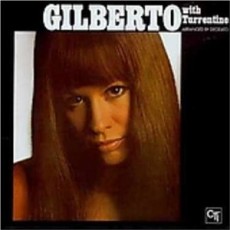
Astrud Gilberto was born Astrud Weinert on March 30, 1940 in the state of Bahia and raised in Rio de Janiero, the daughter of a Brazilian mother and a German father, She married Joao Gilberto in 1959, emigrating to the United States in 1963 and has continued to reside in the US ever since. They divorced in the mid-1960s and she began a relationship with her musical partner, Stan Getz.
Although now widely known for her samba and bossa nova music, she had never sung professionally and it was at the behest of her husband Joao that she sang on the recording of the Getz/Gilberto album featuring Stan Getz, Joao Gilberto and Antonio Carlos Jobim. Providing the English vocals to the 1965 Grammy Award-winning song “The Girl From Ipanema”, and her career was launched garnering her worldwide recognition and establishing her as a jazz and pop singer.
Her first solo album was The Astrud Gilberto Album in 1964, went on tour with Stan Getz singing bossa nova and American jazz standards, Gilberto didn’t start to record her own compositions until the 1970s. Her repertoire included such standards as “The Shadow Of Your Smile”, “It Might As Well Be Spring”, “Love Story”, “Fly Me To The Moon”, “Day By Day”, “Here’s That Rainy Day” and “Look to the Rainbow”.
Astrud has recorded songs in Portuguese, English, Spanish, Italian, French, German and Japanese, has received the “Latin Jazz USA Award for Lifetime Achievement”, inducted into the “International Latin Music Hall of Fame”, contributed to the Aids benefit album Red Hot + Rio, has had numerous versions of her songs sampled and used in movies, is a fine artist and ardent animal rights advocate.
More Posts: vocal
Daily Dose Of Jazz…
Remo Palmier was born Remo Paul Palmieri on March 29, 1923 in New York City, later dropping the “i” at the end of his name. He was taught himself to play guitar and began his professional career with the Nat Jaffe Trio in New York in 1942. In the early part of his career he played with Coleman Hawkins, Billie Holiday, Dizzy Gillespie and Charlie Parker, establishing his own reputation as a swinging and inventive jazz guitarist.
Remo was known to a wider television audience as the guitarist on The Arthur Godfrey Show, a position he held for 27 years from 1945. He went on to work with Red Norvo, pianists Phil Moore and Teddy Wilson, Barney Bigard and Sarah Vaughan in the mid-1940s.
After a hiatus from music, Palmier returned to active jazz playing in the early 1970s, working with the likes of Vic Dickenson, Bobby Hackett, and as an occasional stand-in for Bucky Pizzarelli in Benny Goodman’s small group.
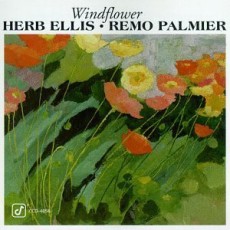
He recorded and released the albums “Windflower” with guitarist Herb Ellis and “Remo Palmier”, and continued to perform into the 90s, including recordings with Louis Bellson, Joe Wilder, and concerts with Benny Carter. Suffering from leukemia and lymphoma, jazz guitarist Remo Palmier passed away in New York City on February 2, 2002.
More Posts: guitar
Daily Dose Of Jazz…
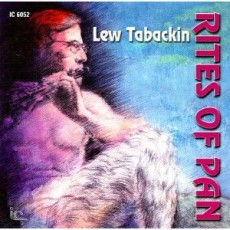
Lew Tabackin was born March 26, 1940 in Philadelphia, Pennsylvania. Tabackin studied flute at the Philadelphia Conservatory of Music and also studied music with composer Vincent Persichetti. Graduating in he did a stint with the Army, and then worked with Tal Farlow. He also worked in a combo that included Elvin Jones, Donald Byrd and Roland Hanna. He eventually took a chair in the band of the Dick Cavett Show.
He formed a quartet with Toshiko Akiyoshi in the late 1960s, and in 1973 co-founded the Toshiko Akiyoshi – Lew Tabackin Big Band that would later transform into the Toshiko Akiyoshi Jazz Orchestra featuring Lew Tabackin. He would be the principal soloist for the big band/orchestra from 1973 through 2003. The orchestra would play bebop in the Duke Ellington-influenced arrangements and compositions by Akiyoshi.
Tabackin has become a great supporter of The Jazz Foundation of America in their mission to save the homes and the lives of America’s elderly jazz and blues musicians including musicians that survived Hurricane Katrina. He has been seated on the Advisory Committee of the Foundation since 2002.
Saxophonist Lew Tabackin has some 54 albums under his belt as a leader and co-leader as well as another twenty-eight in his catalogue as a sideman. He has been a Down Beat Critic’s and Reader’s Poll winner numerous times for Jazz Album of the Year, Big Band and Flute, has been nominated for a Grammy for Best Jazz Instrumental Performance – Big Band ten times as well as Stereo Review magazine Jazz Album of the Year and recognition in Japan winning four Gold and Silver Disks from Swing Journal. He continues to perform and record.
Daily Dose Of Jazz…
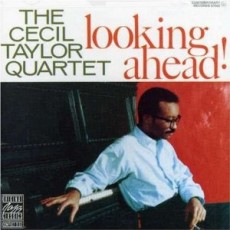
Cecil Percival Taylor was born March 25, 1929 in New York City and began playing piano and classical training at age six. He studied at the New York College of Music and New England Conservatory. After first steps in R&B and swing-styled small groups in the early 1950s, he formed his own band with soprano saxophonist Steve Lacy in 1956, in which he release his first recording Jazz Advance.
Throughout the 1950s and 1960s, Taylor’s music grew more complex and moved away from existing jazz styles. Gigs were often hard to come by, and club owners found Taylor’s approach to performance (long pieces) unhelpful in conducting business. Forming his group The Unit in 1961 with Jimmy Lyons, Sunny Murray and later Andrew Cyrille produced landmark recordings, like “Unit Structures” in 1966, they continued to record although sporadically and many of his recording sessions remained unreleased for sometimes decades.
By the 70s he was performing solo concerts and Taylor’s work began to be released for the next two decades, garnering critical if not popular acclaim. He began lecturing at universities, was awarded the Guggenheim Fellowship, performed a White House lawn concert for President Jimmy Carter, was awarded a MacArthur Fellowship, returned to the trio setting, collaborated with ballet companies and as an accomplished poet often incorporates his poems into his musical performances.
He is the co-founder of the Jazz Composers Guild to enhance the working possibilities of avant-garde musicians. Acknowledged as one of the pioneers of free jazz, his music is characterized by an extremely energetic, physical approach, producing complex improvised sounds, frequently involving tone clusters and intricate polyrhythms. His piano technique has been likened to percussion, described as “eighty-eight tuned drums” referring to the number of keys on a standard piano. He continues to perform, compose and record.
More Posts: bandleader,composer,piano,poet