

Daily Dose Of Jazz…
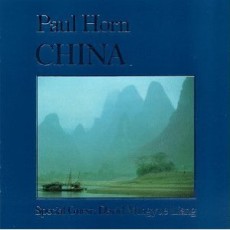
Paul Horn was born March 17, 1930 in New York City and began playing piano at the age of 4 and the saxophone at 12. He studied the flute in 1952 at the Oberlin Conservatory of Music in Ohio and then earned a master’s degree from the Manhattan School of Music.
Moving to Los Angeles in 1956 Paul played with Chico Hamilton’s Quintet till 1958 and two years later recorded his debut album “Something Blue”. By now an established West Coast session player he played on the Duke
Ellington Orchestra’s Suite Thursday and during this period worked with Nat King Cole, Tony Bennett and others. In 1970, he moved Vancouver Island, formed his own and has recorded film scores for the National Film Board of Canada.
Widely known for his innovations on both metal and traditional wood flutes, Horn has recorded some truly exotic albums. Perhaps most famous of these are his “Inside” recordings, which feature airy, echoing sounds created in places of spiritual importance. While he is undoubtedly a jazz musician, many of his works defy categorization. As well as the Inside series, he has recorded other albums of jazz with musicians from a range of cultures and backgrounds including China and Africa. He continues to perform and record.
Daily Dose Of Jazz…
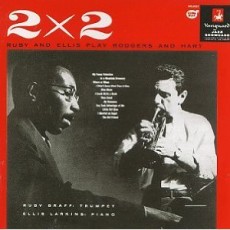
Reuben “Ruby” Braff was born on March 16, 1927 in Boston, Massachusetts He began playing in local clubs in the 1940s and in 1949, and he was hired to play with the Edmond Hall Orchestra at Boston’s Savoy Cafe. Ruby teamed up with Pee Wee Russell when the clarinet was making a comeback and they recorded several sessions for Savoy Records.
Relocating to New York in 1953 Braff easily fit into a variety of Dixieland and mainstream settings becoming in demand for band dates and recordings. He recorded as both leader and sideman working with such names as Vic Dickinson, Buck Clayton, Urbie Green, Ellis Larkins and Benny Goodman.
In the Sixties he was a member of George Wein’s Newport All-Stars but for a number of years work was hard to come by for the Dixieland player until the 70s when he formed a quartet in 1973. Following this he freelanced in different small combos and duets ultimately recording with Scott Hamilton’s quintet and sparring with guitarist Howard Alden.
Ruby Braff, cornetist and trumpeter who played in the genres of Dixieland, mainstream jazz and swing passed away on February 10, 2003 in Chatham, Massachusetts.
Daily Dose Of Jazz…
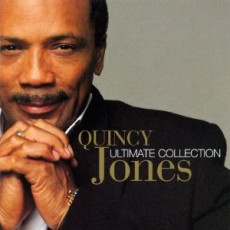
Quincy Delight Jones, Jr. was born on March 14, 1933 in Chicago, Illinois. When he was ten, his family moved to Bremerton, Washington, a suburb of Seattle. He first fell in love with music when he was in elementary school, and tried nearly all the instruments in his school band before settling on the trumpet. While barely in his teens attending Garfield High, Quincy befriended then-local singer-pianist Ray Charles and the two youths formed a combo, eventually landing small club and wedding gigs.
At 18, the young trumpeter won a scholarship to Berklee College of Music in Boston, Massachusetts but dropped out abruptly when he received an offer to go on the road with bandleader Lionel Hampton. The stint with Hampton led to work as a freelance arranger and settling in New York, throughout the 1950s he wrote charts for Tommy Dorsey, Gene Krupa, Sarah Vaughan, Count Basie, Duke Ellington, Dinah Washington, Cannonball Adderley and Ray Charles.
In 1964 Quincy won his first Grammy for Best Instrumental Arrangement of “I Can’t Stop Loving You”, in 1968 he won his second Grammy for Best Instrumental Performance with “Walking In Space” and that same year along with his songwriting partner Bob Russell became the first African Americans to be nominated for an Academy Award for Best Original Song for “The Eyes Of Love” and he became the first African American to be nominated twice within the same year when for Best Original Score for the 1967 film In Cold Blood.
His firsts would continue in 1971 when named musical director/conductor of the Academy Awards ceremony, being first to win the Academy’s Jean Hersholt Humanitarian Award, and He is tied at 7 with sound designer Willie D. Burton as the most Oscar-nominated African American.
His musical achievements are too numerous to list as they span the gambit from film scores such as The Pawnbroker, In The Heat of the Night, The Italian Job, MacKenna’s Gold, The Getaway and The Color Purple to his jazz works “Body Heat” and “Big Band Bossa Nova” from which Soul Bossa Nova was used in the Austin Powers movies to his crowning glories with Miles Davis last release “Live at the Monteux Jazz Festival”, his work with Michael Jackson’s “Thriller” and the charity song “We Are The World”. He continues to produce, conduct, arrange and compose.
More Posts: drums,french horn,piano,synthesizer,trumpet,vocal
Daily Dose Of Jazz…
Roy Owen Haynes was born March 13, 1925 in the Roxbury section of Boston, Massachusetts and made his professional debut at the age of seventeen in his native Boston. He began his full time professional career in 1945. From 1947 to 1949 he worked with Lester Young, and from 1949 to 1952 was a member of Charlie Parker’s quintet. He recorded at the time with Bud Powell, Wardell Gray and Stan Getz.
In 1953 Roy toured with Sarah Vaughan for the next five years and then went on to work with more experimental musicians, like John Coltrane, Eric Dolphy, Andrew Hill and Chick Corea.
Haynes extracted the rhythmic qualities from melodies and created unique new drum and cymbal patterns in an idiosyncratic, now instantly recognizable style. Rather than using cymbals strictly for effect, Haynes brought them to the forefront of his unique rhythmic approach. He also established a distinctively crisp and rapid-fire sound on the snare; this was the inspiration for his nickname, “Snap Crackle”.
Over the course of his 60+ career of hard swinging since 1944, Roy is among the most recorded drummers in jazz playing in a wide range of styles ranging from swing and bebop to jazz-fusion and avant-garde. He has recorded or performed with Gary Burton, Miles Davis, Dizzy Gillespie, Christian McBride, Jackie McLean, Pat Metheny, Thelonious Monk, Gerry Mulligan, Art Pepper, Sonny Rollins, Horace Tapscott and many, many others.
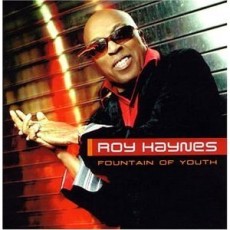
As a bandleader Haynes has also led his own groups, some performing under the name Hip Ensemble and his most recent recordings as a leader are “Fountain of Youth” and “Whereas”, both of which have garnered Gammy nominations. In 2010, the National Academy of Recording Arts and Sciences bestowed upon him a Grammy Lifetime Achievement Award. Drummer, percussionist and bandleader Roy Haynes continues to record and perform worldwide.
More Posts: composer,drums,percussion
Daily Dose Of Jazz…
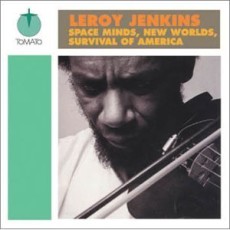
Leroy Jenkins was born on March 11, 1932 in Chicago, Illinois and began playing violin at eight years old, often in church. Another graduate of DuSable High under the tutelage of Walter Dyett, Leroy also played alto saxophone. He went on to graduate from Florida A&M, where he dropped the alto to concentrate on violin.
He returned to Chicago and divided his time from 1965 to 1969 between being involved in the Association for the Advancement of Creative Musicians (AACM) and teaching in the public school system. By the end of the decade he gave up Chicago for Europe and while in Paris, along with Anthony Braxton, Leo Smith and Steve McCall, he founded the creative Construction Company. Jenkins followed this with the Revolutionary Ensemble and formed a trio with Anthony Davis and Andrew Cyrille.
During 1987 he toured Europe as part of Cecil Taylor’s group. He gained recognition for music-theatre works such as “The Mother of Three Sons” and “The Negros Burial Ground”, two collaborations with Ann T. Greene, also “Fresh Faust”, and “The Three Willies”.
Leroy has played with Archie Shepp, Alice Coltrane and Rahsaan Roland Kirk; was a driving force in the free jazz circles and has written numerous pieces for soloists, small groups and large ensembles. Leroy Jenkins, composer, violist and free jazz violinist passed away February 24, 2007.