

Daily Dose Of Jazz…
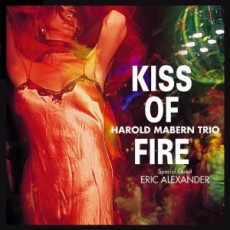
Harold Mabern was born on March 20, 1936 in Memphis, Tennessee and initially started learning the drums before turning his attention to the piano. Attending Douglass High School he played with Frank Strozier, George Coleman, Booker Little but was most influenced by the piano of Phineas Newborn Jr. After graduating from high school he moved to Chicago where he went to street school listening to Ahmad Jamal and others in clubs to increase his proficiency.
Early in his career Harold played in Chicago with Walter Perkins’ MJT + 3 in the late 1950s before moving to New York in 1959. Heading straight to Birdland where he met Cannonball Adderley who introduced him to Harry “Sweets” Edison who was looking for a replacement for Tommy Flanagan. A quick audition was followed by an offer and a few week later they were in the studio recording with Jimmy Forrest.
Mabern grew his reputation as a sideman and in the tradition of hard bop and soul jazz, the pianist worked with Lionel Hampton, the Jazztet, Donald Byrd, Miles Davis, J. J. Johnson, Lee Morgan, Hank Mobley, Sonny Rollins, Freddie Hubbard, Wes Montgomery, Joe Williams and Sarah Vaughan to name a few.
In the late 1960s and early 1970s, Mabern led four albums for Prestige Records and recorded with Stanley Cowell’s Piano Choir. Harold Mabern also recorded as a leader for DIW/Columbia and Sackville and toured with the Contemporary Piano Ensemble.
Pianist Harold Maben has twenty sessions as a leader and another six-dozen as a sideman in his catalogue. In more recent years, Harold is a frequent instructor at the Stanford Jazz Workshop, has recorded extensively with his former William Patterson University student, the tenor saxophonist Eric Alexander and continues to perform and tour.

More Posts: piano

Daily Dose Of Jazz…
Bill Henderson was born William Randall Henderson on March 19, 1926 in Chicago, Illinois. He didn’t begin his musical career until 26 years later performing around his home city with Ramsey Lewis before moving to New
York in 1958. A singer of blues, ballads and swing, he follows in the tradition of Joe Williams and Ernie Andrews but clearly brings his own personality to each performance.
His early big hit was Senor Blues, recorded with Horace Silver and worked with the Jimmy Smith trio. During his tenure at Vee-Jay in which he recorded several fine albums he worked with Ramsey Lewis, Yusef Lateef, Booker Little and Eddie Harris. A move to MGM had him working with Oscar Peterson in 1963 and touring with Count Basie from 1965-66.
Settling in Los Angeles, Bill began working as an actor in film and television in the seventies, taking minor or supporting roles and one-time appearances in such movies as Trouble Man, Silver Streak, City Slickers, Hoodlum, and television with Happy Days, Hill Street Blues, The Jeffersons, MacGyver, Cold Case and My Name Is Earl.
The late nineties saw his participation on Charlie Haden’s album “The Art Of The Song” alongside Shirley Horn, followed by a Live at the Kennedy Center and Beautiful Memory: Live at The Vic releases. Still in great form at the age of 86, vocalist and actor Bill Henderson, who amassed some four-dozen albums and 45s over his career, continued to perform around Los Angeles until his death at age 90 on April 3, 2016 from Alzheimer’s Disease.

More Posts: vocal
Daily Dose Of Jazz…
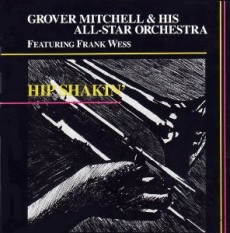
Trombonist and bandleader Grover Curry Mitchell was born on March 17, 1930 in Whatley, Alabama. By age eight he was living in Pittsburgh where jazz took hold of him. During his teen years after an initial desire to play trumpet, the school took note of his long arms and trained him to play the trombone.
After high school he enlisted playing in the U.S. Marine Band, then went on to play with Lionel Hampton and Duke Ellington. But his best-known association was with Count Basie from 1962 to 1978, when he founded his own band, the Jazz Chronicles.
In the seventies he started writing music for television and film including the 1972 Lady Sings The Blues. returned to the Count Basie Band in 1980 and continued to lead the band and served as the director from ’95 until his death, winning a Grammy for the Best Large Jazz Ensemble Album twice.
The mellow-toned trombonist lost a quiet battle with cancer on August 6, 2003 in New York City’s Sloan Kettering Hospital. Grover Mitchell was inducted posthumously into the Alabama Jazz Hall of Fame in 2008.

More Posts: trombone
From Broadway To 52nd Street
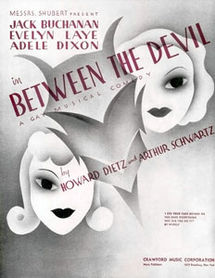
The musical opened in pre-Broadway tryouts in New Haven and Philadelphia in October 1937. Two months later and three days before Christmas on December 22, 1937 Between The Devil opened at the Imperial Theatre. Though it only ran for 93 performances, the play produced by the Shuberts rendered two songs composed by Arthur Schwartz and Howard Dietz that were destined to become jazz standards, By Myself and I See You Face Before Me. The play starred Jack Buchanan, Pierre Antoine, Evelyn Laye, Adele Dixon and Charles Walters.
The Story: The original plot had an English leading man, Peter Anthony, marrying two women at the same time. However, the plot was changed to have Peter Anthony marry the second wife only because he thought his first wife had died.
Broadway History: The Theater Works Project was placed in the hands of Hallie Flanagan, an instructor and creator of an experimental theater at Vassar. She had studied theater in Europe and Russia in the 20s on the first Guggenheim scholarship awarded to a woman, and was fully aware of what Le Gallienne had proposed. Flanagan differed, however, in that she was willing to oversee the development of a national program with chapters throughout the country. New York, with the greatest number of unemployed theater people, would develop six chapters, with other cities developing chapters relative to the number of displaced workers. In an unexpected moment of charity and good will, both George Bernard Shaw and Eugene O’Neill offered rights to their respective works to the Project for the nominal sum of $50.00 per week while they were in production.
More Posts: broadway
Daily Dose Of Jazz…
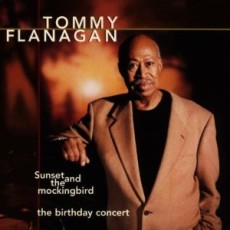
Tommy Flanagan was born Thomas Lee Flanagan on March 16, 1930 in Detroit, Michigan. He began playing clarinet at age six and switched to piano just five years later. By the ‘50s he had become a part of the fertile Detroit scene until moving to New York in 1956.
After his arrival and until his long association with Ella Fitzgerald beginning in 1963, Flanagan worked regularly as a sideman, cut leader sessions for New Jazz, Prestige, Savoy and Moodsville, worked with Oscar Pettiford, J. J. Johnson, Harry “Sweets” Edison and Coleman Hawkins.
It was in 1975 just three years prior to his leaving Ella Fitzgerald that he regained his soloist chops, leading superior recording sessions with his swinging and creative post-bop style.
Flanagan recorded for several American and Japanese labels but came to true prominence with his Sunset and The Mockingbird recording in 1998 followed a year later by Samba for Felix.
In his latter years Tommy Flanagan, known also for his flawless and tasteful playing, suffered from a heart condition. However, despite his health problems, the pianist continued to tour and perform until the end of his life when he passed away of an arterial aneurysm at age 71 on November 16, 2001 in Manhattan, New York.

More Posts: piano