

Daily Dose Of Jazz…
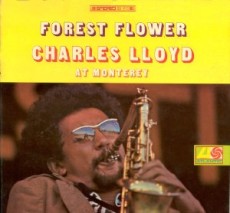
Charles Lloyd was born on March 15, 1938 in Memphis, Tennessee and from an early age was exposed to jazz and immersed in the city’s rich musical culture. Beginning saxophone at age 9, he took lessons from pianist Phineas Newborn and hung out with his closest friend Booker Little. Being in the blues city started gigging with B.B. King, Howlin’ Wolf, Bobby Blue Bland and others.
In ’56 he moved to Los Angeles earning a music degree from USC, playing with Gerald Wilson due this period. By 1960 he became Chico Hamilton’s music director, revolutionizing then chamber jazz to a more progressive post-bop sound. From thee he went on to join Cannonball working with Herbie Hancock, Ron Carter, and Tony Williams, then leading his own quartet with Keith Jarrett, Cecil McBee and Jack DeJohnette that signed with Atlantic Records.
This group brought an interesting fusion of straight-ahead post-bop, free jazz and soul jazz to their music catching on with both fans and critics. Crossing over with young rock fans Lloyd became the first jazz group to play the Fillmore West in San Francisco. The subsequent album Forest Flower, recorded at the 1966 Monterey Jazz Festival, became a huge commercial success.
Entering a period of semi-retirement in 1968 he recorded several albums in the seventies and appeared occasionally as a sideman. During the ’70s he backed and toured with the Beach Boys and a member of Celebration comprised of members of the band. In the early eighties he resumed playing actively after being approached by Michel Petrucciani and by the end of the decade was touring and recording again. This period of recording showcased his sensitivity to playing ballads.
His tenor is soft-toned, reminiscent of a variation of Coltrane but his flute is original. Throughout his career Lloyd’s style has remains unchanged and he continues to play and record.

More Posts: saxophone
Daily Dose Of Jazz…
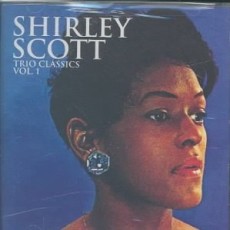
Shirley Scott was born in Philadelphia, Pennsylvania on March 14, 1934. She began her musical journey with piano and trumpet in high school but her admiration for Jimmy Smith moved her to the Hammond organ as her primary instrument, though she continued to play piano.
In the Fifties she came to prominence working with saxophonist Eddie Davis, but by the ‘60s Scott married Stanley Turrentine and the subsequent musical collaboration was fruitful with releases.
A very melodic player, Shirley graduated to an aggressive, highly rhythmic approach of organ player blending intricate bebop harmonies with blues and gospel with soul jazz. Her visibility waned in the seventies as labels interest in organ combos was replaced by fusion and pop jazz.
By the 1980s she would become a jazz educator and recording for Muse with the new found interest in organ late in the decade. Scott, a superb pianist, exclusively played piano during the Nineties in Philly jazz clubs and recorded trio projects for Candid.
By the turn of the new century with her health declining, she was diagnosed with heart damage due to adverse effects from the diet pill “fen-phen”. She was awarded $8 million in a lawsuit against the drug manufacturers. Shirley Scott died of heart failure on March 10, 2002.

Daily Dose Of Jazz…
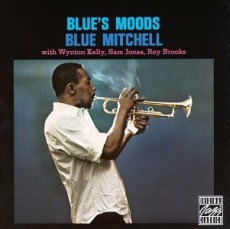
Blue Mitchell was born Richard Allen Mitchell on March 13, 1930 and was raised in Miami, Florida. He didn’t begin playing trumpet until high school, where he received his nickname “Blue”. In the years following he played in the rhythm and blues bands of Paul Williams, Earl Bostic and Chuck Willis but upon returning to Miami caught the ear of Cannonball Adderley, with whom he recorded in 1958 for Riverside.
He joined the Horace Silver Quintet playing alongside Junior Cook, Gene Taylor and Roy Brooks until 1964 and then formed his own band replacing Silver with Chick Corea an ailing Brooks with Al Foster. By 1969 Mitchell disbanded the group and joined Ray Charles, touring till ’71.
This stint was followed by Jazz Blues Fusion with John Mayall and throughout the seventies he recorded and worked as a session player, performed with Louis Bellson, Bill Holman, Lou Donaldson, Grant Green, Philly Joe Jones, Jackie McLean, Dexter Gordon, Hank Mobley and a host of other major players.
On May 21, 1979 the multi-faceted trumpeter Blue Mitchell, who delivered a light and swinging tone and known for his jazz, rhythm and blues, passed away from complications of cancer at age 49 in Los Angeles, California.

More Posts: trumpet
Daily Dose Of Jazz…
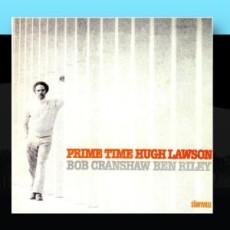
Hugh Lawson was born on March 12, 1935 in Detroit, Michigan. Inspired by Bud Powell, Hampton Hawes and Bill Evans he gained recognition for his more than ten year association with Yusef Lateef during the late ‘50s. During the Sixties he would record with Harry “Sweets” Edison, Roy Brooks and again with Lateef on several sessions.
During the Lawson performed with “The Piano Choir”, a group of several pianists including Stanley Cowell, and Harold Mabern. He went on to tour with Charles Mingus, record with Charlie Rouse, George Adams and as a leader, recording Prime Time, Colour, Jazzcraft Studio recording 1977-78, Beat-EP and Constellations.
Pianist Hugh Lawson was diagnosed with colon cancer and succumbed one day before his 62nd birthday on March 11, 1997 in White Plains, New York.
More Posts: piano
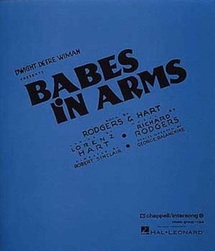
From Broadway To 52nd Street
Babes In Arms opened at the Shubert Theatre on April 14, 1937 and ran for two hundred and eighty-nine performances. The musical starred Mitzi Green (Billie Smith), Ray Heatherton (Valentine “Val” LaMar), Alfred Drake and the Nicholas Brothers.
The music composed by Richard Rodgers and the lyrics were provided by Lorenz Hart and from their score arose five songs that are jazz standards – I Wish I Were In Love Again, Johnny One Note, The Lady Is A Tramp, and Where Or When.
The musicals most famous and recorded composition, My Funny Valentine, in which Billie sings to Val first poking fun at some of Valentine’s characteristics but ultimately affirming that he makes her smile and that she doesn’t want him to change.
The Story: With a threat of being assigned to a work farm, the children of traveling vaudevillians band together to mount a musical revue. The show wins critical acclaim but loses money. So the children are sent to the farm. They are rescued when a French aviator on a transatlantic flight, makes an emergency landing on the farm, coming to their aid.
Jazz History: In the 1930s swing jazz emerged as a dominant form in American music, in which some virtuoso soloists became as famous as the bandleaders. Key figures in developing the “big” jazz band included bandleaders and arrangers Count Basie, Cab Calloway, Jimmy and Tommy Dorsey, Duke Ellington, Benny Goodman, Fletcher Henderson, Earl Hines, Glenn Miller and Artie Shaw.
Ellington and his band members composed numerous swing era hits that have become standards: “It Don’t Mean A Thing (If It Ain’t Got That Swing), Sophisticated Lady, Caravan were among them. Also during this period trumpeter, bandleader and singer Louis Armstrong was a much-imitated innovator of early jazz.
More Posts: broadway