

Daily Dose Of Jazz…
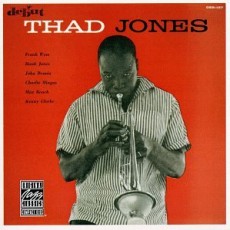
Thaddeus Joseph Jones was born in Pontiac, Michigan on March 28, 1923 into a musical family of ten. His older brother Hank was a pianist and a younger brother Elvin, a drummer. A self-taught musician, Thad was performing professionally by the age of sixteen. Enlisting in the Army from 1943 – 1946, he played in the U.S. Army bands during World War II.
By 1954 Thad joined the Count Basie Orchestra and was a featured soloist on such tunes as April In Paris, Shiny Stockings and Corner Pocket. But his main contribution to the orchestra was his compositions and arrangements of The Deacon, Counter Block and H.R.H. in honor of their command performance in London for the Queen. This was followed by a hymn like ballad by Jones titled “To You” performed by the Basie and Ellington bands in their only performance together, and “Dance Along With Basie” recording with nearly all Jones un-credited arrangements of standards.
1963 saw Jones leaving Basie to become a freelance arranger and studio player in New York. Two years later he and drummer Mel Lewis would form The Thad Jones/Mel Lewis Orchestra that began as an informal jam session amongst New York’s studio elite. They found a home at the Village Vanguard with Thad at the helm for twelve years and in 1978 they won a Grammy for the recording “Live In Munich”.
That same year Jones moved to Copenhagen to the surprise of his New York colleagues. The band continued under Lewis’ direction until his death and is still currently in residence as the Village Vanguard Orchestra. During his life in Copenhagen he composed for the Danish Radio Big Band, taught jazz at the Royal Danish Conservatory, formally studied composition and took up the valve trombone. Ill health began to take its toll on Jones by the mid- eighties and on August 21, 1986 the composer, arranger, trumpeter and flugelhornist passed away in Copenhagen.
Thad Jones’ most notable album was “Suite For Pops” featuring intense bebop improvisations of saxophonist Billy Harper and high note screeching of trumpeter Jon Faddis. His most well known composition is “A Child Is Born”.

More Posts: flugelhorn,trumpet
Daily Dose Of Jazz…
James Moody was born March 26, 1925 in Savannah, Georgia but grew up in New Jersey. He was attracted to the saxophone after hearing George Holmes Tate, Don Byas, and Count Basie. Joining the U.S. Air Force in 1943 he played in the “Negro Band” on the segregated base. Following his discharge, he began playing bebop with Dizzy Gillespie for two years. One of his colleagues was Kenny Barron, who would become an important collaborator.
He recorded his first record for Blue Note in 1948, the first in a long career playing both saxophone and flute. Relocating to Europe for three years stating he had been scarred by racism in the U.S., it was during this period that his acclaimed hit “Moody’s Mood For Love” was recorded and he added the alto to his repertoire. Returning to the States in 1952 he recorded with Prestige, played flute and sax with Pee Wee Moore and by the 60’s rejoined Dizzy.
Throughout the seventies he worked in Las Vegas show bands before returning to jazz as a leader and playing with the Lionel Hampton’s Golden Men Of Jazz. Preferring the tenor, Moody alternates with the alto and adding flute on many of his recordings.
The octogenarian continued to be a globetrotter with his quartet featuring pianist Renee Rosnes, bassist Todd Coolman and drummer Adam Nussbaum. He is a member of the Dizzy Gillespie Alumni All-Stars Big Band, often collaborating with conductor Jon Faddis, and worked alongside Jon in the WDR Big Band in Cologne, Germany. James Moody has been an institution in jazz since the 1940’s playing tenor, flute and occasionally the alto saxophone.
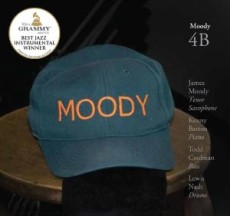
Saxophonist, flautist and composer James Moody passed away of complications from pancreatic cancer at age 85 in San Diego, California on December 9, 2010. Two months later he was posthumously awarded the Grammy Award for Best Jazz Instrumental Album for his recording “Moody 4B”, and named in his honor, the New Jersey Performing Arts Center hosts the James Moody Democracy of Jazz Festival.
Daily Dose Of Jazz…
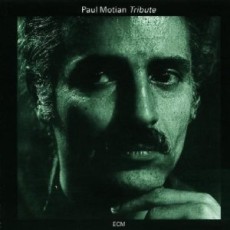
Paul Motian was born Stephen Paul Motian on March 25, 1931 in Philadelphia, Pennsylvania but was raised in Providence, Rhode Island. After playing guitar during his childhood, he started the drums at twelve, which led to his eventual touring New England with a swing band, followed by enlisting in the Navy during the Korean War.
A professional drummer since 1954, Motian came to prominence in the late 50’s in the Bill Evans band from 1959 to 1964. He briefly played with Thelonious Monk, then in the sixties played with Paul Bley, Keith Jarrett, Lennie Tristano, Warne Marsh, Joe Castro and Arlo Guthrie, Carla Bley, Charlie Haden and Don Cherry. As his career progressed Paul went on to play with many great jazz musicians.
From the seventies on Motian became an important composer and bandleader and by the early 80’s was leading a trio featuring guitarist Bill Frisell and saxophonists Joe Lovano. The trio invited occasional guest appearances from the likes of Lee Konitz, Charlie Haden, Dewey Redman, Geri Allen and others.
Paul continued to have an affinity for his first instrument, the guitar, leading the Electric Bebop Band featuring two and sometimes three electric guitars, while his other groups were absent of piano most times, working in an array of contexts. He played an important role in freeing the drummer from the strict duty of timekeeping. Drummer, percussionist and composer Paul Motian passed away on November 22, 2011 at the age of 80 in Manhattan, New York.

More Posts: bandleader,composer,drums,guitar
Daily Dose Of Jazz…
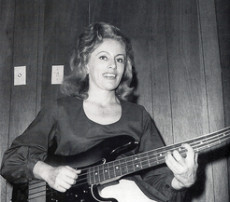
Carol Kaye was born March 24, 1935 in Everett, Washington to professional musicians Clyde and Dot Smith. Growing up in poverty near the Port of Los Angeles, she began teaching guitar professionally in 1949 at age 14. Throughout the fifties Kaye played bebop in L. A. clubs with Bob Neal, Jack Sheldon who backed Lenny Bruce, Teddy Edwards and Billy Higgins.
One of the most prolific and widely heard bass players of her time she played many of Phil Spector’s sessions, Brian Wilson productions, Richie Valens, Simon and Garfunkel, Quincy Jones and Dave Grusin. Her television credits are a who’s who with shows like M*A*S*H, Get Smart, Kojak, It Takes A thief, The Love Boat, Hogan’s Heroes, Mannix, The Cosby Show, Wonder Woman, Mission Impossible and so on and so on.
An educator, Carol wrote beginning in 1969, How To Play The Electric Bass, the first of many bass tutoring books and DVD Courses. By the late 70’s she retired from playing due to arthritis but later returned to session work, teaching both bass and guitar to the likes of John Clayton, and performing, giving seminars and interviews.
A noted session player she carved out a lucrative career beginning with backing the likes of Sam Cooke in 1957 and working with leading producers like Michel Legrand, Lalo Schifrin, Hugh Montenegro, John Williams and Steven Spielberg. She is estimated to have played on 10,000 recording sessions over a career spanning 55 years.

From Broadway To 52nd Street
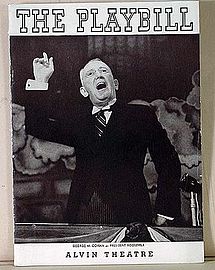
I’d Rather Be Right opened at the Alvin Theatre on November 2, 1937 and ran two hundred and ninety performances. The play starred Joy Hodges, Austin Marshall and George M. Cohen. The composers of the play’s music were Richard Rodgers and Lorenz Hart and one of their songs emerge to become a jazz standard – Have You Met Miss Jones.
The Story: As the story goes, a couple, Phil & Peggy, who wish to marry cannot do so until he receives a raise in pay. This raise was contingent on President Roosevelt balancing the budget. Falling asleep in Central Park, Phil dreams that he and Peggy meet the President. The President, in turn, summons the Cabinet, goes to battle with the Supreme Court, all to help the youngsters. Seemingly stymied, the President then suggests the young lovers marry anyway. When Phil awakens, that’s what they do.
Jazz History: Swing was dance music. It was a “live” broadcast nightly on the radio across America for many years especially by Earl “Fatha” Hines and his Grand Terrace Cafe Orchestra broadcasting coast-to-coast from Chicago. Although it was a collective sound, swing also offered individual musicians a chance to “solo” and “improvise” melodic, thematic solos, which could at times be very complex and “important” music. Over time, social strictures regarding racial segregation began to relax in America: white bandleaders began to recruit black musicians and black bandleaders. In the mid-1930s, Benny Goodman hired pianist Teddy Wilson, vibraphonist Lionel Hampton and guitarist Charlie Christian to join small groups.
More Posts: vocal