

From Broadway To 52nd Street
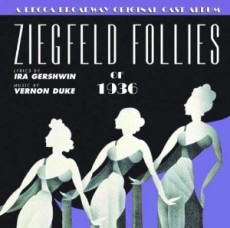
The Ziegfeld Follies of 1936 premiered on Broadway at the Winter Garden Theatre on January 30, 1936 and closed on May 9, 1936 after 115 performances due to Fanny Brice’s illness. The musical had a return engagement on Broadway at the Winter Garden Theatre on September 14, 1936, and closed on December 19, 1936 after 112 performances. Brice reprised her role, with the additional cast that included Gypsy Rose Lee.
The musical was produced by Billie Burke Ziegfeld, Lee Shubert and J. J. Shubert; directed by John Murray Anderson and Edward Clarke Lilley; choreographed by Robert Alton; sketches directed by Edward D. Dowling; ballets directed by George Balanchine and scenic design and costumes were by Vincente Minnelli.
Vernon Duke composed the music with lyrics by Ira Gershwin and a cast starring Fanny Brice, Bob Hope, Eve Arden, Josephine Baker and the Nicholas Brothers.
The Story: In the opening number Brice mocks her famous song (“My Man”) in “He Hasn’t a Thing Except Me”, standing against a lamp-post. In “The Sweepstakes Taker” Brice portrays a Jewish Bronx housewife who wins the Irish sweepstakes. In “Fancy Free’ she becomes the affected and bored British “Zuleika” as she exchanges witty remarks with her husband Sir Robert, and, leaving behind elegance, burps in his face and utters a trade-mark “Denk you.” As Baby Snooks, Brice stars with popular stars of the day such as Clark Gable. The only song to become popular from the musical was “I Can’t Get Started” sung by Bob Hope to Eve Arden.
Broadway History: The musical was not all that was spawned from within the hallowed walls of the Broadway theatre. A new age of American playwright with the emergence of Eugene O’Neill, whose successful plays such as Beyond the Horizon, Anna Christie and The Hairy Ape proved that there was an audience for serious drama on Broadway, thus ushering major dramatists like Elmer Rice, Maxwell Anderson, Robert E. Sherwood, Tennessee Williams and Arthur Miller. Comedy and classical revivals became the norm on Broadway and opened the doors for dramas addressing the rise of Nazism and America’s non-intervention in the approaching world war. The most successful was Lillian Hellman’s “Watch on the Rhine” that would open in April 1941.
Daily Dose Of Jazz…
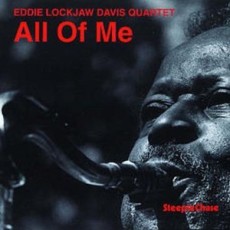
Edward Davis was born on March 2, 1922 in New York City. He was known to his friends, peers, jazz enthusiasts and aficionados by his nickname “Lockjaw” and became one of the pre-eminent jazz saxophonists of the 20th century.
In the early to mid-forties he played with Cootie Williams, Lucky Millinder, Andy Kirk, Louis Armstrong and Cont Basie. By 1946 he was leading his own band “Eddie Davis and His Beboppers” that housed Fats Navarro, Al Haig, Huey Long, Gene Ramey and Denzil Best.
In the 50’s he teamed with Sonny Stitt, from 1960 to ’62 he co-led a quintet with Johnny Griffin, and he and Griffin performed as part of the Kenny Clarke-Franz Boland Big Band. Davis recorded with Ella Fitzgerald, collaborated with Shirley Scott and played off and on with Count Basie’s Orchestra in the early 70’s.
In his later years he played with Harry “Sweets” Edison and remained busy as a soloist until his death on November 3, 1986 at the age of 64. Eddie “Lockjaw” Davis performed within the jazz genres swing, bop, hard bop, Latin and soul jazz.
More Posts: saxophone
Daily Dose Of Jazz…
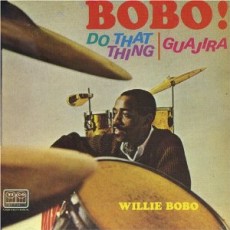
He was born William Correa on February 28, 1934 in East Harlem, New York City but to the jazz and Latin music worlds he was simply known as Willie Bobo, a moniker given him by Mary Lou Williams after they recorded in the early 50’s. Growing up in Spanish Harlem in New York City, he began playing bongos at age 14 and started performing a year later with Perez Prado. Over the next few years he studied with Mongo Santamaria while serving as his translator and at 19 joined Tito Puente for four years.
Willie became one of the great Latin percussionists of his time, a relentless swinger on the congas and timbales, a flamboyant showman onstage, and an engaging if modestly endowed singer. He also made serious inroads into the pop, R&B and straight jazz worlds, and he always said that his favorite song was Antonio Carlos Jobim’s “Dindi.”
He worked with Cal Tjader, Herbie Mann and Santamaria with whom he recorded the evergreen Latin standard “Afro-Blue” but it was in 1963 that he made his first recording as a leader with Clark Terry and Joe Farrell. He went on to record with Miles Davis, Cannonball Adderley, Herbie Hancock, Wes Montgomery, Chico Hamilton and Sonny Stitt. In 1969, he moved to Los Angeles where he led jazz and Latin jazz combos, appeared on Bill Cosby’s first comedy series in 1969.
He recorded on his own for Sussex, Blue Note, Verve and Columbia. One of his last appearances, only three months before his death, was at the 1983 Playboy Jazz Festival where he reunited with Santamaria for the first time in 15 years. Jazz percussionist and timbale master Willie Bobo, known for his Afro-Cuban and Latin jazz succumbed to cancer on September 15, 1983 at age 49.
More Posts: drums,percussion,timbales
Daily Dose Of Jazz…
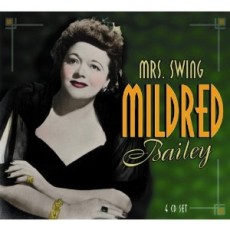
Mildred Bailey was born Mildred Rinker on February 27, 1907 in Tekoa, Washington. She began performing at an early age, playing piano and singing in movie theatres by 1920. Moving to Seattle to bolster her career, she retained the name of her first husband Ted Bailey, but it was her second husband Benny Stafford that helped establish her on the West Coast.
By 1925 she was headlining a Hollywood club performing pop, early jazz and vaudeville standards. Due to her success Mildred was able to secure work for her brother Al Riker and his partner Bing Crosby, who in turn, introduced Mildred to Paul Whiteman via singing at a party so he could “discover” her. Whiteman had a very successful radio show and big band and Mildred became the first woman to join a band as a full time singer.
An early jazz singer with a sweet voice that belied her plump figure, Mildred Bailey influences were Ethel Waters, Bessie Smith and Connie Boswell. She balanced popular success with a hot jazz slanted career as the better half of her third husband Red Norvo, who together were known and Mr. and Mrs. Swing.
Bailey’s debut recording was with Eddie Lang in 1929 and by ’32 her fame exploded with her signature hit “Rockin’ Chair” written especially for her by Hoagy Carmichael. Throughout the 30’s and into the 40’s she continued to record with the Whiteman orchestra, her husband Red, and recording arrangements written by Eddie Sauter that proved perfect for her voice.
She appeared on Benny Goodman’s Camel Caravan radio program, and gained her own series again during the mid-’40s. Hampered by health problems by the end of the decade suffering from diabetes and Mildred Bailey died of a heart attack on December 12, 1951 in Poughkeepsie, New York.
Jazz and blues vocalist Mildred Bailey, a major jazz vocalist and innovator who influenced Billie Holiday, Ella Fitzgerald and Rosemary Clooney was inducted into the Big Band and Jazz Hall of Fame in 1989.

More Posts: vocal

Daily Dose Of Jazz…
Dave Pell was born on February 26, 1925 in New York City. Growing up in Brooklyn between Brighton and Manhattan beaches, as a teenager he was playing the saxophone and touring with the Tony Pastor, Bob Astor, and Bobby Sherwood bands as a teenager, before moving to California in the mid-’40s. He found work with Bob Crosby on the Ford radio show in 1946, and then played with the Les Brown band from 1947 to 1955.
Drawing from the ranks of the Brown band, Pell, one of the founding fathers of the West Coast jazz, began leading his own groups in 1953, usually in an octet format, augmented by guests like Pepper Adams, Benny Carter, Mel Lewis, Red Mitchell, Marty Paich, and Art Pepper.
He also played as a sideman on records by Shorty Rogers, Pete Rugolo, Benny Goodman, and Gene Krupa in the 1950s, while recording under his own name for Atlantic, Kapp, Coral, Capitol, and RCA Victor.
During the 1950’s and ‘60s his primary focus of activity in the record business was as a producer for the budget Tops label and Liberty, supervising a few hit pop/rock records for Gary Lewis & the Playboys.
Then in the late 1970s Dave put together a tribute band to Lester Young called Prez Conference, recording two albums for GNP/Crescendo. In the ’80s and ’90s, the saxophonist and bandleader revived his octet for recordings and sporadic live dates in the Los Angeles area, including an appearance at the Jazz West Coast festival in 1994. He has had several reissues on CD along with a few imports and new recordings over the past decade. Saxophonist Dave Pell, known for his octet recordings and performances, passed away on May 7, 2017, at the age of 92.

More Posts: saxophone