


Daily Dose Of Jazz…
Ian Armit was born on April 11, 1929 in Kirckaldy, Fife, Scotland and little is known about his youth. Surfacing on the jazz scene in 1957 he was found performing with Sandy Brown and releasing the solo EP Jazz Club Piano for Decca Records.
In 1960 Ian began a two year stint with the Humphrey Lyttelton Band and went on to record with Al Fairweather, Cy Laurie, The Wally Fawkes-Sandy Brown Quintet and Wally Fawkes and The Troglodytes. He guested a few of Chris Barber appearances for BBC Radio in 1963. The following year he led his own quintet on the BBC Radio program “Three’s Company.
Tiring of jazz he turned his direction towards blues in late 1964 he joined Alexis Korner’s Blues Incorporated, followed by Long John Baldry’s Hoochie Coochie Men and then became a member of The Steampacket. He recorded with Rod Stewart, toured with Savoy Brown and Fleetwood Mac. He remained with Baldry until 1972 when he joined Bob Wallis on a European tour.
Moving to Switzerland, Armit once again led a quartet and recorded Ian’s Boogie Woogie with the Old Rivertown jazz band in 1989. He would play with the Piccadilly Six, the Harlem Ramblers and other blues bands.
Pianist, composer and bandleader Ian Armit, who never returned to jazz, died after a short illness on February 19, 1992 in Zurich, Switzerland.
More Posts: bandleader,history,instrumental,jazz,music,piano
Daily Dose Of Jazz…
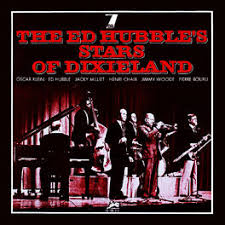
Eddie Hubble was born John Edgar Hubble II on April 6, 1928 in Santa Barbara, California and learned trombone from his father, who was also a professional trombonist in the Los Angeles, California area.
A move to New York City in 1944 and by late in the decade had played with Bob Wilber, Buddy Rich, Doc Evans, Alvino Rey, and Eddie Condon. He played with his own ensemble from the late 1940s, recording for Savoy Records in 1952.
He played with a Dixieland jazz ensemble known as The Six in 1953, and worked with Muggsy Spanier in the 1960s, playing in Ohio and Connecticut. He also worked with the World’s Greatest Jazz Band.
Despite being seriously injured in a car crash in 1979, he was soon back playing, including for international tours.
Trombonist Eddie Hubble died on March 22, 2016, at the age of 91.
More Posts: bandleader,history,instrumental,jazz,music,trombone
Jazz Poems
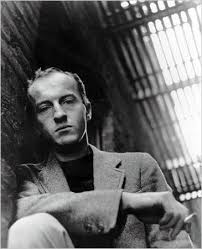
THE DAY LADY DIED It is 12:20 in New York a Friday three days after Bastille Day, yes it is 1959 and I go get a shoeshine because I will get off the 4:19 in Easthampton at 7:15 and then go straight to dinner and I don’t know the people who will feel me I walk up the muggy street beginning to sun and have a hamburger and a malted and buy an ugly NEW WORLD WRITING to see what the poets in Ghana are doing these days I go on to the bank and Miss Stillwagon (first name Linda I once heard) doesn’t even look up my balance for once in her life and in the GOLDEN GRIFFIN I get a little Verlaine for Patsy with drawings by Bonnard although I do think of Hesiod, trans. Richmond Lattimore or Brendan Behan’s new play or Le Balcon or Les Nègres of Genet, but I don’t, I stick with Verlaine after practically going to sleep with quandariness and for Mike just stroll into the PARK LANE Liquor Store and ask for a bottle of Strega and then I go back where I came from to 6th Avenue and the tobacconist in the Ziegfeld Theatre and casually ask for a carton of Gauloises and a carton of Picayunes, and a NEW YORK POST with her face on it and I am sweating a lot by now and thinking of leaning on the john door in the FIVE SPOT while she whispered a song along the keyboard to Mal Waldron and everyone and I stopped breathing FRANK O’HARAfrom Jazz Poems ~ Selected and Edited by Kevin Young

More Posts: book,classic,collectible,history,jazz,library,poet
Daily Dose Of Jazz…
Born Charles Isaacs on March 28, 1923 in Akron, Ohio, he initially played trumpet and tuba as a child before settling on bass. He served in the Army during World War II, where he took lessons from Wendell Marshall. After the war he played with Tiny Grimes from 1948–50, Earl Bostic from 1951 to 1953, Paul Quinichette in 1953, and Bennie Green in 1956.
Ike, as he was affectionately called, led a local band in Ohio in 1956, then played for two years in the trio behind Carmen McRae, whom he married late in the decade. He went on to work with Lambert, Hendricks and Ross, then with Count Basie, Gloria Lynne, and Erroll Garner in the Sixties,
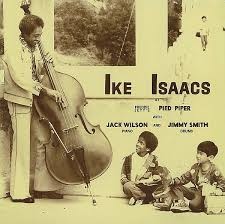
With his own small groups he recorded only once as a leader, At The Pied Piper in 1967 for RGB Records. On this recording he plays in a trio with Jack Wilson on piano and Jimmie Smith on drums. As a coleader he recorded two albums with Maxine Sullivan.
As a sideman he recorded twenty-six albums with Count Basie, Lambert, Hendricks & Ross, Roy Brown, Ray Bryant, Harry Edison, Eddie Lockjaw Davis, Pee Wee Erwin, Ella Fitzgerald, Billie Holiday, Erroll Garner, Bennie Green, Al Grey, Jon Hendricks, Carmen McRae, Big Miller, Esther Phillips, Dan Wall, Jack Wilson, and Joe Williams.
Bassist Ike Isaacs died on February 27, 1981.
More Posts: bandleader,bass,history,instrumental,jazz,music
Daily Dose Of Jazz…
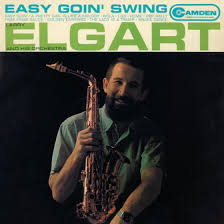
Lawrence Joseph Elgart was born on March 20, 1922 in New London, Connecticut and grew up in Pompton Lakes, New Jersey. His mother was a concert pianist and his father also played piano, though not professionally. With his brother Les they attended Pompton Lakes High School.
Both brothers began playing in jazz ensembles in their teens, and young Larry played with jazz musicians such as Charlie Spivak, Woody Herman, Red Norvo, Freddie Slack and Tommy Dorsey. In the mid-1940s, Les and Larry started up their own ensemble, hiring Nelson Riddle, Bill Finegan and Ralph Flanagan to arrange tunes for them. Their ensemble was not successful, and after a few years, they scuttled the band and sold the arrangements they had commissioned to Tommy Dorsey. Both returned to sideman positions in various orchestras.
In 1953, Larry met Charles Albertine and recorded two of his experimental compositions, Impressions of Outer Space and Music for Barefoot Ballerinas. The recordings were not commercially successful but became collector items for fans of avant-garde jazz. With Albertine they put together an ensemble and using precise microphone placements produced what came to be known as the Elgart Sound. Proved to be very commercially successful, throughout the 1950s they enjoyed a run of successful albums and singles on the Columbia label.
Their initial LP, Sophisticated Swing, released in late 1953, was credited to The Les Elgart Orchestra, because, according to Larry, Les was more interested than his brother in fronting the band. In 1954, the Elgarts left their permanent mark on music history in recording Albertine’s Bandstand Boogie, for the legendary television show American Bandstand. In 1955, the band became The Les and Larry Elgart Orchestra, but the brothers split in 1959, each subsequently releasing his own series of albums.
Larry signed with RCA Victor and his 1959 album New Sounds At the Roosevelt was nominated for a Grammy. From 1960 to 1962, he released music on MGM Records. The brothers reunited in 1963 and recorded several more albums until 1967 they again went their separate ways.
In 1981 he departed from the Elgart Sound for jazz funk and fusion genres, producing Flight of the Condor for the RCA Victor. His biggest exposure came in 1982, with the success of Hooked on Swing. The instrumental was a medley of swing jazz hits In the Mood, Cherokee, Don’t Sit Under the Apple Tree, American Patrol, Sing, Sing, Sing, Don’t Be That Way, Little Brown Jug, Opus #1, “ake the A Train, Zing Went the Strings of My Heart and A String of Pearls.
Alto saxophonist and bandleader Larry Elgart, who was a resident of Longboat Key, Florida died on August 29, 2017 at a hospice center in Sarasota, Florida at the age of 95.
More Posts: bandleader,history,instrumental,jazz,music,saxophone