

Three Wishes
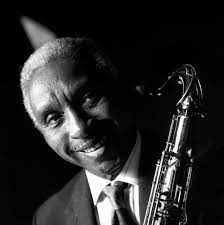
Baroness Pannonica approached Teddy Edwards and as the conversation ensued she asked him if he was given three what would he wish for. His answered:
-
- “I wish peace.”
- “Love.”
- “And health.”
*Excerpt from Three Wishes: An Intimate Look at Jazz Greats ~ Compiled and Photographed by Pannonica de Koenigswarter

More Posts: baroness,history,instrumental,jazz,music,pannonica,saxophone,three,wishes
Daily Dose Of Jazz…
Leslie Richard Condon born February 23 1930 in Kennington, London, England of Irish stock, took up the trumpet in his late teens. Largely self-taught, he worked with local dance bands before doing his national service, when he played for the Eager Beavers at RAF Wroughton, Wiltshire.
Turning professional in 1952, he played with the usual round of palais bands and then took to the sea as a member of Geraldo’s Navy. Working as a musician on Cunard liners crossing the Atlantic allowed him to worship at the feet of the great exponents of bebop on New York’s 52nd Street. Originally a conventional jazz player, like others of the second wave of modernists he was bowled over by bebop, forging an eloquent style of his own, building on what he knew of Dizzy Gillespie, Fats Navarro and Miles Davis.
In 1954, he became a founder member of British bebop pioneer Tony Crombie’s new band, playing alongside trumpeter Jimmy Deuchar and trombonist Ken Wray. Despite having little formal musical education, he was a valued composer and arranger, contributing to the Crombie band book and recording with the drummer for Decca in 1955. He also began to record and solo regularly with bands led by Vic Lewis and Hayes, before joining drummer Tony Kinsey’s successful quintet.
Condon was among the local players added to form Woody Herman’s (Anglo-American) Herd when the veteran US bandleader toured the UK in 1959. He formed a rewarding friendship with Herman’s lead trumpeter Reunald Jones, formerly a key member of the Count Basie orchestra.
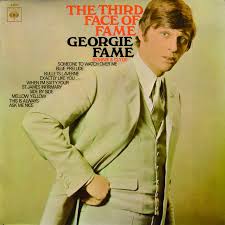
He went on to have a year-long association with Jamaican alto-saxophonist Joe Harriott, famous for his pursuit of “free form” jazz alongside his more structured pieces. He went on to work with a dazzling array of local movers and shakers, recording with the Hayes and Tracey big bands and performing with just about every other significant jazz modernist of the day. An active studio musician, he played for radio and television shows, recorded with singer Georgie Fame and appeared on the Beatles’ Revolver album. His theatre work included a two-year stint with the musical show Bubbling Brown Sugar and a visit to South Africa in 1981, accompanying the singer Jack Jones.
Dental problems forced Condon to cease playing the trumpet in 1990, after which he confined himself to playing the piano at home, composing and studying music. Trumpeter Les Condon, one of the modern players, transitioned on October 30 2007.
More Posts: history,instrumental,jazz,music,trumpet
Daily Dose Of Jazz…
Frank Isola was born on February 20, 1925 in Detroit, Michigan and was heavily influenced by Gene Krupa. He played in the U.S. military during World War II and then studied and performed in California with Bobby Sherwood and Earle Spencer.
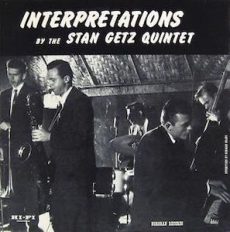
Moving to New York City he played with Johnny Bothwell and Elliot Lawrence in 1947. Following this, in the Fifties Frank played with Stan Getz and Gerry Mulligan, as well as with Mose Allison, Eddie Bert, Bob Brookmeyer, Jimmy Raney, Johnny Williams and Tony Fruscella.
By the late 1950s Isola returned to Detroit and kept working periodically with local bands or in jam sessions but well out of the spotlight. He was active in the Cass Corridor area of Detroit in the 1970s playing jazz standards with pianist Bobby McDonald and others at Cobb’s Corner Bar.
He worked as a drummer briefly at Captain Hornblower’s in Key West, Florida in the late 1980s with pianist Johnny Williams. By the early Nineties, he moved back north and was playing weekly at Tom’s Steamer’s Bar in Grosse Pointe, Michigan. In 1994 and 1995 Isola played at The Windsor Jazz Festival in Ontario, Canada backing Franz Jackson and Marcus Belgrave. The 1994 concert was released on Parkwood Records as Live at Windsor Jazz Festival III with Jackson and Belgrave as co-leaders.
He recorded fourteen albums between 1954 and 1981 with Getz, Mulligan, Mose Allison, Bob Brookmeyer, Dick Garcia, Franz Jackson, Charlie Parker and Bob Szajner. Drummer Frank Isola, who never led a recording session, transitioned on December 12, 2004.
More Posts: drums,history,instrumental,jazz,music
Daily Dose Of Jazz…
Paul Crawford was born on February 16, 1925 in Atmore, Alabama, to parents who were a Baptist minister and a music teacher. After serving in the Navy during World War II he graduated from the Eastman School of Music in Rochester, New York where he studied trombone in a classical style. He went on to study under trombonist and teacher Emory Remington, pursued for a time graduate studies at the University of Alabama. Moving to New Orleans, Louisiana in 1951 he became a specialist in the Dixieland style of Jazz.
Crawford initially took up residence in the French Quarter of New Orleans where he became acquainted with people in the local arts and music scene. He also started performing at the New Orleans Jazz Club and learned to play Dixieland. Soon after he became co-bandleader of the Crawford-Ferguson Night Owls, with Leonard Ferguson, frequently performing on the steamboat President.
He made his first recordings on trombone in 1957 with the Lakefront Loungers. During this time, Paul played the trombone on non-paying gigs, and participated in jam sessions. He performed with Sharkey Bonano and with bandleader Paul “Doc” Evans.
By the 1950s, with Deep South laws prohibiting white musicians from performing with Black musicians, jobs dried up. As these laws were struck down in the 1960s, opportunities opened up for Crawford to perform with various notable Black jazz musicians in New Orleans. In 1964, Crawford was approached by Allan Jaffe, who was the owner of Preservation Hall, about performing at the Preservation Hall venue. With Punch Miller, he became a part of the Preservation Hall Jazz Band.
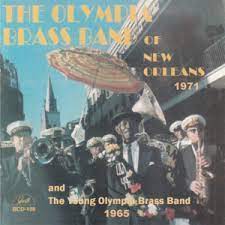
Shortly thereafter, he became a part of the Olympia Brass Band, marched in many New Orleans Jazz Funerals and often performed with the baritone horn. He was a founding member of the New Orleans Ragtime Orchestra. As a member of this group and others, he helped make the soundtrack for the movies “Pretty Baby” and “Live and Let Die”, as well as many other recording sessions. Crawford played the baritone horn in many performances of the musical “One Mo’ Time”.
Crawford was an associate curator at the Tulane University Hogan Jazz Archive. As curator, conducted numerous interviews for an oral history of jazz, and resurrected many forgotten pieces of jazz music and developed arrangements of them. He also developed a significant number of photos of jazz musicians and performances, in a private collection.
Trombonist, baritone hornist, arranger and music historian Paul Crawford, who specialized in Dixieland jazz, transitioned on July 31, 1996 of lung cancer. He had been living in a New Orleans skilled nursing facility at the time.
More Posts: arranger,bandleader,baritone horn,curator,historian,history,instrumental,jazz,music,trombone

Three Wishes
While hanging out one evening during the conversation with Al Dreares, the Baroness asked him his three wishes. He told her this:
-
- “I wish that I may become a great musician.”
- “And I also wish that I can be successful with my fellow musicians.”
- “And I wish my son grows up to be a fine young man. He’s four and a half months old.”
*Excerpt from Three Wishes: An Intimate Look at Jazz Greats ~ Compiled and Photographed by Pannonica de Koenigswarter
More Posts: baroness,drums,history,instrumental,jazz,music,pannonica,three,wishes